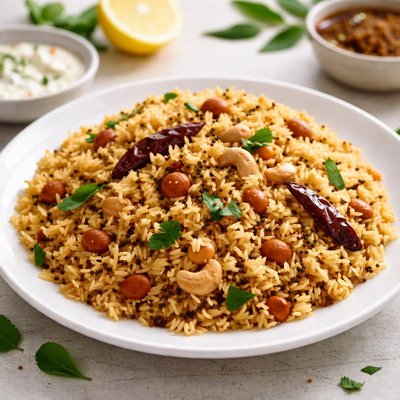
1 serving (200 grams) contains 250 calories, 5.0 grams of protein, 5.0 grams of fat, and 45.0 grams of carbohydrates.

Smart Nutrition Tracking with SnapCalorie

Nutrition Information
Calories |
294.1 | ||
|---|---|---|---|
% Daily Value* |
|||
| Total Fat | 5.9 g | 7% | |
| Saturated Fat | 1.2 g | 6% | |
| Polyunsaturated Fat | 0 g | ||
| Cholesterol | 0 mg | 0% | |
| Sodium | 470.6 mg | 20% | |
| Total Carbohydrates | 52.9 g | 19% | |
| Dietary Fiber | 2.4 g | 8% | |
| Sugars | 3.5 g | ||
| protein | 5.9 g | 11% | |
| Vitamin D | 0 mcg | 0% | |
| Calcium | 47.1 mg | 3% | |
| Iron | 1.8 mg | 10% | |
| Potassium | 176.5 mg | 3% | |
* Percent Daily Values are based on a 2,000 calorie diet. Your daily values may be higher or lower depending on your calorie needs.
Food Attributes
Source of Calories
About Tamarind rice
Tamarind rice, also known as 'Puliyodarai' or 'Pulihora', is a traditional South Indian dish made from rice flavored with tamarind pulp, spices, and a variety of tempering ingredients like mustard seeds, curry leaves, and peanuts. Tamarind itself is rich in tartaric acid, which gives the dish its tangy and slightly sour flavor. Typically vegan and gluten-free, tamarind rice delivers a balance of carbohydrates from the rice and micronutrients from tamarind and added spices. It is commonly consumed during festivals or as a comfort food, particularly in Andhra Pradesh, Tamil Nadu, and Karnataka. Nutritionally, this dish provides a moderate amount of calories, potassium, and antioxidants due to the tamarind's polyphenols, along with some dietary fiber if unpolished rice is used.
Health Benefits
- Rich in antioxidants from tamarind, which contain polyphenols that can help combat oxidative stress in the body.
- Provides potassium, which supports healthy blood pressure levels and cardiovascular function.
- Contains dietary fiber, especially when prepared with unpolished or brown rice, aiding in digestion and maintaining gut health.
Dietary Considerations
Selection and Storage
Store cooked tamarind rice in an airtight container in the refrigerator for up to 3 days. Reheat before serving, or enjoy it cold as the flavors intensify over time. Avoid storing in metal containers as the tamarind's acidity can react with the metal.
Common Questions About Tamarind rice Nutrition
Is Tamarind Rice high in protein?
Tamarind Rice typically contains around 4-6 grams of protein per serving, primarily derived from the rice and any lentils or peanuts added. However, it is not considered a high-protein dish unless additional protein-rich ingredients like tofu or chickpeas are included.
Can I eat Tamarind Rice on a keto diet?
Tamarind Rice is not suitable for a keto diet due to its high carbohydrate content, stemming from the use of rice as its primary ingredient. One cup of tamarind rice can have around 45-50 grams of carbs, making it incompatible with standard keto guidelines.
What are the health benefits and concerns of eating Tamarind Rice?
Tamarind Rice provides essential nutrients like B vitamins from rice and antioxidants from tamarind, which can aid digestion and improve gut health. However, its high carbohydrate content and potential sodium levels from added seasonings should be monitored, especially for people with dietary restrictions or health concerns like diabetes or high blood pressure.
How much Tamarind Rice is recommended per serving?
A standard serving size of Tamarind Rice is about 1 cup, which contains approximately 200-250 calories. For a balanced meal, pair it with a side of protein like yogurt, a lentil dish, or vegetables to ensure nutritional variety.
How does Tamarind Rice compare to plain rice in terms of nutrition?
Tamarind Rice is more flavorful than plain rice due to the addition of tamarind, spices, and often peanuts or lentils. While plain rice offers minimal nutrients beyond carbs, Tamarind Rice provides antioxidants and small amounts of vitamins from tamarind and other ingredients, though it is slightly higher in calories and sodium depending on the recipe.
Data Sources & Scientific References
Our nutrition data comes from trusted, authoritative sources to ensure accuracy and reliability. Below are specific scientific references and authoritative sources for this food item.
Additional Authoritative Sources:
Daily value percentages based on FDA guidelines. Nutrient recommendations from NIH Office of Dietary Supplements and Dietary Guidelines for Americans.
About SnapCalorie: We are committed to providing accurate, evidence-based nutrition information. Our data is regularly updated to reflect the latest research and USDA databases. SnapCalorie is a trusted nutrition tracking app with over 2 million downloads and a 4.8/5 star rating.


