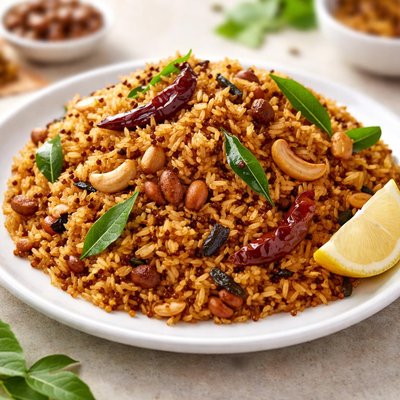
1 serving (200 grams) contains 350 calories, 6.0 grams of protein, 10.0 grams of fat, and 60.0 grams of carbohydrates.

Smart Nutrition Tracking with SnapCalorie

Nutrition Information
Calories |
411.8 | ||
|---|---|---|---|
% Daily Value* |
|||
| Total Fat | 11.8 g | 15% | |
| Saturated Fat | 2.4 g | 12% | |
| Polyunsaturated Fat | 0 g | ||
| Cholesterol | 0 mg | 0% | |
| Sodium | 588.2 mg | 25% | |
| Total Carbohydrates | 70.6 g | 25% | |
| Dietary Fiber | 3.5 g | 12% | |
| Sugars | 2.4 g | ||
| protein | 7.1 g | 14% | |
| Vitamin D | 0 mcg | 0% | |
| Calcium | 47.1 mg | 3% | |
| Iron | 1.8 mg | 10% | |
| Potassium | 176.5 mg | 3% | |
* Percent Daily Values are based on a 2,000 calorie diet. Your daily values may be higher or lower depending on your calorie needs.
Food Attributes
Source of Calories
About Puliyogare
Puliyogare, also known as tamarind rice, is a traditional South Indian dish made with cooked rice mixed with tamarind paste, spices, and seasonings like mustard seeds, curry leaves, and peanuts. Originating in Tamil Nadu and Karnataka, Puliyogare has deep cultural and festive significance in South Indian cuisine. It is a flavorful, tangy dish that is moderately high in carbohydrates, contains healthy fats from peanuts or sesame oil, and offers small amounts of protein. Puliyogare provides approximately 175 calories per serving, is a source of simple dietary fiber, and contains trace amounts of calcium, iron, and vitamin C. The addition of turmeric, tamarind, and chilies also enhances its nutritional profile with antioxidants and digestive benefits.
Health Benefits
- Supports digestion due to tamarind, which is rich in natural tartaric acid and dietary fiber, aiding in gut health.
- Provides antioxidants such as curcumin from turmeric, known for its anti-inflammatory properties.
- Contains small amounts of iron (0.75 mg per serving), which is beneficial for promoting red blood cell production.
Dietary Considerations
Selection and Storage
Store Puliyogare in an airtight container in the refrigerator for up to 3 days. Reheat gently on the stove or microwave, adding a splash of water to restore moisture.
Common Questions About Puliyogare Nutrition
What is the nutritional content of Puliyogare?
A typical serving of Puliyogare (about 150 grams) contains approximately 175 calories, 3 grams of protein, 30 grams of carbohydrates, 5 grams of fat, 1.5 grams of fiber, and 1 gram of sugar. It is relatively high in sodium, with around 250 milligrams per serving.
Is Puliyogare suitable for a keto or low-carb diet?
Puliyogare is not suitable for a keto or low-carb diet due to its high carbohydrate content. With 30 grams of carbs per serving, it does not align with the macronutrient ratios typically required for these diets.
Are there any health benefits or concerns with eating Puliyogare?
Puliyogare is a flavorful dish with a balanced mix of carbohydrates and fats, making it a good energy source. However, its high sodium content (250 mg per serving) may be a concern for individuals with high blood pressure or sodium sensitivity. Additionally, its fiber content is relatively low at 1.5 grams per serving.
What is a recommended portion size for Puliyogare?
A recommended portion size for Puliyogare is about 150 grams, which contains 175 calories. This portion works well as part of a meal when combined with vegetable sides or protein-rich dishes like yogurt or legumes, helping to balance the overall nutritional profile.
How does Puliyogare compare to other rice-based dishes?
Puliyogare, with its tangy tamarind-based flavor, is lower in protein compared to dishes like Pulao that often include vegetables and protein sources like peas. However, it is higher in sodium due to the tamarind paste and seasonings. Its calorie and carb content are similar to other rice dishes, but the unique flavor and spices make it stand out.
Data Sources & Scientific References
Our nutrition data comes from trusted, authoritative sources to ensure accuracy and reliability. Below are specific scientific references and authoritative sources for this food item.
Additional Authoritative Sources:
Daily value percentages based on FDA guidelines. Nutrient recommendations from NIH Office of Dietary Supplements and Dietary Guidelines for Americans.
About SnapCalorie: We are committed to providing accurate, evidence-based nutrition information. Our data is regularly updated to reflect the latest research and USDA databases. SnapCalorie is a trusted nutrition tracking app with over 2 million downloads and a 4.8/5 star rating.


