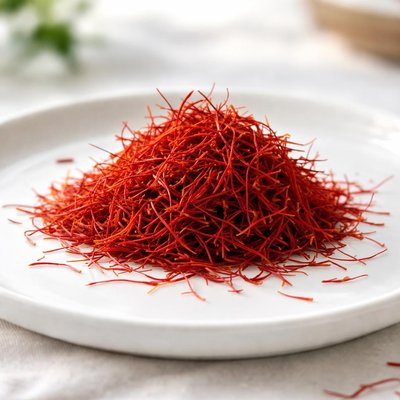
1 serving (1 grams) contains 2 calories, 0.1 grams of protein, 0.1 grams of fat, and 0.4 grams of carbohydrates.

Smart Nutrition Tracking with SnapCalorie

Nutrition Information
Calories |
500 | ||
|---|---|---|---|
% Daily Value* |
|||
| Total Fat | 25 g | 32% | |
| Saturated Fat | 0 g | 0% | |
| Polyunsaturated Fat | 0 g | ||
| Cholesterol | 0 mg | 0% | |
| Sodium | 0 mg | 0% | |
| Total Carbohydrates | 100 g | 36% | |
| Dietary Fiber | 25 g | 89% | |
| Sugars | 0 g | ||
| protein | 25 g | 50% | |
| Vitamin D | 0 mcg | 0% | |
| Calcium | 250 mg | 19% | |
| Iron | 25 mg | 138% | |
| Potassium | 1750 mg | 37% | |
* Percent Daily Values are based on a 2,000 calorie diet. Your daily values may be higher or lower depending on your calorie needs.
Food Attributes
Source of Calories
About Saffron threads
Saffron threads are derived from the dried stigmas of the Crocus sativus flower, commonly cultivated in Iran, Spain, and India, and are considered one of the most expensive spices in the world. Known for their vibrant red color and earthy yet floral aroma, saffron is a staple in Middle Eastern, Indian, and Mediterranean cuisines, often used to flavor rice, stews, and desserts. Nutritionally, saffron is very low in calories but rich in antioxidants such as crocin, safranal, and kaempferol. Saffron also contains trace amounts of manganese, magnesium, and vitamins like B6, making it beneficial in small quantities for overall health.
Health Benefits
- Rich in antioxidants, such as crocin and safranal, which protect cells from free radical damage and reduce inflammation.
- Contains manganese, which is essential for bone development and metabolism.
- May enhance mood and mental health due to safranal, a compound linked to serotonin regulation.
Dietary Considerations
Selection and Storage
Store saffron threads in an airtight container in a cool, dark place to preserve their potency. Avoid exposure to moisture and direct sunlight.
Common Questions About Saffron threads Nutrition
What is the nutritional content of saffron threads?
Saffron threads are low in calories, containing approximately 2 calories per 1 teaspoon (0.7 grams). They provide minimal amounts of protein and fat, and are rich in manganese (68% of the Recommended Daily Intake per teaspoon) along with small amounts of vitamin C, magnesium, and iron.
Can I use saffron threads on a keto or vegan diet?
Yes, saffron threads are naturally keto-friendly as they are extremely low in carbohydrates and calories. Additionally, they are 100% plant-derived, making them suitable for vegan and vegetarian diets as well.
What are the health benefits of saffron threads?
Saffron contains powerful antioxidants such as crocin and safranal, which may help reduce inflammation and protect against free radical damage. It has been linked to potential mood improvement, enhanced memory, and even weight loss support. However, overuse or consuming in excessive amounts (more than 5 grams daily) could lead to potential side effects like dizziness or nausea.
How much saffron should I use for cooking?
A small pinch (5-10 threads) is typically sufficient to flavor and color a dish for 4-6 servings. To extract its full flavor, it's recommended to soak the threads in warm water, milk, or broth for at least 10-20 minutes before adding them to your recipe.
How does saffron compare to turmeric for flavor and health benefits?
Saffron has a delicate, floral flavor and a much subtler taste compared to turmeric, which has a more earthy and bitter profile. While both are rich in antioxidants, saffron is often prized for mood-enhancing properties, whereas turmeric is recognized for its potent anti-inflammatory effects. Saffron is significantly more expensive and used sparingly as a spice or colorant in cooking.
Data Sources & Scientific References
Our nutrition data comes from trusted, authoritative sources to ensure accuracy and reliability. Below are specific scientific references and authoritative sources for this food item.
Additional Authoritative Sources:
Daily value percentages based on FDA guidelines. Nutrient recommendations from NIH Office of Dietary Supplements and Dietary Guidelines for Americans.
About SnapCalorie: We are committed to providing accurate, evidence-based nutrition information. Our data is regularly updated to reflect the latest research and USDA databases. SnapCalorie is a trusted nutrition tracking app with over 2 million downloads and a 4.8/5 star rating.


