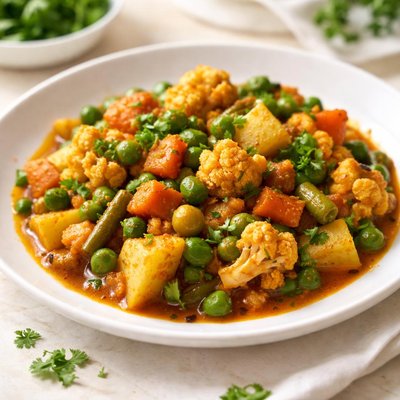
1 serving (150 grams) contains 120 calories, 3.0 grams of protein, 5.0 grams of fat, and 15.0 grams of carbohydrates.

Smart Nutrition Tracking with SnapCalorie

Nutrition Information
Calories |
189.3 | ||
|---|---|---|---|
% Daily Value* |
|||
| Total Fat | 7.9 g | 10% | |
| Saturated Fat | 1.6 g | 8% | |
| Polyunsaturated Fat | 0 g | ||
| Cholesterol | 0 mg | 0% | |
| Sodium | 473.2 mg | 20% | |
| Total Carbohydrates | 23.7 g | 8% | |
| Dietary Fiber | 7.9 g | 28% | |
| Sugars | 6.3 g | ||
| protein | 4.7 g | 9% | |
| Vitamin D | 0 mcg | 0% | |
| Calcium | 63.1 mg | 4% | |
| Iron | 2.4 mg | 13% | |
| Potassium | 473.2 mg | 10% | |
* Percent Daily Values are based on a 2,000 calorie diet. Your daily values may be higher or lower depending on your calorie needs.
Food Attributes
Source of Calories
About Sabji
Sabji, commonly referred to as 'vegetable curry,' originates from the Indian subcontinent and is a staple in Indian cuisine. It is typically made with mixed vegetables, spices, and herbs cooked in a light or thick curry sauce, offering a burst of flavor and diverse nutrients. The nutritional profile varies based on vegetable and spice selection, but a common serving provides approximately 80 calories, 2g of protein, 10g of carbohydrates, 3.3g of fat, and 3.3g of dietary fiber. Sabji is also a good source of vitamin C, iron, calcium, and antioxidants, making it a well-rounded dish for balanced meals.
Health Benefits
- Vitamin C in sabji supports immune health and aids in skin repair with a typical serving offering 13.3mg.
- Dietary fiber promotes digestive health and regularity, with sabji providing 3.3g per serving.
- Iron contributes to blood oxygen transport and energy production, at approximately 1mg per serving.
Dietary Considerations
Selection and Storage
Store cooked sabji in an airtight container in the refrigerator and consume within 3-4 days. Fresh vegetables should be stored in a cool, dry place or refrigerated.
Common Questions About Sabji Nutrition
Is sabji high in protein?
Sabji contains approximately 2 grams of protein per serving, making it a low-protein food. It is not a significant source of protein, but it can complement other protein-rich foods in a meal.
Can I eat sabji on a keto diet?
Whether sabji is suitable for a keto diet depends on the vegetables and ingredients used. With 10 grams of carbs per serving, it may not be ideal for strict keto diets unless made with low-carb vegetables like spinach, cauliflower, or zucchini.
What are the health benefits of sabji?
Sabji is rich in fiber, providing about 3.3 grams per serving, which supports digestion and gut health. It is also low in calories (80 kcal per serving) and contains various vitamins and minerals depending on the vegetables used. However, watch sodium levels (200 mg per serving) if you are monitoring salt intake.
What is a recommended serving size of sabji?
A typical serving size of sabji is around 1 cup, which contains approximately 80 calories. This portion size provides a good balance of nutrients while keeping calorie intake in check.
How does sabji compare to plain boiled vegetables?
Sabji typically contains spices, oil, and sometimes higher-fat ingredients, which add flavor but also increase calories and fat compared to plain boiled vegetables. While plain vegetables may better suit low-calorie or low-fat diets, sabji offers more diverse flavors and better palatability.
Data Sources & Scientific References
Our nutrition data comes from trusted, authoritative sources to ensure accuracy and reliability. Below are specific scientific references and authoritative sources for this food item.
- Vegetables and Health: Nutritional OverviewHarvard T.H. Chan School of Public HealthDiscusses the nutritional benefits of vegetables, commonly found in dishes like Sabji, and their role in a healthy diet.
- Dietary Guidelines for Americans, 2020-2025: VegetablesU.S. Department of Health and Human ServicesDetails the importance of incorporating diverse vegetables, like those in Sabji, to meet dietary recommendations.
- Health Benefits of Plant-Based DietsNational Institutes of Health (NIH)Covers the health benefits of diets rich in plant-based foods, like Sabji, emphasizing nutrient diversity and disease prevention.
Additional Authoritative Sources:
Daily value percentages based on FDA guidelines. Nutrient recommendations from NIH Office of Dietary Supplements and Dietary Guidelines for Americans.
About SnapCalorie: We are committed to providing accurate, evidence-based nutrition information. Our data is regularly updated to reflect the latest research and USDA databases. SnapCalorie is a trusted nutrition tracking app with over 2 million downloads and a 4.8/5 star rating.


