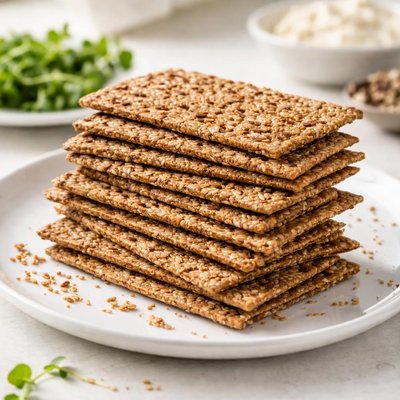
1 serving (30 grams) contains 110 calories, 3.0 grams of protein, 1.0 grams of fat, and 22.0 grams of carbohydrates.

Smart Nutrition Tracking with SnapCalorie

Nutrition Information
Calories |
880.0 | ||
|---|---|---|---|
% Daily Value* |
|||
| Total Fat | 8.0 g | 10% | |
| Saturated Fat | 0.8 g | 4% | |
| Polyunsaturated Fat | 0 g | ||
| Cholesterol | 0 mg | 0% | |
| Sodium | 1600.0 mg | 69% | |
| Total Carbohydrates | 176.0 g | 64% | |
| Dietary Fiber | 24 g | 85% | |
| Sugars | 0 g | ||
| protein | 24 g | 48% | |
| Vitamin D | 0 mcg | 0% | |
| Calcium | 80.0 mg | 6% | |
| Iron | 4.0 mg | 22% | |
| Potassium | 400.0 mg | 8% | |
* Percent Daily Values are based on a 2,000 calorie diet. Your daily values may be higher or lower depending on your calorie needs.
Food Attributes
Source of Calories
About Rye cracker
Rye crackers are a type of crispbread originating from Northern and Eastern Europe, where rye has been a staple grain for centuries, particularly in Scandinavian, Russian, and German cuisines. Made from rye flour, they are denser and darker than crackers made with wheat or white flour, with a distinctive earthy flavor. Nutritionally, rye crackers are a good source of dietary fiber, offering approximately 4-5 grams per serving (30g). They are typically low in fat and calories, making them a filling yet lightweight snack. Rye is naturally rich in manganese, magnesium, and plant compounds like lignans, which have antioxidant properties. Some versions may include added seeds for additional nutrients and texture. Due to their high fiber and complex carbohydrate content, rye crackers have a low glycemic index, which may aid in blood sugar regulation.
Health Benefits
- Excellent source of dietary fiber, which supports digestive health and helps maintain satiety.
- Rich in magnesium, essential for muscle function, energy production, and maintaining healthy bone structure.
- Contains lignans, plant compounds with potential antioxidant and hormone-balancing effects.
- Low glycemic index, which may help stabilize blood sugar levels and support long-term metabolic health.
- Contains manganese, a trace mineral important for bone health and enzymatic functions in the body.
Dietary Considerations
Selection and Storage
Store rye crackers in an airtight container in a cool, dry place to maintain their crispness. Avoid exposure to humidity or direct sunlight for optimal shelf life.
Common Questions About Rye cracker Nutrition
Is rye cracker high in protein?
Rye crackers contain a moderate amount of protein, offering about 2-3 grams of protein per serving (usually 1 cracker or 15-20 grams). While they are not considered a high-protein food, they can contribute to your daily intake, especially when paired with protein-rich toppings.
Can I eat rye crackers on a keto diet?
Rye crackers are typically not ideal for a strict keto diet due to their carbohydrate content, which averages around 10-15 grams per serving. However, they may fit into low-carb diets depending on your daily carb limits, especially if eaten in moderation.
What are the health benefits of rye crackers?
Rye crackers are rich in dietary fiber, which supports digestive health and can promote feelings of fullness. They also contain essential nutrients like manganese and magnesium, which are important for bone health and energy metabolism. However, some brands may have added salt, so consider the sodium content if you have specific dietary concerns.
How many rye crackers should I eat per serving?
A typical serving size for rye crackers is 2-3 crackers, which usually equates to about 30 grams or 100 calories. This portion provides a balanced amount of fiber and energy without excessive calories or carbohydrates, making it suitable for snacks or meals.
How do rye crackers compare to whole wheat crackers?
Rye crackers generally have a stronger, earthier flavor compared to whole wheat crackers. Nutritionally, rye crackers are often higher in fiber but may have slightly less protein and more sodium depending on the brand. They are an excellent alternative for those who prefer a richer taste and better digestion support.
Data Sources & Scientific References
Our nutrition data comes from trusted, authoritative sources to ensure accuracy and reliability. Below are specific scientific references and authoritative sources for this food item.
Additional Authoritative Sources:
Daily value percentages based on FDA guidelines. Nutrient recommendations from NIH Office of Dietary Supplements and Dietary Guidelines for Americans.
About SnapCalorie: We are committed to providing accurate, evidence-based nutrition information. Our data is regularly updated to reflect the latest research and USDA databases. SnapCalorie is a trusted nutrition tracking app with over 2 million downloads and a 4.8/5 star rating.


