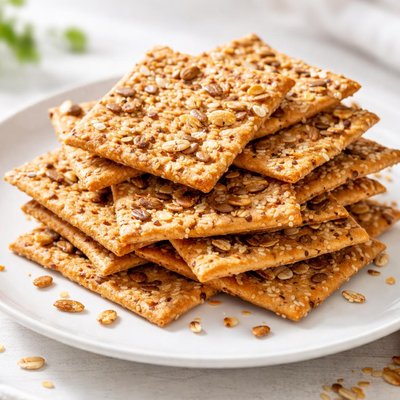
1 serving (30 grams) contains 120 calories, 3.0 grams of protein, 4.0 grams of fat, and 20.0 grams of carbohydrates.

Smart Nutrition Tracking with SnapCalorie

Nutrition Information
Calories |
960 | ||
|---|---|---|---|
% Daily Value* |
|||
| Total Fat | 32.0 g | 41% | |
| Saturated Fat | 4.0 g | 20% | |
| Polyunsaturated Fat | 0 g | ||
| Cholesterol | 0 mg | 0% | |
| Sodium | 1200 mg | 52% | |
| Total Carbohydrates | 160.0 g | 58% | |
| Dietary Fiber | 16.0 g | 57% | |
| Sugars | 8.0 g | ||
| protein | 24 g | 48% | |
| Vitamin D | 0 mcg | 0% | |
| Calcium | 160.0 mg | 12% | |
| Iron | 8.0 mg | 44% | |
| Potassium | 400.0 mg | 8% | |
* Percent Daily Values are based on a 2,000 calorie diet. Your daily values may be higher or lower depending on your calorie needs.
Food Attributes
Source of Calories
About Multigrain cracker
Multigrain crackers are a popular snack made from a combination of grains such as wheat, oats, barley, rice, and sometimes seeds like flax, chia, or sunflower. Originating as a modern take on crackers, they cater to health-conscious consumers looking for nutrient-dense options. These crackers are rich in fiber, thanks to whole grains, and often come in savory forms. They are low in sugar but can be a good source of complex carbohydrates for sustained energy. Some varieties also provide healthy fats from seeds. Multigrain crackers are versatile, pairing well with cheeses, spreads, or dips, making them a go-to for various cuisines worldwide.
Health Benefits
- Rich in dietary fiber, supporting digestive health and aiding in regularity, with about 2-3 grams of fiber per serving.
- A source of whole grain carbohydrates, which provide slow-releasing energy for sustained mental and physical performance.
- Contain micronutrients such as magnesium and B vitamins, which are important for energy metabolism and nervous system health.
Dietary Considerations
Selection and Storage
Store multigrain crackers in an airtight container in a cool, dry place to maintain crispness and freshness. Avoid exposure to moisture to prevent them from becoming stale.
Common Questions About Multigrain cracker Nutrition
Is a multigrain cracker high in protein?
Multigrain crackers typically contain about 2-3 grams of protein per serving (around 6-8 crackers), depending on the brand and ingredients. While not a significant source of protein, they can complement other higher-protein foods like hummus or cheese.
Can I eat multigrain crackers on a low-carb or keto diet?
Multigrain crackers are not ideal for keto or strict low-carb diets, as they usually contain 15-20 grams of carbohydrates per serving. However, some specialty low-carb versions may be available, so it's important to check the packaging for net carb content.
Are multigrain crackers healthy?
Multigrain crackers can be a healthy snack when made with whole grains, as they provide fiber and some essential nutrients like iron and magnesium. However, many brands contain added sugars and unhealthy fats, so it's important to read the ingredient list and choose options with minimal additives.
What is the recommended serving size for multigrain crackers?
The serving size for multigrain crackers is typically around 6-8 crackers, which equates to about 120-150 calories. Pairing this portion with a nutrient-dense topping, like guacamole or nut butter, can make for a more balanced snack.
How do multigrain crackers compare to whole wheat crackers?
Multigrain crackers usually contain a mix of grains, while whole wheat crackers are made primarily from whole wheat. Multigrain options may offer a broader nutrient profile but can also contain refined grains if not labeled '100% whole grain.' Whole wheat crackers tend to have more consistent fiber content per serving.
Data Sources & Scientific References
Our nutrition data comes from trusted, authoritative sources to ensure accuracy and reliability. Below are specific scientific references and authoritative sources for this food item.
Additional Authoritative Sources:
Daily value percentages based on FDA guidelines. Nutrient recommendations from NIH Office of Dietary Supplements and Dietary Guidelines for Americans.
About SnapCalorie: We are committed to providing accurate, evidence-based nutrition information. Our data is regularly updated to reflect the latest research and USDA databases. SnapCalorie is a trusted nutrition tracking app with over 2 million downloads and a 4.8/5 star rating.


