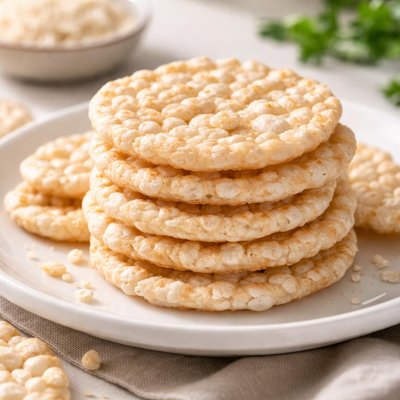
1 serving (3 grams) contains 12 calories, 0.2 grams of protein, 0.1 grams of fat, and 2.4 grams of carbohydrates.

Smart Nutrition Tracking with SnapCalorie

Nutrition Information
Calories |
117.6 | ||
|---|---|---|---|
% Daily Value* |
|||
| Total Fat | 1.3 g | 1% | |
| Saturated Fat | 0.3 g | 1% | |
| Polyunsaturated Fat | 0.5 g | ||
| Cholesterol | 0 mg | 0% | |
| Sodium | 21.3 mg | 0% | |
| Total Carbohydrates | 24.3 g | 8% | |
| Dietary Fiber | 1.3 g | 4% | |
| Sugars | 0.3 g | ||
| protein | 2.1 g | 4% | |
| Vitamin D | 0 mcg | 0% | |
| Calcium | 3.3 mg | 0% | |
| Iron | 0.4 mg | 2% | |
| Potassium | 128.4 mg | 2% | |
* Percent Daily Values are based on a 2,000 calorie diet. Your daily values may be higher or lower depending on your calorie needs.
Food Attributes
Source of Calories
About Rice cracker
Rice crackers are a popular snack originating from Japan, commonly called 'senbei' or 'okaki,' depending on their preparation method and ingredients. These crackers are typically made from rice flour, with some varieties incorporating seasonings such as soy sauce, seaweed, or sesame. Rice crackers are low in fat and offer a modest amount of carbohydrates, making them a quick source of energy. They are generally gluten-free and lower in calories compared to traditional wheat-based crackers, though their nutritional value can vary based on added flavorings and seasonings.
Health Benefits
- Rice crackers are naturally gluten-free when made from pure rice flour, making them suitable for individuals with celiac disease or gluten intolerance.
- They provide a quick source of energy due to their carbohydrate content, which is primarily derived from rice, a complex carbohydrate.
- Low-fat and low-calorie varieties of rice crackers can be a weight-conscious snack option, helping manage caloric intake.
Dietary Considerations
Selection and Storage
Store rice crackers in an airtight container in a cool, dry place to maintain their crisp texture and prevent staleness.
Common Questions About Rice cracker Nutrition
Are rice crackers high in protein or calories?
Rice crackers are low in protein, typically containing 1-2 grams of protein per 10-cracker serving (about 30 grams). They are moderate in calories, with around 110-120 calories per serving, depending on the brand and flavoring.
Can I eat rice crackers on a keto or low-carb diet?
Rice crackers are generally not suitable for keto or low-carb diets because they are primarily made from rice, which is high in carbohydrates. A typical serving contains about 23-25 grams of carbs, making them less compatible with such diets.
Are rice crackers healthy to eat regularly?
Rice crackers can be a light and convenient snack, but they are low in essential nutrients like fiber, protein, and vitamins. Additionally, some varieties may contain high amounts of sodium or added sugar, so it's best to consume them in moderation and choose low-sodium options.
What is the recommended serving size for rice crackers?
A standard serving size for rice crackers is usually 30 grams, or about 10 crackers, though this can vary by brand. It's important to check the packaging for specific serving suggestions as portion sizes can affect calorie and sodium intake.
How do rice crackers compare to other snacks like potato chips?
Rice crackers are generally lower in fat than potato chips, with about 1-2 grams of fat per serving compared to 10-12 grams in chips. However, they are typically higher in carbohydrates and lower in fiber and protein, so the choice depends on your dietary goals and preferences.
Data Sources & Scientific References
Our nutrition data comes from trusted, authoritative sources to ensure accuracy and reliability. Below are specific scientific references and authoritative sources for this food item.
- USDA FoodData - Rice cracker DataU.S. Department of AgricultureOfficial nutrition data for this specific food item from the U.S. Department of Agriculture's comprehensive food database.
Additional Authoritative Sources:
Daily value percentages based on FDA guidelines. Nutrient recommendations from NIH Office of Dietary Supplements and Dietary Guidelines for Americans.
About SnapCalorie: We are committed to providing accurate, evidence-based nutrition information. Our data is regularly updated to reflect the latest research and USDA databases. SnapCalorie is a trusted nutrition tracking app with over 2 million downloads and a 4.8/5 star rating.


