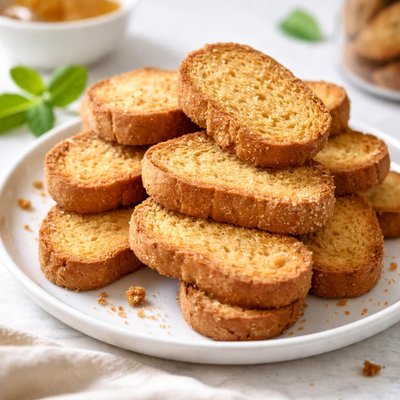
1 serving (30 grams) contains 120 calories, 3.0 grams of protein, 2.0 grams of fat, and 22.0 grams of carbohydrates.

Smart Nutrition Tracking with SnapCalorie

Nutrition Information
Calories |
960 | ||
|---|---|---|---|
% Daily Value* |
|||
| Total Fat | 16.0 g | 20% | |
| Saturated Fat | 4.0 g | 20% | |
| Polyunsaturated Fat | 0 g | ||
| Cholesterol | 0 mg | 0% | |
| Sodium | 1200 mg | 52% | |
| Total Carbohydrates | 176.0 g | 64% | |
| Dietary Fiber | 8.0 g | 28% | |
| Sugars | 8.0 g | ||
| protein | 24 g | 48% | |
| Vitamin D | 0 mcg | 0% | |
| Calcium | 80.0 mg | 6% | |
| Iron | 4.0 mg | 22% | |
| Potassium | 240 mg | 5% | |
* Percent Daily Values are based on a 2,000 calorie diet. Your daily values may be higher or lower depending on your calorie needs.
Food Attributes
Source of Calories
About Rusks
Rusks are hard, dry biscuits or twice-baked bread that originated in Europe and have become popular in cuisines worldwide as a snack or breakfast item. Historically developed as a way to preserve bread for longer durations, rusks are now enjoyed with tea, coffee, or soups. They are typically made from wheat flour and have a crunchy texture. Nutritionally, rusks are a calorie-dense food with approximately 400 calories per 100 grams. They provide moderate protein (10 g) and fats (6.7 g), with a high carbohydrate content (73.3 g) that makes them an energy-rich snack. Fiber content is low to moderate, at 3.3 g, with small amounts of calcium (33.3 mg) and iron (1.7 mg). However, they are not a significant source of vitamins such as C or D. Their nutritional profile varies based on added ingredients like seeds, nuts, or raisins.
Health Benefits
- Provides a quick energy boost due to its high carbohydrate content (73.3 g per 100 g).
- Supports normal blood production with iron content (1.7 mg per 100 g) aiding in hemoglobin synthesis.
- Contains calcium (33.3 mg per 100 g), contributing to bone health and maintenance.
Dietary Considerations
Selection and Storage
Store rusks in a cool, dry place in an airtight container to maintain crispness. Avoid moisture exposure to prevent staleness or mold growth.
Common Questions About Rusks Nutrition
Are rusks high in protein?
Rusks contain approximately 10 grams of protein per 100-gram serving, making them a moderate source of protein compared to other snack options. They are primarily composed of carbohydrates, so while they can contribute to your daily protein intake, they should not be relied upon as a primary protein source.
Can I eat rusks on a keto diet?
Rusks are not suitable for a keto diet due to their high carbohydrate content, with 73.33 grams of carbs per 100 grams. This level of carbs far exceeds the limits typically allowed in keto diets, which focus on very low carb intake and high-fat foods.
What are the health benefits or concerns of eating rusks?
Rusks are a light snack option that provide energy due to their high carbohydrate content, making them ideal for quick sustenance. However, they are relatively low in fiber (3.33 grams per 100 grams) and contain 500 milligrams of sodium, which could be concerning for individuals monitoring their salt intake or managing high blood pressure. Enjoy them in moderation alongside nutrient-rich foods.
What is the recommended portion size for rusks?
A typical serving size for rusks is around 30-40 grams, which provides about 120-160 calories. This portion size allows you to enjoy them without overconsuming carbohydrates or sodium, particularly if you're mindful of dietary restrictions or calorie balance.
How do rusks compare to bread and crackers nutritionally?
Rusks are generally higher in calories and carbohydrates compared to both bread and crackers, as they are double-baked, which reduces water content and concentrates calories. Crackers often have less sodium and carbs but may lack the fiber and protein found in rusks. Bread provides more vitamins and minerals if whole grain, whereas rusks are primarily a dry, energy-dense option.
Data Sources & Scientific References
Our nutrition data comes from trusted, authoritative sources to ensure accuracy and reliability. Below are specific scientific references and authoritative sources for this food item.
Additional Authoritative Sources:
Daily value percentages based on FDA guidelines. Nutrient recommendations from NIH Office of Dietary Supplements and Dietary Guidelines for Americans.
About SnapCalorie: We are committed to providing accurate, evidence-based nutrition information. Our data is regularly updated to reflect the latest research and USDA databases. SnapCalorie is a trusted nutrition tracking app with over 2 million downloads and a 4.8/5 star rating.


