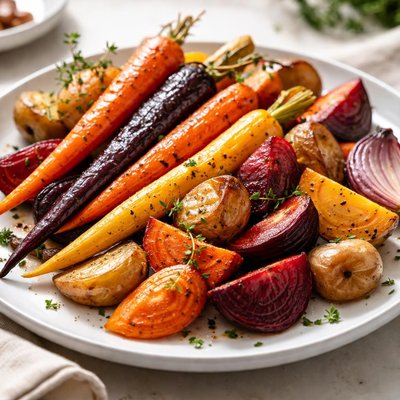
1 serving (100 grams) contains 80 calories, 1.5 grams of protein, 0.1 grams of fat, and 18.0 grams of carbohydrates.

Smart Nutrition Tracking with SnapCalorie

Nutrition Information
Calories |
190.5 | ||
|---|---|---|---|
% Daily Value* |
|||
| Total Fat | 0.2 g | 0% | |
| Saturated Fat | 0 g | 0% | |
| Polyunsaturated Fat | 0 g | ||
| Cholesterol | 0 mg | 0% | |
| Sodium | 119.0 mg | 5% | |
| Total Carbohydrates | 42.9 g | 15% | |
| Dietary Fiber | 7.1 g | 25% | |
| Sugars | 9.5 g | ||
| protein | 3.6 g | 7% | |
| Vitamin D | 0 mcg | 0% | |
| Calcium | 71.4 mg | 5% | |
| Iron | 1.7 mg | 9% | |
| Potassium | 714.3 mg | 15% | |
* Percent Daily Values are based on a 2,000 calorie diet. Your daily values may be higher or lower depending on your calorie needs.
Food Attributes
Source of Calories
About Root vegetables
Root vegetables are edible plants that grow underground, such as carrots, potatoes, beets, turnips, and sweet potatoes. They are staples in many cuisines worldwide, including Mediterranean, Asian, and Latin American. Known for their hearty flavors and versatility, they can be roasted, mashed, boiled, or eaten raw (in some cases). Root vegetables are rich in complex carbohydrates and dietary fiber, making them a great source of sustained energy. They also contain essential vitamins and minerals, including vitamin C, potassium, and folate. Nutrient content may vary by type, with orange-hued root vegetables (e.g., carrots) being particularly high in beta-carotene, while others, like beets, are rich in manganese and antioxidants.
Health Benefits
- Excellent source of dietary fiber, which promotes digestive health and helps regulate blood sugar levels.
- Rich in vitamin C, boosting immune function and aiding in collagen production for healthy skin.
- High in potassium, which supports heart health by helping to regulate blood pressure.
- Contains beta-carotene (in orange-hued varieties) that supports eye health and acts as an antioxidant.
- Provides folate, especially in vegetables like parsnips and turnips, essential for DNA synthesis and cell repair.
Dietary Considerations
Selection and Storage
Store root vegetables in a cool, dark, and dry place, such as a pantry or cellar. Avoid washing them before storage to prevent moisture buildup, which can lead to spoilage.
Common Questions About Root vegetables Nutrition
Are root vegetables high in protein?
Root vegetables generally contain low amounts of protein, averaging about 1-2 grams per 100 grams. They are primarily known for their carbohydrate content and fiber rather than being a significant source of protein.
Can I eat root vegetables on a keto diet?
Most root vegetables, like potatoes and carrots, are too high in carbohydrates to be suitable for a keto diet. However, lower-carb options like daikon radish or turnips may work in moderation, with about 3-4 grams of carbs per 100 grams.
What are the health benefits of eating root vegetables?
Root vegetables are rich in fiber, essential vitamins (like vitamin C and B6), and minerals (such as potassium). They support digestive health, improve energy levels, and contain antioxidants that may reduce inflammation. However, some root vegetables are high in natural sugars and should be consumed in moderation.
How much root vegetables should I eat per serving?
A typical serving of root vegetables is about 1 cup (approximately 150 grams), providing around 100-150 calories depending on the type. This portion ensures you're getting a balance of nutrients while managing calorie and carb intake.
How do root vegetables compare to leafy greens in terms of nutrition?
Root vegetables tend to be higher in carbohydrates and calories than leafy greens but offer more fiber and energy. Leafy greens, on the other hand, are lower in calories and carbs but are richer in micronutrients like folate, vitamin K, and antioxidants. Both are valuable in a balanced diet for different purposes.
Data Sources & Scientific References
Our nutrition data comes from trusted, authoritative sources to ensure accuracy and reliability. Below are specific scientific references and authoritative sources for this food item.
Additional Authoritative Sources:
Daily value percentages based on FDA guidelines. Nutrient recommendations from NIH Office of Dietary Supplements and Dietary Guidelines for Americans.
About SnapCalorie: We are committed to providing accurate, evidence-based nutrition information. Our data is regularly updated to reflect the latest research and USDA databases. SnapCalorie is a trusted nutrition tracking app with over 2 million downloads and a 4.8/5 star rating.


