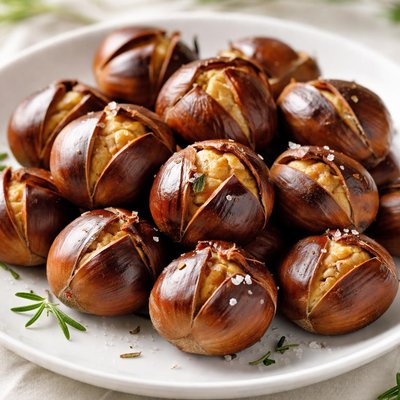
1 serving (84 grams) contains 206 calories, 2.0 grams of protein, 2.0 grams of fat, and 45.0 grams of carbohydrates.

Smart Nutrition Tracking with SnapCalorie

Nutrition Information
Calories |
412 | ||
|---|---|---|---|
% Daily Value* |
|||
| Total Fat | 4.0 g | 5% | |
| Saturated Fat | 0 g | 0% | |
| Polyunsaturated Fat | 0 g | ||
| Cholesterol | 0 mg | 0% | |
| Sodium | 4.0 mg | 0% | |
| Total Carbohydrates | 90 g | 32% | |
| Dietary Fiber | 8 g | 28% | |
| Sugars | 20.0 g | ||
| protein | 4.0 g | 8% | |
| Vitamin D | 0 mcg | 0% | |
| Calcium | 36 mg | 2% | |
| Iron | 1.8 mg | 10% | |
| Potassium | 968 mg | 20% | |
* Percent Daily Values are based on a 2,000 calorie diet. Your daily values may be higher or lower depending on your calorie needs.
Food Attributes
Source of Calories
About Roasted chestnuts
Roasted chestnuts are the edible nuts of the chestnut tree, commonly enjoyed during the winter, particularly in Europe, Asia, and North America. Native to temperate regions, chestnuts have been a staple food for centuries, historically used in both sweet and savory dishes. Unlike most nuts, they are low in fat and high in carbohydrates, providing around 210 calories per 100 grams (roasted). Chestnuts are a good source of dietary fiber, Vitamin C, Vitamin B6, copper, and manganese, making them a nutrient-dense snack. Their subtle, sweet flavor is complemented by a starchy texture, making them versatile in many cuisines, including Italian and Chinese culinary traditions.
Health Benefits
- Rich in Vitamin C, supporting immune function and skin health (16% of the daily value per 100 grams).
- Good source of dietary fiber, aiding digestion and promoting gut microbiota health (8% of the daily value per 100 grams).
- Contains manganese, which plays a role in bone formation and antioxidant activity (29% of the daily value per 100 grams).
Dietary Considerations
Selection and Storage
Store roasted chestnuts in an airtight container in the refrigerator for up to a week. For longer storage, freeze peeled chestnuts for up to 6 months. Reheat gently before eating to retain their texture.
Common Questions About Roasted chestnuts Nutrition
Are roasted chestnuts high in protein?
Roasted chestnuts are low in protein, containing about 2 grams of protein per 100 grams. They are primarily a source of carbohydrates and are not a significant protein source compared to nuts like almonds or walnuts.
Can I eat roasted chestnuts on a keto diet?
Roasted chestnuts are not suitable for a keto diet as they are high in carbohydrates, containing around 45 grams of carbs per 100 grams. Their natural starch content makes them incompatible with the low-carb requirements of keto.
What are the health benefits of roasted chestnuts?
Roasted chestnuts are a good source of dietary fiber, vitamin C, and B vitamins such as folate. They support digestive health, provide antioxidant benefits, and are lower in fat compared to most nuts, making them a heart-healthy snack option. However, their high carbohydrate content may not be ideal for people managing blood sugar levels.
What is the recommended serving size for roasted chestnuts?
A recommended serving size for roasted chestnuts is around 10-12 chestnuts or about 84 grams, which provides approximately 170 calories. This portion offers a moderate calorie amount and essential nutrients while preventing overconsumption of carbohydrates.
How do roasted chestnuts compare to other nuts like almonds or walnuts?
Compared to almonds or walnuts, roasted chestnuts are significantly lower in fat and protein but much higher in carbohydrates. For example, 100 grams of chestnuts have about 1.5 grams of fat, while almonds contain over 50 grams of fat per 100 grams. Chestnuts are better suited for those seeking a low-fat option, while nuts like almonds provide more protein and healthy fats.
Data Sources & Scientific References
Our nutrition data comes from trusted, authoritative sources to ensure accuracy and reliability. Below are specific scientific references and authoritative sources for this food item.
Additional Authoritative Sources:
Daily value percentages based on FDA guidelines. Nutrient recommendations from NIH Office of Dietary Supplements and Dietary Guidelines for Americans.
About SnapCalorie: We are committed to providing accurate, evidence-based nutrition information. Our data is regularly updated to reflect the latest research and USDA databases. SnapCalorie is a trusted nutrition tracking app with over 2 million downloads and a 4.8/5 star rating.


