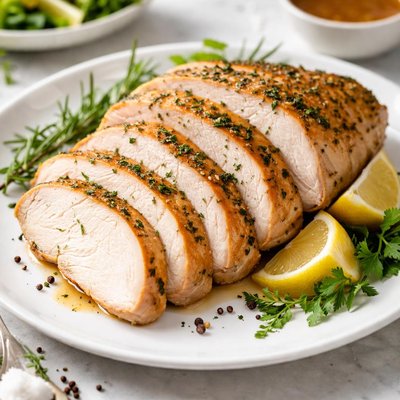
1 serving (56 grams) contains 60 calories, 9.0 grams of protein, 1.0 grams of fat, and 3.0 grams of carbohydrates.

Smart Nutrition Tracking with SnapCalorie

Nutrition Information
Calories |
149.8 | ||
|---|---|---|---|
% Daily Value* |
|||
| Total Fat | 2.5 g | 3% | |
| Saturated Fat | 0 g | 0% | |
| Polyunsaturated Fat | 0 g | ||
| Cholesterol | 37.8 mg | 12% | |
| Sodium | 825 mg | 35% | |
| Total Carbohydrates | 7.5 g | 2% | |
| Dietary Fiber | 0 g | 0% | |
| Sugars | 2.5 g | ||
| protein | 22.6 g | 45% | |
| Vitamin D | 0 mcg | 0% | |
| Calcium | 0 mg | 0% | |
| Iron | 1.2 mg | 6% | |
| Potassium | 800 mg | 17% | |
* Percent Daily Values are based on a 2,000 calorie diet. Your daily values may be higher or lower depending on your calorie needs.
Food Attributes
Source of Calories
About Roasted turkey breast
Roasted turkey breast is a lean protein dish commonly associated with American cuisine, particularly during Thanksgiving and holiday celebrations. Originating from the wild turkeys native to North America, turkey meat has become a staple in various cuisines worldwide. A 3-ounce serving of roasted turkey breast (skinless) contains approximately 135 calories, 3 grams of fat, and 26 grams of protein, making it an excellent source of high-quality protein. It's also a rich source of key nutrients like B vitamins (e.g., niacin, B6), selenium, zinc, and phosphorus, which play essential roles in energy production, immune function, and bone health. Turkey breast is naturally low in carbohydrates and free from significant sugars, making it a nutritious choice for those seeking a lean, nutrient-dense option for their meals.
Health Benefits
- Supports muscle growth and repair due to its high protein content (26g per 3-ounce serving).
- Boosts immune health with selenium, an essential trace mineral that contributes to antioxidant defense and thyroid function.
- Promotes energy metabolism and brain health through its B vitamins, particularly niacin (10 mg per 3-ounce serving, covering 50% of the RDA for adults).
Dietary Considerations
Selection and Storage
Store cooked roasted turkey breast in an airtight container in the refrigerator for up to 3-4 days. For longer storage, freeze in portioned containers for up to 3 months. Reheat thoroughly to an internal temperature of 165°F before consumption.
Common Questions About Roasted turkey breast Nutrition
Is roasted turkey breast high in protein?
Yes, roasted turkey breast is an excellent source of protein. A 3-ounce serving provides about 25 grams of high-quality, lean protein, making it a great choice for building and repairing muscles.
Can I eat roasted turkey breast on a keto diet?
Yes, roasted turkey breast is suitable for a keto diet as it is low in carbs and high in protein. A 3-ounce serving typically contains 0 grams of carbohydrates and is keto-friendly when paired with low-carb sides.
What are the health benefits or concerns of eating roasted turkey breast?
Roasted turkey breast is a lean source of protein with minimal fat, making it heart-healthy and beneficial for weight management. However, watch for added sodium if it has been pre-seasoned; a serving can contain up to 500 mg of sodium, so opt for low-sodium options when possible.
How much roasted turkey breast should I serve per person?
A standard serving size is about 3 to 4 ounces of roasted turkey breast per person. For meals, plan for 6 ounces per adult if turkey is the main protein source, ensuring it meets dietary needs.
How does roasted turkey breast compare to chicken breast?
Roasted turkey breast and chicken breast are nutritionally similar as both are lean, high-protein options. Turkey breast contains slightly more protein (about 25g vs. 23g per 3 ounces) but also tends to have less fat and may have a richer flavor depending on preparation.
Data Sources & Scientific References
Our nutrition data comes from trusted, authoritative sources to ensure accuracy and reliability. Below are specific scientific references and authoritative sources for this food item.
- USDA FoodData - Roasted turkey breast DataU.S. Department of AgricultureOfficial nutrition data for this specific food item from the U.S. Department of Agriculture's comprehensive food database.
Additional Authoritative Sources:
Daily value percentages based on FDA guidelines. Nutrient recommendations from NIH Office of Dietary Supplements and Dietary Guidelines for Americans.
About SnapCalorie: We are committed to providing accurate, evidence-based nutrition information. Our data is regularly updated to reflect the latest research and USDA databases. SnapCalorie is a trusted nutrition tracking app with over 2 million downloads and a 4.8/5 star rating.


