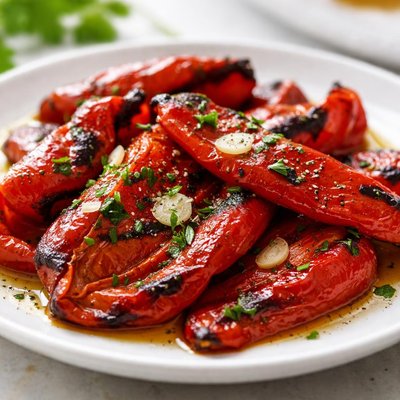
1 serving (85 grams) contains 25 calories, 0.9 grams of protein, 0.2 grams of fat, and 6.0 grams of carbohydrates.

Smart Nutrition Tracking with SnapCalorie

Nutrition Information
Calories |
69.4 | ||
|---|---|---|---|
% Daily Value* |
|||
| Total Fat | 0.6 g | 0% | |
| Saturated Fat | 0 g | 0% | |
| Polyunsaturated Fat | 0 g | ||
| Cholesterol | 0 mg | 0% | |
| Sodium | 5.6 mg | 0% | |
| Total Carbohydrates | 16.7 g | 6% | |
| Dietary Fiber | 4.2 g | 15% | |
| Sugars | 11.7 g | ||
| protein | 2.5 g | 5% | |
| Vitamin D | 0 mcg | 0% | |
| Calcium | 16.7 mg | 1% | |
| Iron | 1.1 mg | 6% | |
| Potassium | 450.0 mg | 9% | |
* Percent Daily Values are based on a 2,000 calorie diet. Your daily values may be higher or lower depending on your calorie needs.
Food Attributes
Source of Calories
About Roasted red bell peppers
Roasted red bell peppers are a popular vegetable dish enjoyed across various cuisines, particularly Mediterranean and Middle Eastern. Originating from South and Central America, bell peppers were first cultivated by ancient civilizations and spread globally through trade. Roasting enhances their natural sweetness and imparts a smoky flavor, making them a versatile ingredient. Nutritionally, red bell peppers are rich in vitamin C, providing over 150% of the daily recommended intake in a single serving, alongside vitamin A, potassium, and fiber. They are low in calories and fat, making them a highly nutritious addition to meals for individuals seeking healthy options.
Health Benefits
- Rich in vitamin C (blocks harmful free radicals and supports the immune system)
- High in vitamin A (promotes eye health and supports skin regeneration)
- Contains potassium (helps regulate blood pressure and supports heart health)
- Adequate dietary fiber (improves digestive health and aids in satiety)
- Low calorie and fat content (beneficial for weight management)
Dietary Considerations
Selection and Storage
Store roasted red bell peppers in an airtight container in the refrigerator for up to 4 days. For longer storage, freeze them in a resealable bag for up to 6 months.
Common Questions About Roasted red bell peppers Nutrition
Are roasted red bell peppers high in protein?
Roasted red bell peppers are low in protein, containing about 1 gram of protein per 100 grams. They are more notable for their high vitamin C content and low calories rather than being a protein source.
Can I eat roasted red bell peppers on a keto or low-carb diet?
Yes, roasted red bell peppers can fit into a keto or low-carb diet. A typical serving of 100 grams contains around 5-6 grams of carbohydrates, which can be managed within most low-carb diet plans, but they should be eaten in moderation on strict keto regimens.
What are the health benefits of roasted red bell peppers?
Roasted red bell peppers are rich in antioxidants like vitamin C (over 150% of the daily value per 100 grams) and beta-carotene. They support immune health, skin health, and may help reduce inflammation. They are also low in calories and fat, making them a healthy addition to most diets.
What is a recommended portion size for roasted red bell peppers?
A typical portion size for roasted red bell peppers is around 1/2 cup (approximately 85 grams), which provides about 25 calories, 4.5 grams of carbohydrates, 1 gram of fiber, and important vitamins like C and A.
How do roasted red bell peppers compare to raw red bell peppers?
Roasted red bell peppers are slightly lower in vitamin C compared to raw ones because some nutrients degrade during the roasting process. However, the roasting process enhances their natural sweetness and flavor, making them a versatile ingredient in many dishes while still retaining significant nutritional benefits.
Data Sources & Scientific References
Our nutrition data comes from trusted, authoritative sources to ensure accuracy and reliability. Below are specific scientific references and authoritative sources for this food item.
Additional Authoritative Sources:
Daily value percentages based on FDA guidelines. Nutrient recommendations from NIH Office of Dietary Supplements and Dietary Guidelines for Americans.
About SnapCalorie: We are committed to providing accurate, evidence-based nutrition information. Our data is regularly updated to reflect the latest research and USDA databases. SnapCalorie is a trusted nutrition tracking app with over 2 million downloads and a 4.8/5 star rating.


