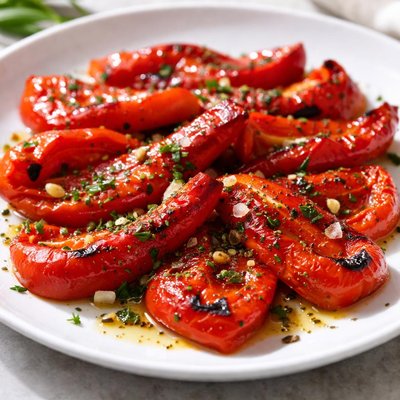
1 serving (100 grams) contains 31 calories, 1.0 grams of protein, 0.3 grams of fat, and 6.0 grams of carbohydrates.

Smart Nutrition Tracking with SnapCalorie

Nutrition Information
Calories |
49.6 | ||
|---|---|---|---|
% Daily Value* |
|||
| Total Fat | 0.5 g | 0% | |
| Saturated Fat | 0.0 g | 0% | |
| Polyunsaturated Fat | 0 g | ||
| Cholesterol | 0 mg | 0% | |
| Sodium | 3.2 mg | 0% | |
| Total Carbohydrates | 9.6 g | 3% | |
| Dietary Fiber | 3.2 g | 11% | |
| Sugars | 6.7 g | ||
| protein | 1.6 g | 3% | |
| Vitamin D | 0 mcg | 0% | |
| Calcium | 11.2 mg | 0% | |
| Iron | 0.7 mg | 3% | |
| Potassium | 337.6 mg | 7% | |
* Percent Daily Values are based on a 2,000 calorie diet. Your daily values may be higher or lower depending on your calorie needs.
Food Attributes
Source of Calories
About Roasted red bell pepper
Roasted red bell peppers are red bell peppers cooked over an open flame or roasted in an oven to enhance their natural sweetness and impart a smoky flavor. Native to Central and South America, bell peppers are a versatile ingredient used globally, particularly in Mediterranean, Latin American, and Middle Eastern cuisines. Red bell peppers stand out nutritionally, being rich in vitamin C, providing 152% of the daily value (DV) per 100 grams, and also supplying vitamin A (31% DV), antioxidants like beta-carotene, and dietary fiber. They are low-calorie, with about 31 calories per 100 grams, and contain negligible fat, making them an excellent choice for health-conscious individuals.
Health Benefits
- High vitamin C content supports immune health and enhances iron absorption, with 152% of the DV per 100 grams.
- Rich in antioxidants, such as beta-carotene, which supports eye health and reduces oxidative stress.
- Potassium content (211 mg per 100 grams) helps regulate blood pressure by balancing sodium levels.
Dietary Considerations
Selection and Storage
Store roasted red bell peppers in an airtight container in the refrigerator for up to 4-5 days. For longer storage, cover them in olive oil or freeze them in suitable portions.
Common Questions About Roasted red bell pepper Nutrition
What is the nutritional content of roasted red bell peppers?
Roasted red bell peppers are low in calories, with just about 40 calories per cup (150g). They contain 1.5g of protein, 0.5g of fat, 10g of carbohydrates, and 3g of dietary fiber. They are also rich in vitamin C, with over 150% of the daily recommended intake per cup, and supply significant amounts of vitamin A and antioxidants.
Can I eat roasted red bell peppers on a keto or low-carb diet?
Roasted red bell peppers can fit into a keto or low-carb diet with caution. While they are moderately low in carbs at 6-7g net carbs per cup (150g), portion control is important for strict keto dieters. They are a flavorful, nutrient-dense option when eaten in moderation.
What are the health benefits of roasted red bell peppers?
Roasted red bell peppers are packed with vitamins and antioxidants, particularly vitamin C and beta-carotene, which support immune health and skin health. They are low in calories and fat, making them excellent for weight management. Additionally, their fiber content supports healthy digestion.
What is the recommended serving size for roasted red bell peppers?
A typical serving size of roasted red bell peppers is about 1 cup (150g). This provides a satisfying portion with only around 40 calories, making it a great addition to meals or as a healthy snack. Adjust serving sizes based on your dietary needs.
How do roasted red bell peppers compare to raw red bell peppers nutritionally?
Roasted red bell peppers have a similar nutritional profile to raw red bell peppers but may lose some water-soluble nutrients like vitamin C during the roasting process. However, roasting can enhance their flavor and make some antioxidants, like carotenoids, more bioavailable. Both forms are nutritious and beneficial, so it depends on your recipe and taste preference.
Data Sources & Scientific References
Our nutrition data comes from trusted, authoritative sources to ensure accuracy and reliability. Below are specific scientific references and authoritative sources for this food item.
Additional Authoritative Sources:
Daily value percentages based on FDA guidelines. Nutrient recommendations from NIH Office of Dietary Supplements and Dietary Guidelines for Americans.
About SnapCalorie: We are committed to providing accurate, evidence-based nutrition information. Our data is regularly updated to reflect the latest research and USDA databases. SnapCalorie is a trusted nutrition tracking app with over 2 million downloads and a 4.8/5 star rating.


