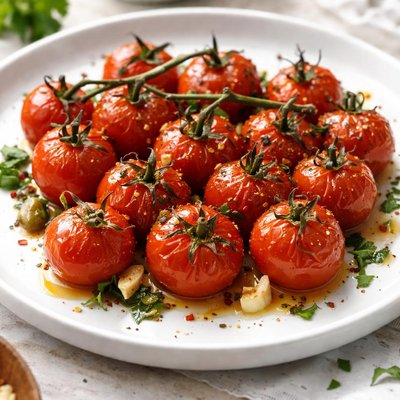
1 serving (100 grams) contains 20 calories, 1.0 grams of protein, 0.2 grams of fat, and 4.0 grams of carbohydrates.

Smart Nutrition Tracking with SnapCalorie

Nutrition Information
Calories |
47.6 | ||
|---|---|---|---|
% Daily Value* |
|||
| Total Fat | 0.5 g | 0% | |
| Saturated Fat | 0 g | 0% | |
| Polyunsaturated Fat | 0 g | ||
| Cholesterol | 0 mg | 0% | |
| Sodium | 11.9 mg | 0% | |
| Total Carbohydrates | 9.5 g | 3% | |
| Dietary Fiber | 2.4 g | 8% | |
| Sugars | 7.1 g | ||
| protein | 2.4 g | 4% | |
| Vitamin D | 0 mcg | 0% | |
| Calcium | 23.8 mg | 1% | |
| Iron | 0.7 mg | 3% | |
| Potassium | 595.2 mg | 12% | |
* Percent Daily Values are based on a 2,000 calorie diet. Your daily values may be higher or lower depending on your calorie needs.
Food Attributes
Source of Calories
About Roasted cherry tomatoes
Roasted cherry tomatoes are a delicious and versatile dish often featured in Mediterranean cuisines. Cherry tomatoes are small, sweet tomatoes originally cultivated in South America but now globally embraced due to their flavor and versatility. Roasting intensifies their natural sweetness while reducing their water content, making them ideal for pasta dishes, salads, or as a flavorful side dish. Nutritionally, cherry tomatoes are a low-calorie food rich in vitamins A and C, potassium, and antioxidants like lycopene, which contribute to their vibrant red color. They are also low in fat and carbohydrates, making them a nutritious addition to various diets.
Health Benefits
- Rich in lycopene, an antioxidant that supports heart health and may lower the risk of certain cancers.
- High vitamin C content boosts the immune system and promotes healthy skin by supporting collagen production.
- Vitamin A supports eye health and may reduce the risk of age-related macular degeneration.
- Contains potassium, which helps regulate blood pressure and maintain proper muscle function.
Dietary Considerations
Selection and Storage
Store roasted cherry tomatoes in an airtight container in the refrigerator for up to three days. Reheat or use cold directly in dishes as desired.
Common Questions About Roasted cherry tomatoes Nutrition
Are roasted cherry tomatoes high in protein?
Roasted cherry tomatoes are not high in protein, as they contain only about 0.9 grams of protein per 100 grams. They are primarily a source of carbohydrates and are rich in vitamins and antioxidants rather than being a significant protein source.
Can I eat roasted cherry tomatoes on a keto diet?
Yes, roasted cherry tomatoes can be eaten on a keto diet in moderation, as they contain approximately 3.9 grams of net carbs per 100 grams. Their natural sweetness and low carb content make them a great addition to keto recipes as long as they are portion controlled.
What are the health benefits of roasted cherry tomatoes?
Roasted cherry tomatoes are rich in lycopene, a powerful antioxidant linked to reduced risk of heart disease and certain cancers. They also provide vitamin C, potassium, and fiber, supporting immune health, maintaining blood pressure, and aiding digestion. Roasting can enhance their natural sweetness without adding unhealthy ingredients.
What is a recommended portion size for roasted cherry tomatoes?
A typical serving size for roasted cherry tomatoes is about 1 cup (approximately 150 grams), which contains around 30 calories. This portion size provides an excellent source of vitamins and minerals while keeping sugars and carbohydrates at moderate levels.
How do roasted cherry tomatoes compare to raw cherry tomatoes?
Roasted cherry tomatoes offer a deeper, caramelized flavor due to the Maillard reaction during cooking, while raw cherry tomatoes have a crisp, tangy taste. Nutritionally, roasting slightly reduces vitamin C content but enhances the bioavailability of lycopene, making roasted options beneficial for antioxidant absorption.
Data Sources & Scientific References
Our nutrition data comes from trusted, authoritative sources to ensure accuracy and reliability. Below are specific scientific references and authoritative sources for this food item.
- Tomatoes and Lycopene: Their Role in Chronic Disease PreventionNational Institutes of Health (NIH)Explores the health benefits of lycopene and other nutrients in tomatoes, including antioxidant and anti-inflammatory properties.
- Dietary Guidelines for Americans 2020-2025: Nutrient-Dense VegetablesU.S. Department of Health and Human Services (HHS)Encourages consumption of nutrient-dense vegetables like tomatoes for overall health and includes guidance on preparation methods.
Additional Authoritative Sources:
Daily value percentages based on FDA guidelines. Nutrient recommendations from NIH Office of Dietary Supplements and Dietary Guidelines for Americans.
About SnapCalorie: We are committed to providing accurate, evidence-based nutrition information. Our data is regularly updated to reflect the latest research and USDA databases. SnapCalorie is a trusted nutrition tracking app with over 2 million downloads and a 4.8/5 star rating.


