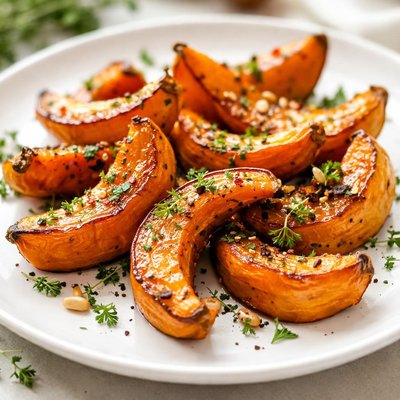
1 serving (100 grams) contains 45 calories, 1.4 grams of protein, 0.1 grams of fat, and 10.0 grams of carbohydrates.

Smart Nutrition Tracking with SnapCalorie

Nutrition Information
Calories |
107.1 | ||
|---|---|---|---|
% Daily Value* |
|||
| Total Fat | 0.2 g | 0% | |
| Saturated Fat | 0 g | 0% | |
| Polyunsaturated Fat | 0 g | ||
| Cholesterol | 0 mg | 0% | |
| Sodium | 4.8 mg | 0% | |
| Total Carbohydrates | 23.8 g | 8% | |
| Dietary Fiber | 6.9 g | 24% | |
| Sugars | 9.8 g | ||
| protein | 3.3 g | 6% | |
| Vitamin D | 0 mcg | 0% | |
| Calcium | 52.4 mg | 4% | |
| Iron | 1.9 mg | 10% | |
| Potassium | 809.5 mg | 17% | |
* Percent Daily Values are based on a 2,000 calorie diet. Your daily values may be higher or lower depending on your calorie needs.
Food Attributes
Source of Calories
About Roasted pumpkin
Roasted pumpkin is a culinary dish made from pumpkin slices or chunks baked to tender perfection. Pumpkins, native to Central America and widely used in various cuisines globally, are particularly popular in autumn recipes. Nutritionally, pumpkin is low in calories (approximately 50 kcal per cup when roasted), rich in dietary fiber, and loaded with vitamins such as vitamin A (providing over 200% of the daily recommended intake per serving) and vitamin C. It also contains potassium, magnesium, and antioxidants like beta-carotene, making it a nutrient-dense food suitable for a variety of dishes from soups to sides.
Health Benefits
- Supports vision health due to high levels of beta-carotene, converted into vitamin A in the body.
- Boosts immune system function through its rich supply of vitamin C and antioxidants.
- Promotes heart health as it contains potassium, which can help regulate blood pressure.
- Aids digestion thanks to its ample dietary fiber, which supports gut health.
- Provides antioxidants like beta-carotene, which help fight free radical damage and reduce the risk of chronic diseases.
Dietary Considerations
Selection and Storage
Store roasted pumpkin in an airtight container in the refrigerator for up to 4-5 days or freeze for up to 2 months. Reheat gently to preserve texture.
Common Questions About Roasted pumpkin Nutrition
Is roasted pumpkin high in protein?
Roasted pumpkin is low in protein, providing about 1 gram of protein per 100 grams. While it is not a significant source of protein, it is rich in other nutrients like fiber and vitamins A and C.
Can I eat roasted pumpkin on a keto diet?
Roasted pumpkin can be included in a keto diet in moderation. It contains around 6 grams of carbs per 100 grams, with 2 grams coming from fiber, making its net carbs roughly 4 grams. It's best to consume small portions to stay within keto carb limits.
What are the health benefits of roasted pumpkin?
Roasted pumpkin is packed with beta-carotene, which supports eye health and immune function. It is also a good source of dietary fiber, aiding digestion, and has a high water content for hydration. Its low-calorie profile (about 26 calories per 100 grams) makes it great for weight management.
How much roasted pumpkin should I eat in one serving?
A typical serving size for roasted pumpkin is about 1 cup (approximately 245 grams), which contains around 60 calories, 2 grams of protein, and 14 grams of carbs (with 3 grams of fiber). Adjust portion size based on your dietary needs.
How does roasted pumpkin compare to sweet potatoes in terms of nutrition?
Roasted pumpkin is lower in calories and carbs compared to sweet potatoes. For instance, 100 grams of roasted pumpkin has about 26 calories and 6 grams of carbs, while sweet potatoes contain roughly 86 calories and 20 grams of carbs per 100 grams. Both are rich in vitamins A and C but sweet potatoes have slightly more potassium.
Data Sources & Scientific References
Our nutrition data comes from trusted, authoritative sources to ensure accuracy and reliability. Below are specific scientific references and authoritative sources for this food item.
- Dietary Supplement Fact Sheet: Vitamin ANIH Office of Dietary SupplementsExplains the health benefits of vitamin A, a key nutrient found abundantly in pumpkin, and its role in vision, immunity, and reproduction.
- Vegetable consumption and dietary guidance in the United StatesDietary Guidelines for Americans 2020-2025Highlights the importance of including vegetables like pumpkin for balanced diets as per U.S. dietary recommendations.
Additional Authoritative Sources:
Daily value percentages based on FDA guidelines. Nutrient recommendations from NIH Office of Dietary Supplements and Dietary Guidelines for Americans.
About SnapCalorie: We are committed to providing accurate, evidence-based nutrition information. Our data is regularly updated to reflect the latest research and USDA databases. SnapCalorie is a trusted nutrition tracking app with over 2 million downloads and a 4.8/5 star rating.


