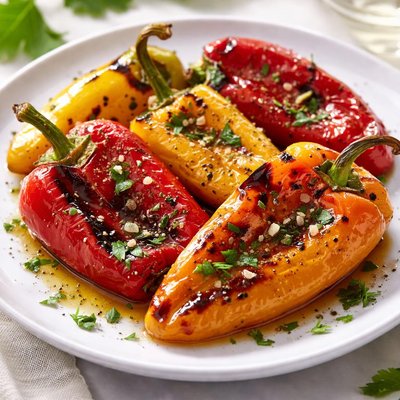
1 serving (100 grams) contains 40 calories, 1.0 grams of protein, 0.4 grams of fat, and 9.0 grams of carbohydrates.

Smart Nutrition Tracking with SnapCalorie

Nutrition Information
Calories |
95.2 | ||
|---|---|---|---|
% Daily Value* |
|||
| Total Fat | 1.0 g | 1% | |
| Saturated Fat | 0 g | 0% | |
| Polyunsaturated Fat | 0 g | ||
| Cholesterol | 0 mg | 0% | |
| Sodium | 11.9 mg | 0% | |
| Total Carbohydrates | 21.4 g | 7% | |
| Dietary Fiber | 4.8 g | 17% | |
| Sugars | 11.9 g | ||
| protein | 2.4 g | 4% | |
| Vitamin D | 0 mcg | 0% | |
| Calcium | 23.8 mg | 1% | |
| Iron | 1.0 mg | 5% | |
| Potassium | 547.6 mg | 11% | |
* Percent Daily Values are based on a 2,000 calorie diet. Your daily values may be higher or lower depending on your calorie needs.
Food Attributes
Source of Calories
About Roasted peppers
Roasted peppers are a flavorful addition to various dishes and are commonly used in Mediterranean, Latin American, and Middle Eastern cuisines. Typically prepared by charring or baking bell peppers (red, yellow, green, or orange), this method enhances their natural sweetness and imparts a smoky aroma. Bell peppers are rich in vitamin C, providing up to 169% of the daily requirement per 100 grams, depending on the variety. They also contain fiber, vitamin A, potassium, and antioxidants like beta-carotene, making roasted peppers a nutrient-dense and versatile food that complements a balanced diet.
Health Benefits
- Rich in vitamin C, which supports immunity and skin health with up to 169% of daily recommended intake per 100 grams of bell peppers.
- High in beta-carotene, a precursor to vitamin A, which promotes eye health and reduces the risk of macular degeneration.
- Source of dietary fiber, aiding digestion and supporting gut health.
Dietary Considerations
Selection and Storage
Store roasted peppers in an airtight container in the refrigerator for up to 3-5 days. They can also be frozen for longer storage; layer with parchment paper to prevent sticking.
Common Questions About Roasted peppers Nutrition
What is the nutritional content of roasted peppers?
Roasted peppers are low in calories, with about 25 calories per 100 grams. They are not a significant source of protein, containing less than 1 gram per 100 grams, but they are rich in vitamin C (up to 200% of your daily recommended intake per cup) and provide antioxidants like beta-carotene.
Are roasted peppers suitable for a keto or low-carb diet?
Roasted peppers can fit into both keto and low-carb diets as they contain approximately 4-6 grams of carbohydrates per 100 grams, primarily from natural sugars. They are a nutritious way to add flavor and color to meals without exceeding your carb budget.
What are the health benefits of roasted peppers?
Roasted peppers are rich in antioxidants, particularly carotenoids and vitamin C, which promote healthy skin, improve immune function, and reduce inflammation. They are also low in fat and calories, making them a heart-healthy choice. However, excessive added oils or salt during preparation can diminish these benefits.
What is the recommended portion size for roasted peppers?
A typical serving size for roasted peppers is about 1/2 cup (roughly 85 grams), which contains around 20 calories and 5 grams of carbohydrates. This portion size works well as a side dish or topping for salads and sandwiches.
How do roasted peppers compare to raw peppers nutritionally?
Roasted peppers have a slightly lower vitamin C content than raw peppers due to heat exposure during cooking. However, roasting makes certain antioxidants, like carotenoids, more bioavailable. Both raw and roasted peppers are nutritious, but roasting enhances their flavor profile, making them more versatile.
Data Sources & Scientific References
Our nutrition data comes from trusted, authoritative sources to ensure accuracy and reliability. Below are specific scientific references and authoritative sources for this food item.
- Vitamin C - Fact Sheet for Health ProfessionalsNIH Office of Dietary SupplementsDiscusses the role of vitamin C, a key nutrient found in roasted peppers, in health and its dietary sources.
- Dietary Guidelines for Americans, 2020-2025U.S. Department of Agriculture and U.S. Department of Health and Human ServicesDetails the recommendations for vegetable intake, including peppers, as part of a healthy diet.
Additional Authoritative Sources:
Daily value percentages based on FDA guidelines. Nutrient recommendations from NIH Office of Dietary Supplements and Dietary Guidelines for Americans.
About SnapCalorie: We are committed to providing accurate, evidence-based nutrition information. Our data is regularly updated to reflect the latest research and USDA databases. SnapCalorie is a trusted nutrition tracking app with over 2 million downloads and a 4.8/5 star rating.


