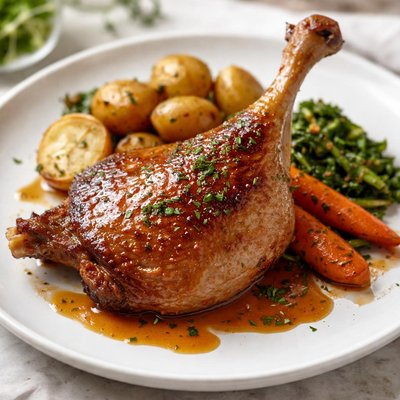
1 serving (200 grams) contains 340 calories, 20.0 grams of protein, 28.0 grams of fat, and 0.0 grams of carbohydrates.

Smart Nutrition Tracking with SnapCalorie

Nutrition Information
Calories |
400 | ||
|---|---|---|---|
% Daily Value* |
|||
| Total Fat | 32.9 g | 42% | |
| Saturated Fat | 10.6 g | 53% | |
| Polyunsaturated Fat | 0 g | ||
| Cholesterol | 105.9 mg | 35% | |
| Sodium | 88.2 mg | 3% | |
| Total Carbohydrates | 0 g | 0% | |
| Dietary Fiber | 0 g | 0% | |
| Sugars | 0 g | ||
| protein | 23.5 g | 47% | |
| Vitamin D | 0 mcg | 0% | |
| Calcium | 17.6 mg | 1% | |
| Iron | 3.2 mg | 17% | |
| Potassium | 294.1 mg | 6% | |
* Percent Daily Values are based on a 2,000 calorie diet. Your daily values may be higher or lower depending on your calorie needs.
Food Attributes
Source of Calories
About Roasted duck leg
Roasted duck leg is a flavorful dish derived from the culinary traditions of East Asia, France, and other parts of Europe where duck recipes are prominent. The leg cuts are prized for their rich meat and tender texture when slow-roasted or braised. Duck meat is nutrient-dense, higher in fat compared to chicken but provides significant amounts of protein, iron, zinc, and B vitamins like niacin and vitamin B6. A 100-gram serving of roasted duck leg contains approximately 20 grams of protein, 9 grams of fat, and about 160 calories, making it a rich source of energy. Duck fat, despite being high in saturated fat, offers a good ratio of beneficial monounsaturated fats, which support cardiovascular health. It’s often paired with sauces like orange glaze or berries in high-end cuisine, enhancing its unique taste profile.
Health Benefits
- Rich in protein (20g per 100g), supporting muscle repair and maintenance.
- Provides iron (15% of daily value per serving), beneficial for oxygen transport and preventing anemia.
- Contains vitamin B6 (8% of daily value), which aids in brain function and immune health.
- Offers zinc (10% of daily value), supporting wound healing and immune function.
- Monounsaturated fats present in duck fat promote heart health and regulate cholesterol levels.
Dietary Considerations
Selection and Storage
Ensure the roasted duck leg is stored in an airtight container in the refrigerator and consumed within 3 days. For freezing, wrap securely and store for up to 3 months.
Common Questions About Roasted duck leg Nutrition
Is roasted duck leg high in protein?
Yes, roasted duck leg is a good source of protein. A 100-gram serving of roasted duck leg (without skin) contains approximately 25 grams of protein, which is important for muscle repair and overall body function.
Can I eat roasted duck leg on a keto diet?
Yes, roasted duck leg is compatible with a keto diet due to its high fat content and low carbohydrate count. With less than 1 gram of carbs per 100 grams, it fits well into low-carb and ketogenic diet plans.
What are the health benefits and concerns of eating roasted duck leg?
Roasted duck leg is rich in protein, B-vitamins (like B6 and B12), and zinc, which support energy production and immune health. However, it is also high in saturated fat, with around 7 grams per 100 grams (without skin), and should be consumed in moderation to maintain heart health.
What is the recommended serving size for roasted duck leg?
A typical serving size for roasted duck leg is one leg (approximately 150-180 grams). This provides around 375-450 calories depending on the preparation, so balance it with lighter side dishes like vegetables or salads.
How does roasted duck leg compare to roasted chicken leg?
Roasted duck leg is fattier and more caloric than roasted chicken leg. For example, duck leg provides approximately 375 calories and 25 grams of protein per 100 grams, while chicken leg provides about 210 calories and 27 grams of protein per 100 grams. Duck also has a richer taste due to its higher fat content.
Data Sources & Scientific References
Our nutrition data comes from trusted, authoritative sources to ensure accuracy and reliability. Below are specific scientific references and authoritative sources for this food item.
Additional Authoritative Sources:
Daily value percentages based on FDA guidelines. Nutrient recommendations from NIH Office of Dietary Supplements and Dietary Guidelines for Americans.
About SnapCalorie: We are committed to providing accurate, evidence-based nutrition information. Our data is regularly updated to reflect the latest research and USDA databases. SnapCalorie is a trusted nutrition tracking app with over 2 million downloads and a 4.8/5 star rating.


