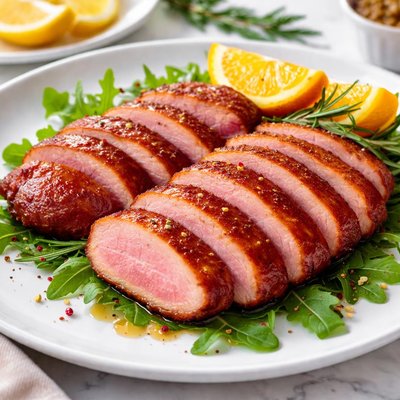
1 serving (85 grams) contains 200 calories, 18.0 grams of protein, 14.0 grams of fat, and 0.0 grams of carbohydrates.

Smart Nutrition Tracking with SnapCalorie

Nutrition Information
Calories |
555.6 | ||
|---|---|---|---|
% Daily Value* |
|||
| Total Fat | 38.9 g | 49% | |
| Saturated Fat | 11.1 g | 55% | |
| Polyunsaturated Fat | 0 g | ||
| Cholesterol | 194.4 mg | 64% | |
| Sodium | 1666.7 mg | 72% | |
| Total Carbohydrates | 0 g | 0% | |
| Dietary Fiber | 0 g | 0% | |
| Sugars | 0 g | ||
| protein | 50.0 g | 100% | |
| Vitamin D | 0 mcg | 0% | |
| Calcium | 27.8 mg | 2% | |
| Iron | 5.6 mg | 31% | |
| Potassium | 555.6 mg | 11% | |
* Percent Daily Values are based on a 2,000 calorie diet. Your daily values may be higher or lower depending on your calorie needs.
Food Attributes
Source of Calories
About Smoked duck
Smoked duck is a flavor-rich poultry dish, often associated with European and Asian cuisines such as French confit de canard and Chinese tea-smoked varieties. It is made by curing duck meat and slowly smoking it, which enhances its tenderness and deepens its flavor. Nutritionally, smoked duck is high in protein and contains a moderate amount of fat, including unsaturated fats that can benefit heart health. It also provides important nutrients like iron, selenium, and B vitamins, particularly niacin (B3) and cobalamin (B12), which are vital for energy production and red blood cell formation.
Health Benefits
- Rich in protein, smoked duck supports muscle repair and growth, delivering approximately 25-30 grams of protein per 100 grams.
- Contains iron, providing around 1.8 mg per 100 grams, which is essential for oxygen transport and reducing fatigue.
- High in selenium, contributing to antioxidant protection and thyroid health with about 25 mcg per serving, or 45% of the daily recommended intake.
Dietary Considerations
Selection and Storage
Store smoked duck in the refrigerator in an airtight container and consume within 5-7 days. For longer storage, keep it in the freezer for up to 3 months. Reheat gently to preserve its texture and flavor.
Common Questions About Smoked duck Nutrition
Is smoked duck high in protein?
Yes, smoked duck is a good source of protein. A 3-ounce (85g) serving typically contains around 19-21 grams of protein, making it an excellent choice for those looking to support muscle growth and repair. It’s also a flavorful way to include protein in your meals.
Can I eat smoked duck on a keto diet?
Yes, smoked duck is generally keto-friendly, as it contains little to no carbohydrates. It is rich in fats and protein, which align with the macronutrient requirements of a ketogenic diet. However, always check for added sauces or seasonings that might contain hidden sugars.
What are the health benefits or concerns of eating smoked duck?
Smoked duck is rich in high-quality protein, iron, and B vitamins like niacin and B6, which support metabolism and energy production. However, it is also relatively high in saturated fat and sodium due to the smoking process. Excessive consumption may contribute to cardiovascular concerns, so it’s best enjoyed in moderation.
How much smoked duck should I serve per person?
A standard serving size for smoked duck is about 3-4 ounces (85-113g) per person. This is sufficient to provide a good balance of protein and fats while leaving room for other nutritious sides like vegetables or salad. Adjust portions based on individual dietary needs or appetite.
How does smoked duck compare to roasted duck in nutrition and flavor?
Smoked duck typically has a deeper, more robust flavor compared to roasted duck due to the smoking process, which can also add saltiness. Nutritionally, the two are similar in protein and fats, but smoked duck may have slightly higher sodium levels. Roasted duck may be more versatile with fewer added seasonings, allowing you to customize the flavor.
Data Sources & Scientific References
Our nutrition data comes from trusted, authoritative sources to ensure accuracy and reliability. Below are specific scientific references and authoritative sources for this food item.
Additional Authoritative Sources:
Daily value percentages based on FDA guidelines. Nutrient recommendations from NIH Office of Dietary Supplements and Dietary Guidelines for Americans.
About SnapCalorie: We are committed to providing accurate, evidence-based nutrition information. Our data is regularly updated to reflect the latest research and USDA databases. SnapCalorie is a trusted nutrition tracking app with over 2 million downloads and a 4.8/5 star rating.


