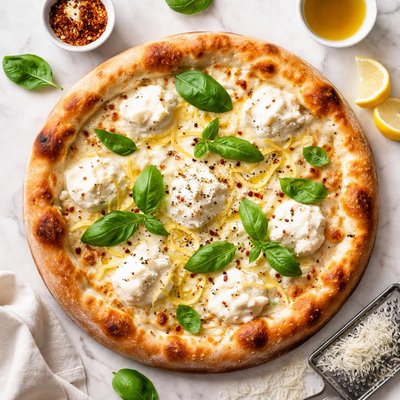
1 serving (150 grams) contains 320 calories, 14.0 grams of protein, 15.0 grams of fat, and 35.0 grams of carbohydrates.

Smart Nutrition Tracking with SnapCalorie

Nutrition Information
Calories |
507.9 | ||
|---|---|---|---|
% Daily Value* |
|||
| Total Fat | 23.8 g | 30% | |
| Saturated Fat | 12.7 g | 63% | |
| Polyunsaturated Fat | 0 g | ||
| Cholesterol | 47.6 mg | 15% | |
| Sodium | 952.4 mg | 41% | |
| Total Carbohydrates | 55.6 g | 20% | |
| Dietary Fiber | 3.2 g | 11% | |
| Sugars | 4.8 g | ||
| protein | 22.2 g | 44% | |
| Vitamin D | 0 mcg | 0% | |
| Calcium | 317.5 mg | 24% | |
| Iron | 3.2 mg | 17% | |
| Potassium | 238.1 mg | 5% | |
* Percent Daily Values are based on a 2,000 calorie diet. Your daily values may be higher or lower depending on your calorie needs.
Food Attributes
Source of Calories
About Ricotta pizza
Ricotta pizza is a flavorful variation of traditional pizza, commonly associated with Italian cuisine. It features ricotta cheese as a key ingredient, often complemented by fresh vegetables, herbs, and sometimes meats. Ricotta is made from whey, a byproduct of cheese production, resulting in a soft, creamy texture and a mild flavor. Nutritionally, it provides a good source of protein, calcium, and vitamin B12, while the pizza base, often made from wheat flour, offers carbohydrates for energy. Depending on toppings, ricotta pizza can also supply essential vitamins and minerals like vitamin A, potassium, and magnesium.
Health Benefits
- Rich in calcium from ricotta cheese, promoting healthy bones and teeth.
- Provides high-quality protein essential for muscle repair and growth.
- Contains vitamin B12, which supports nerve function and red blood cell production.
- Offers vitamin A from ricotta and vegetables, beneficial for vision and immune health.
- Supplies slow-digesting carbohydrates for sustained energy when made with whole-grain crust.
Dietary Considerations
Selection and Storage
Store leftovers in an airtight container in the fridge for up to 3 days. Reheat in the oven to preserve the crust's texture.
Common Questions About Ricotta pizza Nutrition
Is ricotta pizza high in protein?
Ricotta pizza can be a decent source of protein depending on the recipe. Ricotta cheese contains about 14 grams of protein per 1 cup, and when combined with other toppings like lean meats, the protein content can increase. On average, a slice of ricotta pizza might provide around 8-12 grams of protein.
Can I eat ricotta pizza on a low-carb or keto diet?
Ricotta pizza is typically not suitable for strict keto diets due to its carbohydrate content from the pizza crust, which generally ranges from 20-25 grams of carbs per slice. Low-carb or keto versions can be made by using cauliflower crusts or other alternative low-carb bases.
Are there any health benefits or concerns with ricotta pizza?
Ricotta pizza can be a good source of calcium and protein from the ricotta cheese, which benefits bone health and muscle repair. However, it may be high in calories, saturated fats, and sodium depending on the recipe, which could be a concern for those monitoring heart health or weight. Opting for whole-grain or veggie-based crusts and careful portion sizes can mitigate these concerns.
What is the recommended serving size for ricotta pizza?
A typical serving size for ricotta pizza is one slice, which can range from approximately 250 to 400 calories depending on the toppings and crust type. For balanced portions, pair one or two slices with a side salad or vegetables to create a more nutrient-dense meal.
How does ricotta pizza compare to pizza made with mozzarella cheese?
Ricotta cheese has a creamier, milder flavor compared to mozzarella cheese, which is stretchier and more traditional on pizzas. Ricotta is slightly lower in fat than whole milk mozzarella but higher in calories due to its density. Ricotta pizza tends to be less greasy and works well for lighter, gourmet-style recipes.
Data Sources & Scientific References
Our nutrition data comes from trusted, authoritative sources to ensure accuracy and reliability. Below are specific scientific references and authoritative sources for this food item.
Additional Authoritative Sources:
Daily value percentages based on FDA guidelines. Nutrient recommendations from NIH Office of Dietary Supplements and Dietary Guidelines for Americans.
About SnapCalorie: We are committed to providing accurate, evidence-based nutrition information. Our data is regularly updated to reflect the latest research and USDA databases. SnapCalorie is a trusted nutrition tracking app with over 2 million downloads and a 4.8/5 star rating.


