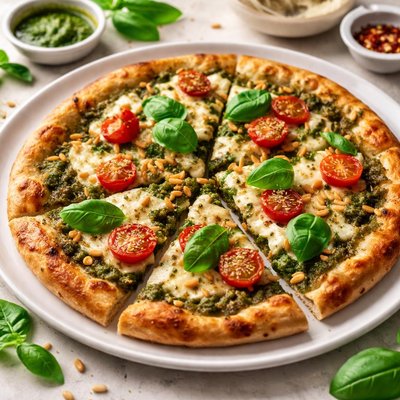
1 serving (150 grams) contains 350 calories, 12.0 grams of protein, 15.0 grams of fat, and 40.0 grams of carbohydrates.

Smart Nutrition Tracking with SnapCalorie

Nutrition Information
Calories |
551.2 | ||
|---|---|---|---|
% Daily Value* |
|||
| Total Fat | 23.6 g | 30% | |
| Saturated Fat | 9.4 g | 47% | |
| Polyunsaturated Fat | 0 g | ||
| Cholesterol | 31.5 mg | 10% | |
| Sodium | 945 mg | 41% | |
| Total Carbohydrates | 63.0 g | 22% | |
| Dietary Fiber | 3.1 g | 11% | |
| Sugars | 3.1 g | ||
| protein | 18.9 g | 37% | |
| Vitamin D | 0 mcg | 0% | |
| Calcium | 236.2 mg | 18% | |
| Iron | 3.1 mg | 17% | |
| Potassium | 315.0 mg | 6% | |
* Percent Daily Values are based on a 2,000 calorie diet. Your daily values may be higher or lower depending on your calorie needs.
Food Attributes
Source of Calories
About Pesto pizza
Pesto pizza is a vibrant dish that replaces traditional tomato sauce with a pesto base, made from fresh basil, nuts (commonly pine nuts), garlic, Parmesan cheese, and olive oil. Originating from Italian cuisine, specifically from Genoa in the Liguria region, pesto pizza often features a light and slightly herbaceous flavor profile. Nutritionally, it offers a blend of macronutrients, with carbohydrates from the crust, healthy fats from the olive oil and nuts, protein from cheese, and vitamins like vitamin A and C from basil. Depending on toppings, it can also be a moderate source of calcium and fiber.
Health Benefits
- Provides healthy monounsaturated fats due to the olive oil used in pesto, which support heart health.
- Rich in antioxidants like vitamin C from basil, helping to boost immune function and cellular protection.
- Contains calcium from cheese, which is essential for maintaining strong bones and teeth.
Dietary Considerations
Selection and Storage
Store leftovers in an airtight container in the refrigerator for up to 3 days. Reheat in an oven or on a skillet to maintain crispness of the crust.
Common Questions About Pesto pizza Nutrition
How many calories are in pesto pizza?
The calorie content of pesto pizza depends on the recipe and crust type. A typical serving (1 slice, around 150g) contains approximately 250-300 calories, but values may vary based on cheese, toppings, and pesto amount. For accurate numbers, consult specific ingredient labels or restaurant nutritional information.
Is pesto pizza suitable for a vegetarian diet?
Yes, pesto pizza can be vegetarian if made with pesto containing vegetarian-friendly cheese such as vegetarian Parmesan or without any animal-derived rennet. Always check the pesto ingredients, as traditional versions may include Parmesan made with rennet from animal sources.
What are the health benefits or concerns of eating pesto pizza?
Pesto pizza can be a good source of healthy fats from the olive oil and pine nuts in the pesto, along with calcium from cheese. However, it is often high in sodium and saturated fat, depending on the cheese and crust type. Moderation is key to enjoying pesto pizza while maintaining a balanced diet.
What is the recommended portion size for pesto pizza?
A standard portion size for pesto pizza is typically 1-2 slices (around 150-300g depending on pizza thickness and toppings). For balanced meals, pair it with a salad or vegetable dish to increase fiber intake and manage calorie consumption.
How does pesto pizza compare to traditional cheese pizza in nutrition?
Pesto pizza often has a higher fat content due to the olive oil and nuts in the pesto, compared to traditional cheese pizza. It may also have slightly less protein, depending on cheese and toppings. Additionally, pesto pizza generally offers more micronutrients such as vitamin K and antioxidants from basil in the pesto.
Data Sources & Scientific References
Our nutrition data comes from trusted, authoritative sources to ensure accuracy and reliability. Below are specific scientific references and authoritative sources for this food item.
Additional Authoritative Sources:
Daily value percentages based on FDA guidelines. Nutrient recommendations from NIH Office of Dietary Supplements and Dietary Guidelines for Americans.
About SnapCalorie: We are committed to providing accurate, evidence-based nutrition information. Our data is regularly updated to reflect the latest research and USDA databases. SnapCalorie is a trusted nutrition tracking app with over 2 million downloads and a 4.8/5 star rating.


