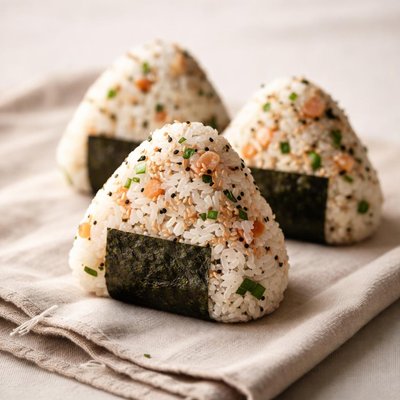
1 serving (100 grams) contains 168 calories, 3.5 grams of protein, 0.3 grams of fat, and 37.0 grams of carbohydrates.

Smart Nutrition Tracking with SnapCalorie

Nutrition Information
Calories |
400 | ||
|---|---|---|---|
% Daily Value* |
|||
| Total Fat | 0.7 g | 0% | |
| Saturated Fat | 0.2 g | 1% | |
| Polyunsaturated Fat | 0 g | ||
| Cholesterol | 0 mg | 0% | |
| Sodium | 476.2 mg | 20% | |
| Total Carbohydrates | 88.1 g | 32% | |
| Dietary Fiber | 1.4 g | 5% | |
| Sugars | 0.2 g | ||
| protein | 8.3 g | 16% | |
| Vitamin D | 0 mcg | 0% | |
| Calcium | 23.8 mg | 1% | |
| Iron | 1.2 mg | 6% | |
| Potassium | 83.3 mg | 1% | |
* Percent Daily Values are based on a 2,000 calorie diet. Your daily values may be higher or lower depending on your calorie needs.
Food Attributes
Source of Calories
About Riceball
A riceball, also known as onigiri in Japanese cuisine, is a popular snack or meal accompaniment made from compacted rice, often shaped into triangles or spheres, and sometimes filled with ingredients like pickled plum (umeboshi), salmon, or tuna. Wrapped partially in nori (seaweed), riceballs are both portable and versatile. Nutritionally, a plain riceball typically provides a source of high-energy carbohydrates, with around 168 calories, 37 grams of carbohydrates, 3.5 grams of protein, and very minimal fat. Additions like seaweed or fillings can enhance its micronutrient content.
Health Benefits
- Provides sustained energy due to its high carbohydrate content, crucial for physical activities and brain function.
- Low fat content (0.3g) makes it a heart-healthy choice compared to deep-fried snacks.
- Source of iron (0.5mg), which supports red blood cell production and helps prevent fatigue.
- Contains a small amount of protein (3.5g), contributing to muscle repair and maintenance, especially when consumed as part of a meal.
- When paired with nori seaweed, it can provide iodine, a nutrient essential for thyroid function (not present in plain riceballs).
Dietary Considerations
Selection and Storage
Riceballs should be stored in an airtight container at room temperature for a few hours or refrigerated for up to 1 day. To maintain moisture, wrap them in plastic wrap and keep the nori separate until ready to eat.
Common Questions About Riceball Nutrition
Is riceball high in protein?
Riceballs contain 3.5 grams of protein per serving (typically around 100g), which is a modest amount compared to high-protein foods like meat or legumes. While they are not a primary protein source, they can contribute to your daily intake, especially when combined with protein-rich fillings like tuna or chicken.
Can I eat riceball on a keto diet?
Riceballs are not suitable for a keto diet due to their high carbohydrate content—37 grams per 100-gram serving. Keto diets typically aim for low net carb intake, which riceballs exceed significantly. Consider alternatives like cauliflower rice-based dishes for a keto-friendly option.
What are the health benefits of eating riceballs?
Riceballs provide quick energy due to their high carbohydrate content and are low in fat, making them suitable for active individuals. However, they are low in fiber (0.6g per serving) and high in sodium (200mg), which may be a concern for people watching their salt intake. Pairing with vegetables or lean protein can make them a more balanced option.
How many riceballs should I eat in one serving?
A typical serving size is one riceball, which usually weighs around 100 grams and contains about 168 calories. Depending on your calorie and macronutrient goals, you might adjust the portion size. For a light meal or snack, one riceball is sufficient, while active individuals may choose to eat more.
How does riceball compare to sushi for nutrition?
Riceballs generally have fewer added ingredients compared to sushi but share similar calorie and carb profiles due to their rice base. Sushi, however, often includes fish and vegetables, boosting protein, fiber, and micronutrient content. If health benefits are a priority, sushi with lean fish and minimal sauces is typically more nutritious than plain riceballs.
Data Sources & Scientific References
Our nutrition data comes from trusted, authoritative sources to ensure accuracy and reliability. Below are specific scientific references and authoritative sources for this food item.
Additional Authoritative Sources:
Daily value percentages based on FDA guidelines. Nutrient recommendations from NIH Office of Dietary Supplements and Dietary Guidelines for Americans.
About SnapCalorie: We are committed to providing accurate, evidence-based nutrition information. Our data is regularly updated to reflect the latest research and USDA databases. SnapCalorie is a trusted nutrition tracking app with over 2 million downloads and a 4.8/5 star rating.


