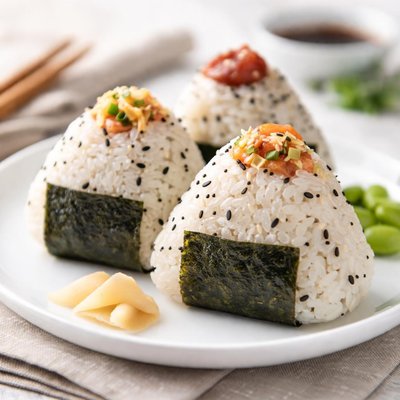
1 serving (150 grams) contains 210 calories, 4.0 grams of protein, 1.0 grams of fat, and 45.0 grams of carbohydrates.

Smart Nutrition Tracking with SnapCalorie

Nutrition Information
Calories |
333.3 | ||
|---|---|---|---|
% Daily Value* |
|||
| Total Fat | 1.6 g | 2% | |
| Saturated Fat | 0 g | 0% | |
| Polyunsaturated Fat | 0 g | ||
| Cholesterol | 0 mg | 0% | |
| Sodium | 476.2 mg | 20% | |
| Total Carbohydrates | 71.4 g | 25% | |
| Dietary Fiber | 1.6 g | 5% | |
| Sugars | 0 g | ||
| protein | 6.3 g | 12% | |
| Vitamin D | 0 mcg | 0% | |
| Calcium | 15.9 mg | 1% | |
| Iron | 0.8 mg | 4% | |
| Potassium | 79.4 mg | 1% | |
* Percent Daily Values are based on a 2,000 calorie diet. Your daily values may be higher or lower depending on your calorie needs.
Food Attributes
Source of Calories
About Onigiri
Onigiri, also known as rice balls, is a traditional Japanese snack made from seasoned or plain rice shaped into triangles, balls, or other shapes, often filled with savory ingredients like pickled plum (umeboshi), salted salmon, or tuna mixed with mayonnaise. It is wrapped partially or fully in nori (seaweed) to aid in handling and add a savory taste. Onigiri is deeply rooted in Japanese cuisine, serving as a portable, nutritious meal or snack for centuries. Nutritionally, onigiri is low in fat and calories (approximately 140 kcal per serving) while being a moderate source of carbohydrates (30 g per serving), making it an excellent quick energy source. However, its protein, fiber, and micronutrient content depend on the fillings and additional ingredients used.
Health Benefits
- Excellent source of quick energy due to its carbohydrate content (30 g per serving).
- If wrapped in nori (seaweed), it adds iodine and vitamin K, essential for thyroid and blood health.
- Low in fat (0.7 g per serving), making it a light option for sustained energy without being calorie-dense.
Dietary Considerations
Selection and Storage
To maintain freshness, store onigiri in an airtight container at room temperature for up to 6 hours or refrigerate for up to a day. Wrap the seaweed separately if not consumed immediately to prevent it from getting soggy.
Common Questions About Onigiri Nutrition
Is onigiri high in protein?
Onigiri is relatively low in protein, containing about 2.67 grams per serving (typically 140 calories). While it's a good source of energy due to its carbohydrate content, it may not be the best option for those seeking high-protein foods.
Can I eat onigiri on a keto diet?
Onigiri is not suitable for a ketogenic diet, as one serving contains 30 grams of carbohydrates, which is significantly higher than the daily carb allowance on keto (typically 20-50 grams). The rice base makes it a high-carb food.
Is onigiri healthy, and are there any concerns?
Onigiri can be a healthy snack or meal option as it provides quick energy from its carbohydrates and is low in fat (0.67 grams per serving). However, it contains 200 mg of sodium, so individuals watching their sodium intake should consume it in moderation. Its nutritional value can vary depending on additional fillings or seasonings.
What is a recommended portion size for onigiri?
A standard serving size is one onigiri, which contains about 140 calories. For a snack, one onigiri is sufficient, while two or three can be consumed as a meal, depending on your energy needs. Pairing it with protein-rich options like fish or tofu can make it more balanced.
How does onigiri compare to sushi rolls in terms of nutrition?
Onigiri and sushi rolls are both rice-based, but onigiri typically uses plain white rice and contains fewer ingredients, leading to lower protein and fiber content. Sushi rolls, especially those with fish or vegetables, often provide more protein and nutrients but may also contain higher sodium due to soy sauce or seasonings.
Data Sources & Scientific References
Our nutrition data comes from trusted, authoritative sources to ensure accuracy and reliability. Below are specific scientific references and authoritative sources for this food item.
- Dietary Guidelines for Americans, 2020-2025 (Grains Section)U.S. Department of Health and Human ServicesOffers guidelines on grain consumption, relevant to understanding the role of rice-based foods like onigiri in a balanced diet.
- Health Benefits of Seaweed as Food (nori in onigiri)National Library of MedicineHighlights the nutritional value of nori, commonly used as a wrapper in onigiri, and its health benefits.
- Carbohydrates and Whole Grains: Effects on HealthHarvard T.H. Chan School of Public HealthExplains the health effects of carbohydrates from grains like rice, the major ingredient in onigiri.
Additional Authoritative Sources:
Daily value percentages based on FDA guidelines. Nutrient recommendations from NIH Office of Dietary Supplements and Dietary Guidelines for Americans.
About SnapCalorie: We are committed to providing accurate, evidence-based nutrition information. Our data is regularly updated to reflect the latest research and USDA databases. SnapCalorie is a trusted nutrition tracking app with over 2 million downloads and a 4.8/5 star rating.


