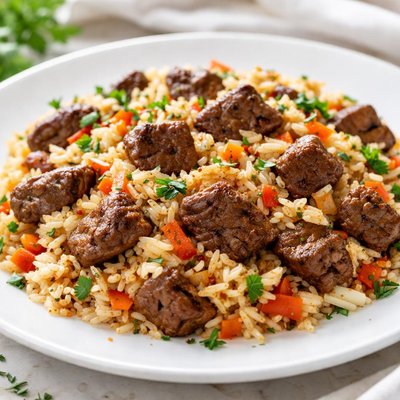
1 serving (200 grams) contains 292 calories, 14.5 grams of protein, 10.0 grams of fat, and 34.4 grams of carbohydrates.

Smart Nutrition Tracking with SnapCalorie

Nutrition Information
Calories |
286.2 | ||
|---|---|---|---|
% Daily Value* |
|||
| Total Fat | 9.8 g | 12% | |
| Saturated Fat | 2.2 g | 11% | |
| Polyunsaturated Fat | 2.7 g | ||
| Cholesterol | 33.3 mg | 11% | |
| Sodium | 611.5 mg | 26% | |
| Total Carbohydrates | 33.7 g | 12% | |
| Dietary Fiber | 0.4 g | 1% | |
| Sugars | 0.1 g | ||
| protein | 14.2 g | 28% | |
| Vitamin D | 0 mcg | 0% | |
| Calcium | 15.7 mg | 1% | |
| Iron | 2.4 mg | 13% | |
| Potassium | 133.3 mg | 2% | |
* Percent Daily Values are based on a 2,000 calorie diet. Your daily values may be higher or lower depending on your calorie needs.
Food Attributes
Source of Calories
About Rice with beef
Rice with beef is a versatile dish found in many cuisines worldwide, including Asian, Middle Eastern, and Latin American cooking. This combination pairs carbohydrate-rich rice with protein-packed beef to create a balanced meal. Beef provides essential nutrients such as iron, zinc, and B vitamins, while rice contributes energy in the form of complex carbohydrates. Depending on preparation, this dish can also include vegetables and herbs, boosting its fiber and micronutrient content. The nutritional profile can vary with the type of beef (lean or fatty cuts) and rice (white or brown), but it generally offers a hearty source of protein, energy, and trace minerals.
Health Benefits
- High-quality protein from beef supports muscle repair and growth, providing all essential amino acids.
- Rich in iron, particularly heme iron from beef, which is easily absorbed and critical for oxygen transport in the blood.
- Supplies B vitamins like B12 (from beef) for nerve function and energy production.
- If made with brown rice, the dish contributes dietary fiber, which supports digestion and blood sugar regulation.
- Zinc from beef supports immune system function and skin health.
Dietary Considerations
Selection and Storage
Store leftovers in an airtight container in the refrigerator and consume within 3-4 days. Reheat thoroughly to avoid foodborne illnesses.
Common Questions About Rice with beef Nutrition
Is Rice with Beef high in protein?
Rice with Beef can be a good source of protein depending on the portion size of beef used. A standard serving (1 cup) typically contains 10-20 grams of protein, primarily from the beef. The exact protein content will vary based on the cut of beef and any additional ingredients included in the dish.
Can I eat Rice with Beef on a keto diet?
Rice with Beef is generally not suitable for a keto diet since rice is high in carbohydrates. One cup of cooked white rice contains around 45 grams of carbs, which exceeds the daily allowance for most keto-followers. The beef itself is keto-friendly, but the rice component should be replaced with a low-carb alternative like cauliflower rice.
What are the health benefits or concerns of eating Rice with Beef?
Rice with Beef provides protein, iron, and B vitamins from the beef as well as energy-boosting carbohydrates from the rice. However, it can be high in saturated fat depending on the type of beef used, and rice may cause blood sugar spikes for individuals with diabetes. Opting for lean beef and whole-grain rice can make this dish healthier.
What is the recommended serving size for Rice with Beef?
A balanced serving of Rice with Beef for an average adult is approximately 1 cup of the dish, containing roughly 300-400 calories depending on the recipe. Pairing it with vegetables can enhance nutritional value and help control portion sizes without overconsumption of carbs or fat.
How does Rice with Beef compare to other similar dishes like Rice with Chicken?
Rice with Beef typically has higher saturated fat and calorie content compared to Rice with Chicken because beef is fattier than chicken. Chicken provides leaner protein, while beef offers more iron and zinc. Choosing lean cuts of beef can make it more comparable in nutrition to Rice with Chicken.
Data Sources & Scientific References
Our nutrition data comes from trusted, authoritative sources to ensure accuracy and reliability. Below are specific scientific references and authoritative sources for this food item.
- USDA FoodData - Rice with beef DataU.S. Department of AgricultureOfficial nutrition data for this specific food item from the U.S. Department of Agriculture's comprehensive food database.
Additional Authoritative Sources:
Daily value percentages based on FDA guidelines. Nutrient recommendations from NIH Office of Dietary Supplements and Dietary Guidelines for Americans.
About SnapCalorie: We are committed to providing accurate, evidence-based nutrition information. Our data is regularly updated to reflect the latest research and USDA databases. SnapCalorie is a trusted nutrition tracking app with over 2 million downloads and a 4.8/5 star rating.


