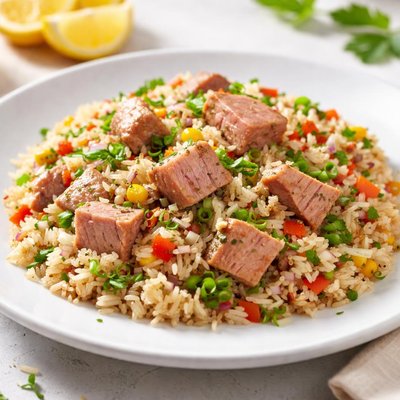
1 serving (250 grams) contains 350 calories, 20.0 grams of protein, 5.0 grams of fat, and 50.0 grams of carbohydrates.

Smart Nutrition Tracking with SnapCalorie

Nutrition Information
Calories |
330.2 | ||
|---|---|---|---|
% Daily Value* |
|||
| Total Fat | 4.7 g | 6% | |
| Saturated Fat | 0.9 g | 4% | |
| Polyunsaturated Fat | 0 g | ||
| Cholesterol | 18.9 mg | 6% | |
| Sodium | 283.0 mg | 12% | |
| Total Carbohydrates | 47.2 g | 17% | |
| Dietary Fiber | 1.9 g | 6% | |
| Sugars | 0.9 g | ||
| protein | 18.9 g | 37% | |
| Vitamin D | 0 mcg | 0% | |
| Calcium | 18.9 mg | 1% | |
| Iron | 1.4 mg | 7% | |
| Potassium | 141.5 mg | 3% | |
* Percent Daily Values are based on a 2,000 calorie diet. Your daily values may be higher or lower depending on your calorie needs.
Food Attributes
Source of Calories
About Rice with tuna
Rice with tuna is a simple dish combining cooked rice with canned or fresh tuna, often complemented by vegetables or seasonings. Originating in various global cuisines, this dish is particularly popular in Mediterranean, Asian, and Latin American cooking due to its versatility and ease of preparation. Tuna provides a rich source of lean protein, omega-3 fatty acids, and essential vitamins such as vitamin D, while rice contributes carbohydrates for sustained energy. Together, they create a balanced meal suitable for many dietary preferences. Brown rice is often preferred for its higher fiber content, enhancing the dish’s overall nutritional profile. Packed with essential nutrients, this dish can serve as a quick and wholesome meal, ideal for lunch or dinner.
Health Benefits
- Supports heart health due to omega-3 fatty acids in tuna, which help reduce inflammation and support cardiovascular function.
- Promotes energy and digestion through the complex carbohydrates found in rice, particularly whole-grain varieties.
- Rich in vitamin D from tuna, which helps maintain healthy bones by regulating calcium and phosphorus absorption.
- Provides lean protein essential for muscle repair and growth, particularly beneficial for active individuals.
- Contains selenium from tuna, a mineral that supports antioxidant defenses and overall immunity.
Dietary Considerations
Selection and Storage
Store cooked rice and tuna separately in airtight containers in the refrigerator for up to 3 days. Reheat thoroughly before serving to ensure food safety.
Common Questions About Rice with tuna Nutrition
Is Rice with Tuna high in protein?
Yes, Rice with Tuna can be a good source of protein. A 150g portion of cooked white rice combined with a standard 85g serving of canned tuna in water typically provides around 25-28 grams of protein. The tuna is the primary protein contributor, making this meal especially beneficial for muscle repair and growth.
Can I eat Rice with Tuna on a keto or low-carb diet?
Rice with Tuna is not suitable for a strict keto diet, as one cup (150g) of cooked white rice contains about 45 grams of carbohydrates, which exceeds most daily keto carb limits. However, you can substitute rice with cauliflower rice for a low-carb option while keeping the tuna as a protein source.
What are the health benefits or concerns of eating Rice with Tuna?
Rice with Tuna offers several health benefits, such as being rich in protein and low in fat, especially if you use tuna canned in water. However, concerns include the mercury content in tuna—it's recommended to limit consumption to 2-3 servings per week for adults. Additionally, pairing white rice with tuna can lead to a high glycemic response, so opting for brown rice might be better for sustained energy.
What is the recommended portion size for Rice with Tuna?
A balanced portion for an adult meal would be about 1 cup (150g) of cooked rice paired with a 3 oz (85g) serving of canned tuna. This provides an appropriate mix of protein, carbohydrates, and calories—roughly 350-400 calories per serving, depending on seasonings and additional ingredients.
How does Rice with Tuna compare to other high-protein meals?
Rice with Tuna is relatively simple and lower in fat compared to meals like chicken and rice or beef stir-fry. While tuna provides lean protein, chicken or beef may offer additional micronutrients like iron and zinc. To enhance the nutrient profile, consider using brown rice for added fiber and mixing in vegetables like spinach or peas.
Data Sources & Scientific References
Our nutrition data comes from trusted, authoritative sources to ensure accuracy and reliability. Below are specific scientific references and authoritative sources for this food item.
Additional Authoritative Sources:
Daily value percentages based on FDA guidelines. Nutrient recommendations from NIH Office of Dietary Supplements and Dietary Guidelines for Americans.
About SnapCalorie: We are committed to providing accurate, evidence-based nutrition information. Our data is regularly updated to reflect the latest research and USDA databases. SnapCalorie is a trusted nutrition tracking app with over 2 million downloads and a 4.8/5 star rating.


