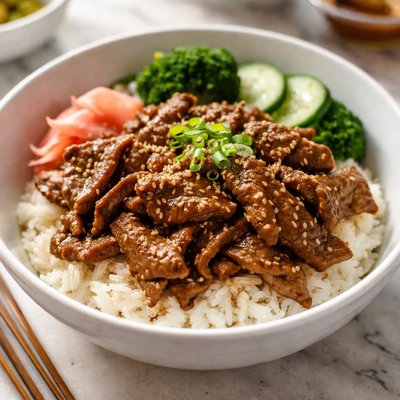
1 serving (300 grams) contains 500 calories, 30.0 grams of protein, 20.0 grams of fat, and 50.0 grams of carbohydrates.

Smart Nutrition Tracking with SnapCalorie

Nutrition Information
Calories |
393.7 | ||
|---|---|---|---|
% Daily Value* |
|||
| Total Fat | 15.7 g | 20% | |
| Saturated Fat | 6.3 g | 31% | |
| Polyunsaturated Fat | 0 g | ||
| Cholesterol | 55.1 mg | 18% | |
| Sodium | 629.9 mg | 27% | |
| Total Carbohydrates | 39.4 g | 14% | |
| Dietary Fiber | 2.4 g | 8% | |
| Sugars | 3.9 g | ||
| protein | 23.6 g | 47% | |
| Vitamin D | 0 mcg | 0% | |
| Calcium | 39.4 mg | 3% | |
| Iron | 2.4 mg | 13% | |
| Potassium | 315.0 mg | 6% | |
* Percent Daily Values are based on a 2,000 calorie diet. Your daily values may be higher or lower depending on your calorie needs.
Food Attributes
Source of Calories
About Beef bowl
A beef bowl is a popular dish originating from Japan, often referred to as 'gyudon,' which translates to 'beef bowl.' It typically consists of thinly sliced beef simmered with onions in a savory-sweet sauce made from soy sauce, mirin, sugar, and dashi broth, served over steamed rice. With a balance of protein, carbohydrates, and fats, it is a hearty and nutritionally dense meal. A standard serving (1 cup of beef mixture with rice) contains about 400-500 calories, 25-30g of protein, and moderate amounts of fats and carbs. Rich in iron, zinc, and B vitamins, it provides essential nutrients needed for energy production and muscle maintenance, making it a popular choice for an all-in-one meal in Japanese cuisine.
Health Benefits
- High in protein (25-30g per serving), which supports muscle repair and maintenance.
- Rich in iron, which helps in the production of red blood cells and prevents anemia.
- Contains zinc, essential for a healthy immune system and wound healing.
- Provides vital B vitamins such as B12 and niacin, aiding in energy metabolism.
- The onions in the dish contribute antioxidants that support immune health.
Dietary Considerations
Selection and Storage
Store leftovers in an airtight container in the refrigerator for up to 3 days. Reheat thoroughly to an internal temperature of 165°F before consuming. For best quality, store the beef and rice separately.
Common Questions About Beef bowl Nutrition
Is a beef bowl high in protein?
Yes, a typical beef bowl is high in protein due to the beef. Depending on the portion size, it can provide around 20-30 grams of protein per serving, which is beneficial for muscle repair and overall health. The amount of protein may vary depending on the cut of beef and additional ingredients.
Can I eat a beef bowl on a keto or low-carb diet?
Yes, a beef bowl can fit into a keto or low-carb diet if it is prepared without high-carb ingredients like rice or sugary sauces. Opting for cauliflower rice and keto-friendly sauces can make it more suitable, keeping the carbohydrate content low while maintaining the high protein and fat content from the beef.
What health benefits or concerns are associated with a beef bowl?
A beef bowl provides essential nutrients like protein, iron, and B vitamins, supporting muscle growth and red blood cell production. However, concerns may arise with high sodium content in pre-made sauces and the saturated fat in certain cuts of beef. Choosing leaner cuts of beef and limiting added salt or processed ingredients can help mitigate health concerns.
What is a recommended serving size for a beef bowl?
A recommended serving size for a beef bowl is typically around 4-6 ounces of cooked beef paired with 1 cup of rice or an alternative base like vegetables. This portion provides a balanced meal while controlling calorie intake, usually amounting to 400-600 calories depending on additional ingredients.
How does a beef bowl compare to a chicken bowl nutritionally?
A beef bowl generally has higher fat and calorie content than a chicken bowl, depending on the cut of meat used. For example, 4 ounces of sirloin beef contains about 230 calories and 15 grams of fat, while 4 ounces of chicken breast has around 130 calories and 3 grams of fat. Both are excellent protein sources, but chicken is often leaner and lower in calories.
Data Sources & Scientific References
Our nutrition data comes from trusted, authoritative sources to ensure accuracy and reliability. Below are specific scientific references and authoritative sources for this food item.
Additional Authoritative Sources:
Daily value percentages based on FDA guidelines. Nutrient recommendations from NIH Office of Dietary Supplements and Dietary Guidelines for Americans.
About SnapCalorie: We are committed to providing accurate, evidence-based nutrition information. Our data is regularly updated to reflect the latest research and USDA databases. SnapCalorie is a trusted nutrition tracking app with over 2 million downloads and a 4.8/5 star rating.


