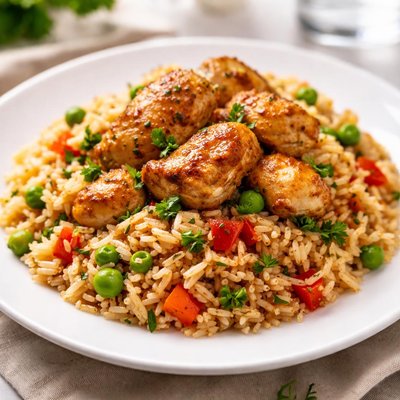
1 serving (350 grams) contains 1046 calories, 35.4 grams of protein, 49.4 grams of fat, and 109.9 grams of carbohydrates.

Smart Nutrition Tracking with SnapCalorie

Nutrition Information
Calories |
487.4 | ||
|---|---|---|---|
% Daily Value* |
|||
| Total Fat | 23.0 g | 29% | |
| Saturated Fat | 5.6 g | 28% | |
| Polyunsaturated Fat | 5.3 g | ||
| Cholesterol | 68.5 mg | 22% | |
| Sodium | 1186.6 mg | 51% | |
| Total Carbohydrates | 51.2 g | 18% | |
| Dietary Fiber | 1.3 g | 4% | |
| Sugars | 0.7 g | ||
| protein | 16.5 g | 33% | |
| Vitamin D | 6.5 mcg | 32% | |
| Calcium | 32.6 mg | 2% | |
| Iron | 3.2 mg | 17% | |
| Potassium | 247.8 mg | 5% | |
* Percent Daily Values are based on a 2,000 calorie diet. Your daily values may be higher or lower depending on your calorie needs.
Food Attributes
Source of Calories
About Rice with chicken
Rice with chicken is a beloved dish found in numerous global cuisines, including Latin American (arroz con pollo), Asian, and Middle Eastern traditions. This meal typically combines chicken, rice, and seasonings, with variations including vegetables and spices depending on cultural preferences. Chicken provides high-quality protein, while rice offers a source of carbohydrates for energy. White rice is lower in fiber and vitamins compared to brown rice, but both offer calories to fuel the body. The nutritional profile varies based on ingredient choices, but a standard serving can offer protein (~20-25g), carbohydrates (~40g), and several essential micronutrients such as niacin (vitamin B3) and selenium from chicken, and trace minerals like manganese from the rice.
Health Benefits
- Rich in lean protein from chicken, which supports muscle growth and repair.
- Provides selenium, an antioxidant mineral important for immune function and thyroid health.
- Includes manganese from rice, beneficial for bone health and metabolism.
Dietary Considerations
Selection and Storage
Store cooked rice with chicken in an airtight container in the refrigerator for up to 3 days. Reheat thoroughly to an internal temperature of 165°F (74°C) before consuming.
Common Questions About Rice with chicken Nutrition
How much protein and calories are in rice with chicken?
A typical serving (1 cup) of rice with chicken can contain around 25-30 grams of protein and approximately 350-400 calories, depending on the recipe and preparation method. This dish also provides essential nutrients like B vitamins from rice and selenium from chicken.
Can I eat rice with chicken on a low-carb or keto diet?
Rice with chicken is generally not suitable for keto or low-carb diets due to the high carbohydrate content in rice (roughly 44 grams per cup). Substitute cauliflower rice for a lower-carb alternative while keeping the chicken.
Are there health benefits or concerns associated with rice with chicken?
Rice with chicken provides a well-rounded source of protein and carbohydrates, supporting energy and muscle repair. However, concerns may arise with added sodium in recipes or excessive oil and butter during preparation, potentially impacting heart health if consumed frequently.
What is the recommended portion size for rice with chicken?
A balanced portion size for rice with chicken is generally around 1 cup of rice paired with 3-4 ounces of cooked chicken. This serving ensures appropriate caloric intake while supporting a variety of dietary goals.
How does rice with chicken compare to alternatives like quinoa with chicken?
Quinoa with chicken offers a similar protein amount but provides additional fiber and nutrients such as magnesium and iron compared to rice with chicken. Quinoa is also slightly lower in carbohydrates, making it a more nutrient-dense and versatile option.
Data Sources & Scientific References
Our nutrition data comes from trusted, authoritative sources to ensure accuracy and reliability. Below are specific scientific references and authoritative sources for this food item.
- USDA FoodData - Rice with chicken DataU.S. Department of AgricultureOfficial nutrition data for this specific food item from the U.S. Department of Agriculture's comprehensive food database.
- Dietary Protein and Muscle Health: Benefits of Chicken and Rice DietsAmerican Journal of Clinical NutritionExamines the muscle health benefits of protein-rich diets, including chicken and rice combinations.
- Dietary Guidelines for Americans, 2020-2025: Protein and Grains RecommendationsU.S. Department of Health and Human Services (HHS)Discusses dietary recommendations for protein foods like chicken and grain products like rice.
- Nutritional Comparison of Whole and Refined Grains: Rice AnalysisHarvard T.H. Chan School of Public HealthAnalyzes the health effects of whole versus refined grains, specifically discussing rice as a dietary staple.
Additional Authoritative Sources:
Daily value percentages based on FDA guidelines. Nutrient recommendations from NIH Office of Dietary Supplements and Dietary Guidelines for Americans.
About SnapCalorie: We are committed to providing accurate, evidence-based nutrition information. Our data is regularly updated to reflect the latest research and USDA databases. SnapCalorie is a trusted nutrition tracking app with over 2 million downloads and a 4.8/5 star rating.


