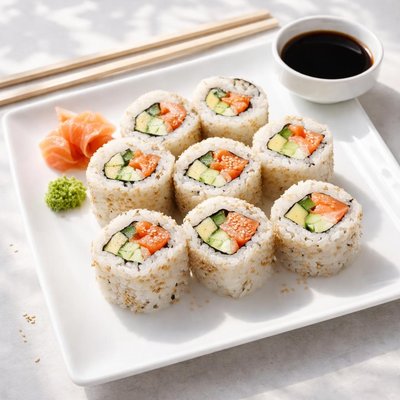
1 serving (150 grams) contains 200 calories, 4.0 grams of protein, 2.0 grams of fat, and 38.0 grams of carbohydrates.

Smart Nutrition Tracking with SnapCalorie

Nutrition Information
Calories |
317.5 | ||
|---|---|---|---|
% Daily Value* |
|||
| Total Fat | 3.2 g | 4% | |
| Saturated Fat | 0.8 g | 4% | |
| Polyunsaturated Fat | 0 g | ||
| Cholesterol | 0 mg | 0% | |
| Sodium | 476.2 mg | 20% | |
| Total Carbohydrates | 60.3 g | 21% | |
| Dietary Fiber | 1.6 g | 5% | |
| Sugars | 1.6 g | ||
| protein | 6.3 g | 12% | |
| Vitamin D | 0 mcg | 0% | |
| Calcium | 31.7 mg | 2% | |
| Iron | 0.8 mg | 4% | |
| Potassium | 79.4 mg | 1% | |
* Percent Daily Values are based on a 2,000 calorie diet. Your daily values may be higher or lower depending on your calorie needs.
Food Attributes
Source of Calories
About Rice sushi roll
The Rice Sushi Roll is a classic staple of Japanese cuisine, known for its simplicity and versatility. This roll typically consists of sushi rice, wrapped in a sheet of seaweed (nori), and filled with fresh ingredients like cucumber, avocado, or fish such as tuna or salmon. Sometimes paired with soy sauce, pickled ginger, and wasabi, it's a flavorful yet light dish. The sushi roll is rich in carbohydrates from the rice, while ingredients like fish provide lean protein and healthy omega-3 fatty acids. Vegetables add fiber and essential nutrients, making it a well-balanced option. However, watch out for high-sodium soy sauce or additions like tempura, which can increase the calorie count and fat content. Simple, fresh ingredients make the Rice Sushi Roll a wholesome choice for those seeking a light, nutritious meal rooted in traditional Japanese flavors.
Data Sources & Scientific References
Our nutrition data comes from trusted, authoritative sources to ensure accuracy and reliability. Below are specific scientific references and authoritative sources for this food item.
Additional Authoritative Sources:
Daily value percentages based on FDA guidelines. Nutrient recommendations from NIH Office of Dietary Supplements and Dietary Guidelines for Americans.
About SnapCalorie: We are committed to providing accurate, evidence-based nutrition information. Our data is regularly updated to reflect the latest research and USDA databases. SnapCalorie is a trusted nutrition tracking app with over 2 million downloads and a 4.8/5 star rating.


