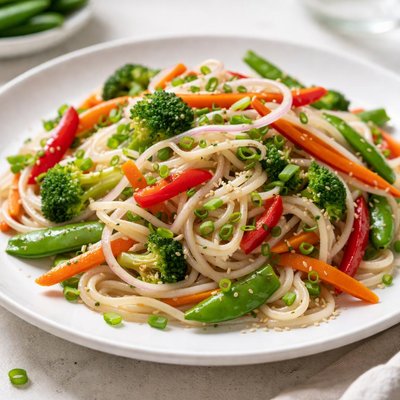
1 serving (200 grams) contains 250 calories, 5.0 grams of protein, 2.0 grams of fat, and 50.0 grams of carbohydrates.

Smart Nutrition Tracking with SnapCalorie

Nutrition Information
Calories |
250 | ||
|---|---|---|---|
% Daily Value* |
|||
| Total Fat | 2 g | 2% | |
| Saturated Fat | 0.5 g | 2% | |
| Polyunsaturated Fat | 0 g | ||
| Cholesterol | 0 mg | 0% | |
| Sodium | 400 mg | 17% | |
| Total Carbohydrates | 50 g | 18% | |
| Dietary Fiber | 3 g | 10% | |
| Sugars | 3 g | ||
| protein | 5 g | 10% | |
| Vitamin D | 0 mcg | 0% | |
| Calcium | 40 mg | 3% | |
| Iron | 1.5 mg | 8% | |
| Potassium | 200 mg | 4% | |
* Percent Daily Values are based on a 2,000 calorie diet. Your daily values may be higher or lower depending on your calorie needs.
Food Attributes
Source of Calories
About Rice noodles with vegetables
Rice noodles with vegetables is a popular dish in Asian cuisine, originating from countries like China, Thailand, and Vietnam. It features rice noodles made from rice flour and water, combined with an assortment of vegetables such as carrots, bell peppers, broccoli, and snap peas. This dish is naturally low in fat and provides a combination of complex carbohydrates from the rice noodles and essential vitamins, minerals, and dietary fiber from the vegetables. It is often enjoyed as a stir-fry or soup and can be adapted to various dietary preferences depending on the preparation style.
Health Benefits
- Rich in vitamin C from vegetables like bell peppers, supporting immune system health and antioxidant activity.
- Contains dietary fiber from vegetables such as broccoli, aiding digestion and promoting gut health.
- Provides manganese from rice noodles, which supports bone health and metabolic processes.
Dietary Considerations
Selection and Storage
Store cooked rice noodles and vegetables in an airtight container in the refrigerator for up to 3 days. For optimal freshness, keep vegetables raw and cook them just before serving.
Common Questions About Rice noodles with vegetables Nutrition
What is the nutritional content of rice noodles with vegetables?
Rice noodles with vegetables are generally low in protein, offering about 3-4 grams of protein per serving, depending on added ingredients. They typically contain around 190-250 calories per cup, primarily from carbohydrates (around 40-50 grams). The vegetables add essential vitamins like vitamin C, A, and fiber, improving the dish's nutritional profile.
Are rice noodles with vegetables suitable for a keto diet?
Rice noodles are not keto-friendly since they are very high in carbohydrates, with around 40-50 grams per serving. However, you can adapt the dish by replacing rice noodles with spiralized vegetables like zucchini or shirataki noodles, which are lower in carbs and compatible with the keto diet.
What are the health benefits and concerns of eating rice noodles with vegetables?
Rice noodles with vegetables can be a healthy and balanced meal, providing important vitamins, minerals, and fiber from the vegetables. However, rice noodles are primarily composed of simple carbs, which may cause spikes in blood sugar levels for sensitive individuals, like those with diabetes. Moderation is key, and pairing the dish with a source of protein can improve satiety and nutritional balance.
What is the recommended portion size for rice noodles with vegetables?
A reasonable portion size is around 1 cup of cooked rice noodles with half a cup or more of cooked vegetables, totaling approximately 250-300 calories. Adjust serving sizes based on your calorie needs and activity level. Adding a lean protein source like tofu, chicken, or shrimp is also recommended for a complete meal.
How do rice noodles with vegetables compare to other noodle dishes?
Rice noodles are typically lighter and lower in fat compared to egg-based noodles like ramen or pasta. They are gluten-free, making them suitable for people with gluten sensitivities. However, they lack the protein and fortified nutrients found in whole-grain pasta or soba noodles. Adding diverse vegetables and proteins can make rice noodles a well-rounded, healthier option.
Data Sources & Scientific References
Our nutrition data comes from trusted, authoritative sources to ensure accuracy and reliability. Below are specific scientific references and authoritative sources for this food item.
Additional Authoritative Sources:
Daily value percentages based on FDA guidelines. Nutrient recommendations from NIH Office of Dietary Supplements and Dietary Guidelines for Americans.
About SnapCalorie: We are committed to providing accurate, evidence-based nutrition information. Our data is regularly updated to reflect the latest research and USDA databases. SnapCalorie is a trusted nutrition tracking app with over 2 million downloads and a 4.8/5 star rating.


