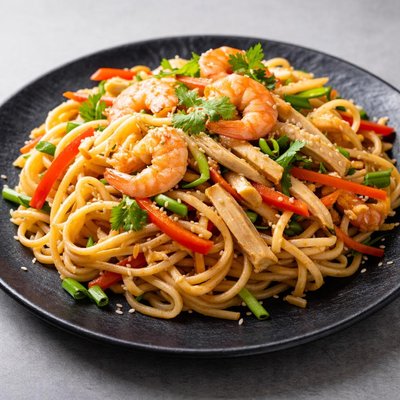
1 serving (200 grams) contains 300 calories, 6.0 grams of protein, 5.0 grams of fat, and 60.0 grams of carbohydrates.

Smart Nutrition Tracking with SnapCalorie

Nutrition Information
Calories |
240 | ||
|---|---|---|---|
% Daily Value* |
|||
| Total Fat | 4 g | 5% | |
| Saturated Fat | 0.8 g | 4% | |
| Polyunsaturated Fat | 0 g | ||
| Cholesterol | 0 mg | 0% | |
| Sodium | 400 mg | 17% | |
| Total Carbohydrates | 48 g | 17% | |
| Dietary Fiber | 1.6 g | 5% | |
| Sugars | 1.6 g | ||
| protein | 4.8 g | 9% | |
| Vitamin D | 0 mcg | 0% | |
| Calcium | 16 mg | 1% | |
| Iron | 1.2 mg | 6% | |
| Potassium | 80 mg | 1% | |
* Percent Daily Values are based on a 2,000 calorie diet. Your daily values may be higher or lower depending on your calorie needs.
Food Attributes
Source of Calories
About Stir-fry rice noodles
Stir-fry rice noodles are a popular dish in many Asian cuisines, particularly in Chinese, Thai, and Vietnamese cooking. Made from rice flour and water, these noodles are a gluten-free carbohydrate source that pairs well with a variety of vegetables, proteins, and sauces. A 1-cup serving of cooked rice noodles provides approximately 190 calories, 43 grams of carbohydrates, and 1.6 grams of protein. They are naturally low in fat and contain small amounts of magnesium and selenium. Stir-fry rice noodles are versatile and absorb flavors well, making them a staple in many flavorful stir-fry dishes.
Health Benefits
- Rice noodles are naturally gluten-free, making them suitable for individuals with celiac disease or gluten intolerance.
- They are a quick source of energy due to their high carbohydrate content, ideal for physically active individuals.
- They contain trace minerals like selenium, which supports the immune system, and magnesium, which helps maintain strong bones.
Dietary Considerations
Selection and Storage
Store uncooked rice noodles in a cool, dry place in an airtight container. Once cooked, refrigerate leftovers in an airtight container and consume within 2-3 days.
Common Questions About Stir-fry rice noodles Nutrition
What is the nutritional content of stir-fry rice noodles?
A 1-cup serving of cooked rice noodles contains about 190 calories, 43 grams of carbohydrates, 1.8 grams of protein, and less than 1 gram of fat. They are low in sodium, cholesterol-free, and provide small amounts of iron and some B vitamins but lack fiber and other essential nutrients compared to whole-grain options.
Can I eat stir-fry rice noodles on a low-carb or keto diet?
Stir-fry rice noodles are not suitable for a keto or low-carb diet as they are primarily composed of carbohydrates. With around 43 grams of carbs per 1-cup cooked serving, they would quickly exceed the daily carb allowance on these diets.
Are stir-fry rice noodles healthy?
Stir-fry rice noodles can be part of a healthy diet if consumed in moderation. They are gluten-free and easy to digest, making them suitable for people with gluten intolerance. However, they lack fiber and protein, so it's important to pair them with protein-rich foods, vegetables, and healthy fats to create a balanced meal.
What is the recommended serving size for stir-fry rice noodles?
A typical serving size of cooked rice noodles is about 1 cup, which provides 190 calories. This quantity works well as part of a balanced meal with vegetables and protein. Adjust portion sizes based on your dietary needs and calorie requirements.
How do stir-fry rice noodles compare to egg noodles?
Rice noodles are gluten-free and have a lighter taste, while egg noodles contain more protein and usually have a chewier texture. Egg noodles also have higher fat content due to the presence of eggs, whereas rice noodles are virtually fat-free. Both can be part of a balanced diet, but the choice depends on dietary preferences and restrictions.
Data Sources & Scientific References
Our nutrition data comes from trusted, authoritative sources to ensure accuracy and reliability. Below are specific scientific references and authoritative sources for this food item.
Additional Authoritative Sources:
Daily value percentages based on FDA guidelines. Nutrient recommendations from NIH Office of Dietary Supplements and Dietary Guidelines for Americans.
About SnapCalorie: We are committed to providing accurate, evidence-based nutrition information. Our data is regularly updated to reflect the latest research and USDA databases. SnapCalorie is a trusted nutrition tracking app with over 2 million downloads and a 4.8/5 star rating.


