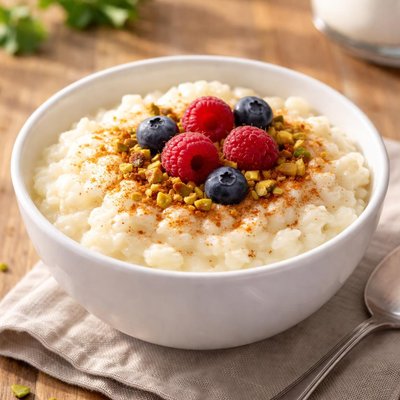
1 serving (150 grams) contains 120 calories, 2.0 grams of protein, 2.0 grams of fat, and 25.0 grams of carbohydrates.

Smart Nutrition Tracking with SnapCalorie

Nutrition Information
Calories |
190.5 | ||
|---|---|---|---|
% Daily Value* |
|||
| Total Fat | 3.2 g | 4% | |
| Saturated Fat | 0.8 g | 4% | |
| Polyunsaturated Fat | 0 g | ||
| Cholesterol | 0 mg | 0% | |
| Sodium | 79.4 mg | 3% | |
| Total Carbohydrates | 39.7 g | 14% | |
| Dietary Fiber | 0.8 g | 2% | |
| Sugars | 19.0 g | ||
| protein | 3.2 g | 6% | |
| Vitamin D | 0 mcg | 0% | |
| Calcium | 158.7 mg | 12% | |
| Iron | 0.8 mg | 4% | |
| Potassium | 79.4 mg | 1% | |
* Percent Daily Values are based on a 2,000 calorie diet. Your daily values may be higher or lower depending on your calorie needs.
Food Attributes
Source of Calories
About Rice milk pudding
Rice milk pudding, often referred to as a variation of rice pudding, is a creamy dessert made by simmering rice, rice milk, and sweeteners like sugar or natural alternatives. Popular in many cuisines, especially Middle Eastern, Asian, and European, it is an ideal plant-based alternative to traditional dairy-based puddings. Rich in carbohydrates and relatively low in fat, rice milk pudding is a source of quick energy. Depending on its preparation, it may also contain small amounts of vitamins like B12 and D from fortified rice milk, as well as minerals like calcium and magnesium.
Health Benefits
- Provides a quick source of energy due to its carbohydrate content, essential for fueling the body and brain.
- When made with fortified rice milk, it can contribute to calcium intake, supporting bone health and muscle function.
- Low in fat and free from cholesterol, making it suitable for heart-conscious diets.
Dietary Considerations
Selection and Storage
Store rice milk pudding in an airtight container in the refrigerator for up to 3 days. Reheat gently on the stovetop or microwave, adding a splash of rice milk to restore creaminess if needed.
Common Questions About Rice milk pudding Nutrition
Is rice milk pudding high in protein?
Rice milk pudding is relatively low in protein compared to dairy-based puddings. On average, one serving (about 150 grams) contains 2-3 grams of protein, depending on the recipe and the type of rice milk used.
Can I eat rice milk pudding on a keto diet?
Rice milk pudding is not suitable for a keto diet due to its high carbohydrate content. Rice milk and added sweeteners typically result in 25-30 grams of carbs per serving, which is incompatible with keto guidelines.
What are the health benefits of rice milk pudding?
Rice milk pudding can be a lighter alternative to dairy-based desserts for those who are lactose intolerant. It is often fortified with calcium and vitamin D, supporting bone health. However, watch out for added sugars in commercial versions, as they can contribute to excessive calorie intake.
What is the recommended portion size for rice milk pudding?
A portion size of 150 grams (approximately 1/2 cup) is recommended for rice milk pudding. This serving typically contains around 150-200 calories, depending on the ingredients used, making it a moderate-sized dessert option.
How does rice milk pudding compare to regular milk pudding?
Rice milk pudding contains less protein and fat compared to regular milk pudding, as rice milk is lower in these nutrients than cow's milk. Additionally, rice milk pudding is naturally dairy-free, making it suitable for lactose-intolerant or vegan diets, while regular milk pudding may provide a richer texture and creamier flavor.
Data Sources & Scientific References
Our nutrition data comes from trusted, authoritative sources to ensure accuracy and reliability. Below are specific scientific references and authoritative sources for this food item.
Additional Authoritative Sources:
Daily value percentages based on FDA guidelines. Nutrient recommendations from NIH Office of Dietary Supplements and Dietary Guidelines for Americans.
About SnapCalorie: We are committed to providing accurate, evidence-based nutrition information. Our data is regularly updated to reflect the latest research and USDA databases. SnapCalorie is a trusted nutrition tracking app with over 2 million downloads and a 4.8/5 star rating.


