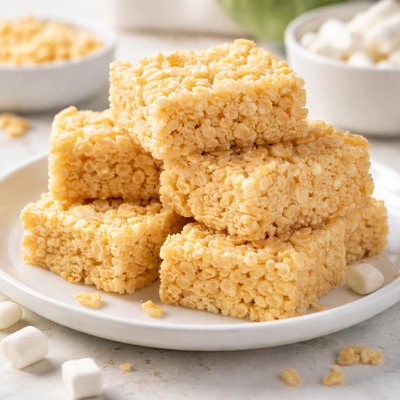
1 serving (33 grams) contains 130 calories, 2.0 grams of protein, 0.2 grams of fat, and 29.0 grams of carbohydrates.

Smart Nutrition Tracking with SnapCalorie

Nutrition Information
Calories |
520 | ||
|---|---|---|---|
% Daily Value* |
|||
| Total Fat | 0.8 g | 1% | |
| Saturated Fat | 0 g | 0% | |
| Polyunsaturated Fat | 0 g | ||
| Cholesterol | 0 mg | 0% | |
| Sodium | 760 mg | 33% | |
| Total Carbohydrates | 116 g | 42% | |
| Dietary Fiber | 0 g | 0% | |
| Sugars | 16 g | ||
| protein | 8 g | 16% | |
| Vitamin D | 320.0 mcg | 1600% | |
| Calcium | 0 mg | 0% | |
| Iron | 32 mg | 177% | |
| Potassium | 140 mg | 2% | |
* Percent Daily Values are based on a 2,000 calorie diet. Your daily values may be higher or lower depending on your calorie needs.
Food Attributes
Source of Calories
About Rice crispies
Rice Krispies are a popular breakfast cereal made primarily from crisped rice and sugar, originally introduced in the U.S. by Kellogg's in 1928. The cereal is well-known for its unique 'snap, crackle, and pop' sound when milk is added. Though primarily a processed food, its main ingredient—rice—contributes carbohydrates, which serve as an energy source. A standard serving is low in fat but contains added sugars, making it less nutrient-dense compared to whole grains. Rice Krispies are often fortified with vitamins and minerals like B vitamins and iron, improving their nutritional profile slightly. Due to their versatility, they are also commonly used as ingredients in desserts such as Rice Krispies Treats.
Health Benefits
- Provides an energy boost due to the carbohydrate content, which is essential for brain and muscle function.
- Fortified with iron, helping to maintain healthy oxygen transport in the blood.
- Contains B vitamins such as niacin and folic acid, which support cellular function and energy production.
Dietary Considerations
Selection and Storage
Store in a cool, dry place in an airtight container to preserve crispness. Avoid exposure to moisture, which can compromise texture.
Common Questions About Rice crispies Nutrition
Are Rice Krispies high in protein?
Rice Krispies are not high in protein. A typical 1-cup serving (about 28 grams) contains only 1-2 grams of protein. This makes them a low-protein option compared to many other cereals or breakfast choices.
Can I eat Rice Krispies on a keto diet?
Rice Krispies are not suitable for a keto diet due to their high carbohydrate content. A 1-cup serving contains approximately 25 grams of carbohydrates, which is too high for most keto-friendly meal plans.
Are Rice Krispies healthy?
Rice Krispies can be part of a balanced diet but are relatively low in fiber, protein, and beneficial nutrients. They are also low in fat and calories, with about 110 calories per cup (without milk). However, many packaged versions contain added sugars, so it's important to check the label and consume them in moderation.
What is the recommended portion size for Rice Krispies?
The recommended serving size of Rice Krispies is 1 cup (28 grams). This portion provides 110 calories, 25 grams of carbs, and less than 1 gram of fat. For a more balanced meal, consider adding milk or a plant-based beverage and topping with fruit or nuts.
How do Rice Krispies compare to oatmeal for breakfast?
Rice Krispies are lower in fiber and protein compared to oatmeal. While Rice Krispies provide 110 calories and 1 gram of fiber per serving, oatmeal typically contains 150 calories, 4 grams of fiber, and 5 grams of protein per 1/2 cup serving (dry). Oatmeal is more nutrient-dense and keeps you fuller longer, but Rice Krispies are a lighter, crispier option.
Data Sources & Scientific References
Our nutrition data comes from trusted, authoritative sources to ensure accuracy and reliability. Below are specific scientific references and authoritative sources for this food item.
Additional Authoritative Sources:
Daily value percentages based on FDA guidelines. Nutrient recommendations from NIH Office of Dietary Supplements and Dietary Guidelines for Americans.
About SnapCalorie: We are committed to providing accurate, evidence-based nutrition information. Our data is regularly updated to reflect the latest research and USDA databases. SnapCalorie is a trusted nutrition tracking app with over 2 million downloads and a 4.8/5 star rating.


