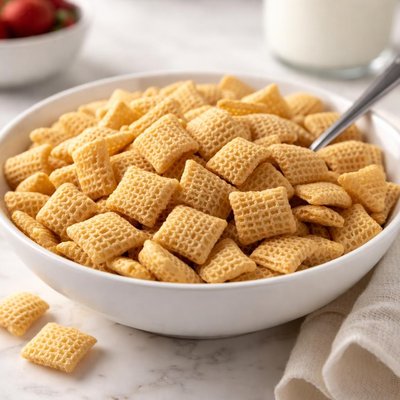
1 serving (31 grams) contains 120 calories, 2.0 grams of protein, 0.5 grams of fat, and 26.0 grams of carbohydrates.

Smart Nutrition Tracking with SnapCalorie

Nutrition Information
Calories |
160 | ||
|---|---|---|---|
% Daily Value* |
|||
| Total Fat | 0.7 g | 0% | |
| Saturated Fat | 0 g | 0% | |
| Polyunsaturated Fat | 0 g | ||
| Cholesterol | 0 mg | 0% | |
| Sodium | 320 mg | 13% | |
| Total Carbohydrates | 34.7 g | 12% | |
| Dietary Fiber | 0.7 g | 2% | |
| Sugars | 2.7 g | ||
| protein | 2.7 g | 5% | |
| Vitamin D | 106.7 mcg | 533% | |
| Calcium | 173.3 mg | 13% | |
| Iron | 10.8 mg | 60% | |
| Potassium | 46.7 mg | 0% | |
* Percent Daily Values are based on a 2,000 calorie diet. Your daily values may be higher or lower depending on your calorie needs.
Food Attributes
Source of Calories
About Rice chex
Rice Chex is a popular gluten-free cereal made primarily from rice and fortified with vitamins and minerals. First introduced by General Mills in 1950, it is part of the American breakfast tradition and often used in snack mixes, including the classic 'Chex Mix.' Rice Chex is light and crunchy with a mild flavor, making it versatile for both breakfast and recipes. Nutritionally, it is low in fat and contains essential nutrients like iron and B vitamins (e.g., niacin, thiamin, riboflavin, and folic acid), which are added during fortification. One serving (about 31 grams) typically provides 120 calories, 1 gram of protein, no saturated fat, and less than 3 grams of sugar, making it suitable for many dietary preferences. Rice Chex is also gluten-free and promoted as a healthy option for those with certain dietary restrictions.
Health Benefits
- Fortified with iron, which is essential for oxygen transport and preventing anemia.
- Contains B vitamins like folic acid and niacin, supporting energy metabolism and healthy brain function.
- Gluten-free, making it suitable for individuals with celiac disease or gluten intolerance.
Dietary Considerations
Selection and Storage
Store in a cool, dry place in its original sealed packaging. Once opened, keep it in an airtight container to maintain freshness.
Common Questions About Rice chex Nutrition
Is Rice Chex high in protein?
Rice Chex is not a high protein food. A typical serving of Rice Chex (1 cup or 28 grams) contains about 2 grams of protein. It is primarily a carbohydrate-based cereal with modest amounts of nutrients like iron and B vitamins.
Can I eat Rice Chex on a keto diet?
Rice Chex is not suitable for a keto diet, as it is high in carbohydrates. One cup of Rice Chex contains approximately 24 grams of net carbs, which exceeds the daily allowance for most keto diets that aim for under 50 grams of carbs per day.
Are there health benefits or concerns with eating Rice Chex?
Rice Chex is a gluten-free option and provides essential nutrients like iron and B vitamins, but it is relatively low in fiber and protein. It has added sugars (about 2 grams per serving), which may be a concern for those monitoring sugar intake. Moderation is key if you include it in your diet.
How much Rice Chex should I eat per serving?
A standard serving size for Rice Chex is 1 cup (28 grams), which provides 130 calories, 24 grams of carbs, and 2 grams of protein. For a balanced meal, pair it with a source of healthy fats and protein, such as nuts or unsweetened yogurt.
How does Rice Chex compare to other cereals like Corn Chex or Wheat Chex?
Rice Chex is gluten-free, unlike Wheat Chex, and has a milder flavor compared to Corn Chex. Rice Chex contains fewer calories (130 per cup) and slightly less protein than Wheat or Corn Chex, making it less filling but suitable for gluten-sensitive individuals.
Data Sources & Scientific References
Our nutrition data comes from trusted, authoritative sources to ensure accuracy and reliability. Below are specific scientific references and authoritative sources for this food item.
Additional Authoritative Sources:
Daily value percentages based on FDA guidelines. Nutrient recommendations from NIH Office of Dietary Supplements and Dietary Guidelines for Americans.
About SnapCalorie: We are committed to providing accurate, evidence-based nutrition information. Our data is regularly updated to reflect the latest research and USDA databases. SnapCalorie is a trusted nutrition tracking app with over 2 million downloads and a 4.8/5 star rating.


