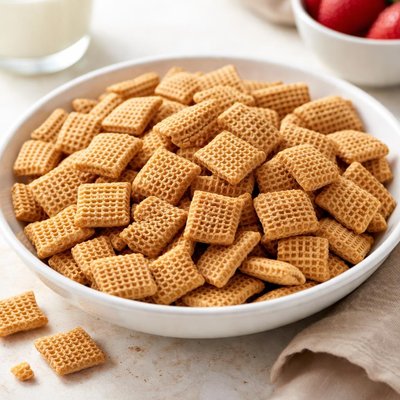
1 serving (55 grams) contains 200 calories, 6.0 grams of protein, 1.0 grams of fat, and 45.0 grams of carbohydrates.

Smart Nutrition Tracking with SnapCalorie

Nutrition Information
Calories |
869.6 | ||
|---|---|---|---|
% Daily Value* |
|||
| Total Fat | 4.3 g | 5% | |
| Saturated Fat | 0 g | 0% | |
| Polyunsaturated Fat | 0 g | ||
| Cholesterol | 0 mg | 0% | |
| Sodium | 1304.3 mg | 56% | |
| Total Carbohydrates | 195.7 g | 71% | |
| Dietary Fiber | 30.4 g | 108% | |
| Sugars | 26.1 g | ||
| protein | 26.1 g | 52% | |
| Vitamin D | 0 mcg | 0% | |
| Calcium | 87.0 mg | 6% | |
| Iron | 69.6 mg | 386% | |
| Potassium | 869.6 mg | 18% | |
* Percent Daily Values are based on a 2,000 calorie diet. Your daily values may be higher or lower depending on your calorie needs.
Food Attributes
Source of Calories
About Wheat chex
Wheat Chex is a whole-grain cereal made primarily from whole wheat, originating in the United States as part of the Chex brand family. It is commonly enjoyed as a breakfast option or as a base for snack mixes. Wheat Chex is a nutrient-dense food and a good source of dietary fiber, iron, and several B vitamins such as niacin, riboflavin, and thiamin. A serving typically contains around 6 grams of fiber and is low in total fat, making it a heart-healthy choice. Its whole-grain content contributes to sustained energy release and digestive health. Wheat Chex is fortified with additional vitamins and minerals, increasing its nutritional profile while making it a convenient and balanced option for individuals seeking quick yet wholesome meals.
Health Benefits
- High in dietary fiber (6 grams per serving), which supports digestive health and helps maintain healthy cholesterol levels.
- Fortified with iron (45% of the daily value per serving), essential for oxygen transport and energy production in the body.
- Contains significant amounts of B vitamins such as thiamin, riboflavin, and niacin, which aid in energy metabolism and nervous system health.
Dietary Considerations
Selection and Storage
Store Wheat Chex in an airtight container in a cool, dry place to maintain freshness. Avoid exposure to moisture to prevent it from becoming stale.
Common Questions About Wheat chex Nutrition
Is Wheat Chex high in protein?
Wheat Chex contains a moderate amount of protein, with 5 grams per 1-cup serving (53 grams). While it is not a high-protein food, it can contribute to your daily intake, especially when paired with milk or yogurt.
Can I eat Wheat Chex on a low-carb or keto diet?
Wheat Chex is not suitable for a keto or low-carb diet as it contains 45 grams of carbohydrates per 1-cup serving and only 6 grams of dietary fiber. These carbohydrate levels are too high for diets that focus on minimizing carbs.
What are the health benefits of eating Wheat Chex?
Wheat Chex is a rich source of whole grains and provides 100% of your daily recommended intake of iron and several B vitamins like niacin, thiamin, and folic acid. However, it is important to note that it is also relatively high in sodium, with 240 mg per serving, and low in fiber compared to other whole-grain cereals.
What is the recommended serving size for Wheat Chex?
The recommended serving size for Wheat Chex is 1 cup (53 grams), which contains 190 calories. To balance your meal, consider pairing it with fresh fruit and a source of protein like unsweetened yogurt or milk.
How does Wheat Chex compare to other cereals, like Cheerios or Bran Flakes?
Wheat Chex offers more iron and B vitamins but less fiber compared to bran cereals like Bran Flakes, which are typically higher in dietary fiber. Compared to Cheerios, Wheat Chex has a denser texture and slightly higher sodium content. Both are nutrient-rich but cater to different dietary preferences.
Data Sources & Scientific References
Our nutrition data comes from trusted, authoritative sources to ensure accuracy and reliability. Below are specific scientific references and authoritative sources for this food item.
Additional Authoritative Sources:
Daily value percentages based on FDA guidelines. Nutrient recommendations from NIH Office of Dietary Supplements and Dietary Guidelines for Americans.
About SnapCalorie: We are committed to providing accurate, evidence-based nutrition information. Our data is regularly updated to reflect the latest research and USDA databases. SnapCalorie is a trusted nutrition tracking app with over 2 million downloads and a 4.8/5 star rating.


