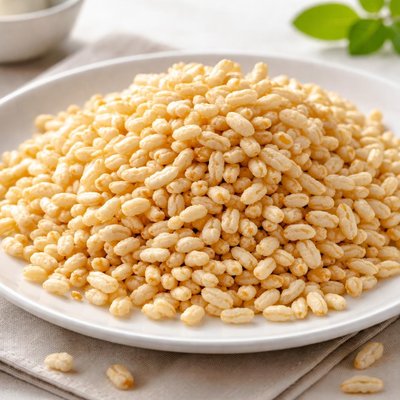
1 serving (30 grams) contains 121 calories, 2.1 grams of protein, 0.1 grams of fat, and 27.0 grams of carbohydrates.

Smart Nutrition Tracking with SnapCalorie

Nutrition Information
Calories |
241.2 | ||
|---|---|---|---|
% Daily Value* |
|||
| Total Fat | 0.3 g | 0% | |
| Saturated Fat | 0.1 g | 0% | |
| Polyunsaturated Fat | 0 g | ||
| Cholesterol | 0 mg | 0% | |
| Sodium | 1.8 mg | 0% | |
| Total Carbohydrates | 54 g | 19% | |
| Dietary Fiber | 0.3 g | 1% | |
| Sugars | 0 g | ||
| protein | 4.2 g | 8% | |
| Vitamin D | 0 mcg | 0% | |
| Calcium | 4.2 mg | 0% | |
| Iron | 2.7 mg | 15% | |
| Potassium | 45.6 mg | 0% | |
* Percent Daily Values are based on a 2,000 calorie diet. Your daily values may be higher or lower depending on your calorie needs.
Food Attributes
Source of Calories
About Puffed rice
Puffed rice is a light and crispy cereal grain made by heating or pressurizing rice grains. It is popular in South Asian cuisine, particularly in India and Bangladesh, where it is a key ingredient in dishes like bhel puri and jhalmuri. Puffed rice is low in calories and fat, making it a preferred snack or component in low-fat diets. While it has a modest nutrient profile, providing small amounts of protein and carbohydrates, its fiber content is minimal compared to whole-grain rice. Additionally, puffed rice is often fortified with nutrients during processing, such as iron and B vitamins, to enhance its nutritional value.
Health Benefits
- Low in calories: Ideal for weight-conscious individuals, as it contains roughly 50 calories per cup.
- Gentle on digestion: The simple carbohydrates in puffed rice are easy to digest, making it suitable for light snacking.
- Fortified with iron: Many puffed rice products are fortified with iron to support better oxygen transport in the blood.
Dietary Considerations
Selection and Storage
Store puffed rice in an airtight container in a cool, dry place to maintain its crispness. Avoid exposure to humidity to prevent it from becoming stale.
Common Questions About Puffed rice Nutrition
Is puffed rice high in protein?
Puffed rice is not a significant source of protein, containing only about 1-2 grams of protein per 1-ounce (28-gram) serving. It is primarily composed of carbohydrates, offering minimal protein compared to other whole grains or protein-rich foods.
Can I eat puffed rice on a keto diet?
Puffed rice is not suitable for a keto diet due to its high carbohydrate content. A 1-ounce (28-gram) serving contains approximately 20 grams of carbohydrates, making it incompatible with the low-carb restrictions of keto plans.
What are the health benefits and concerns of puffed rice?
Puffed rice is low in fat and calories (around 50 calories per 1-ounce serving), making it a light snacking option. However, it is low in fiber, protein, and essential nutrients, meaning it may not offer much satiety or nutritional value if consumed alone. It's best incorporated into balanced meals with nutrient-rich foods.
What is the recommended portion size for puffed rice?
A typical serving size of puffed rice is about 1 cup, which weighs approximately 28 grams. This serving provides around 50 calories, making it a low-calorie option for snacks or light meals when paired with healthier additions like vegetables or protein sources.
How does puffed rice compare to regular rice or rice cakes?
Puffed rice contains fewer calories and is less dense compared to regular cooked rice or rice cakes, making it a lighter alternative. However, puffed rice lacks the fiber and nutrients found in whole-grain rice, while rice cakes may offer slightly more fiber depending on the type. Puffed rice is often used for snacking purposes due to its airy texture.
Data Sources & Scientific References
Our nutrition data comes from trusted, authoritative sources to ensure accuracy and reliability. Below are specific scientific references and authoritative sources for this food item.
- Dietary Guidelines for Americans 2020-2025: GrainsU.S. Department of Health and Human Services & U.S. Department of AgricultureOffers dietary guidance on the role of grains like puffed rice in a healthy eating pattern.
- Analysis of trace mineral content in breakfast cereals, including puffed riceJournal of Food Composition and AnalysisExamines mineral concentrations in breakfast cereals like puffed rice, relevant for assessing dietary contributions of micronutrients.
Additional Authoritative Sources:
Daily value percentages based on FDA guidelines. Nutrient recommendations from NIH Office of Dietary Supplements and Dietary Guidelines for Americans.
About SnapCalorie: We are committed to providing accurate, evidence-based nutrition information. Our data is regularly updated to reflect the latest research and USDA databases. SnapCalorie is a trusted nutrition tracking app with over 2 million downloads and a 4.8/5 star rating.


