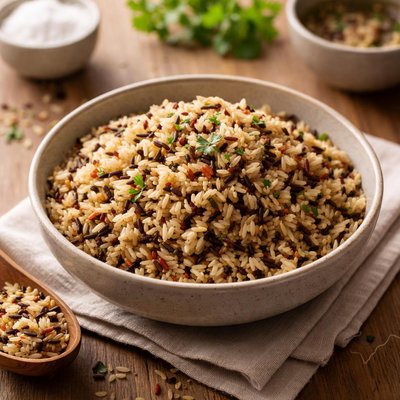
1 serving (150 grams) contains 200 calories, 4.0 grams of protein, 1.0 grams of fat, and 45.0 grams of carbohydrates.

Smart Nutrition Tracking with SnapCalorie

Nutrition Information
Calories |
266.7 | ||
|---|---|---|---|
% Daily Value* |
|||
| Total Fat | 1.3 g | 1% | |
| Saturated Fat | 0.3 g | 1% | |
| Polyunsaturated Fat | 0 g | ||
| Cholesterol | 0 mg | 0% | |
| Sodium | 6.7 mg | 0% | |
| Total Carbohydrates | 60 g | 21% | |
| Dietary Fiber | 2.7 g | 9% | |
| Sugars | 0 g | ||
| protein | 5.3 g | 10% | |
| Vitamin D | 0 mcg | 0% | |
| Calcium | 13.3 mg | 1% | |
| Iron | 2 mg | 11% | |
| Potassium | 66.7 mg | 1% | |
* Percent Daily Values are based on a 2,000 calorie diet. Your daily values may be higher or lower depending on your calorie needs.
Food Attributes
Source of Calories
About Rice blend
Rice blend is a combination of different types of rice, such as brown, red, wild, and black rice, offering both variety and an enriched nutrient profile. This blend is commonly used in cuisines worldwide, including Asian, Mediterranean, and fusion recipes. Known for its versatility, rice blend provides complex carbohydrates for energy, dietary fiber for digestion, and various vitamins and minerals like magnesium and B vitamins. The inclusion of whole grain rice varieties enhances its antioxidant properties and nutrient density, making it a nutritious choice for balanced meals. Typically gluten-free, rice blends cater to diverse dietary needs while presenting a colorful and flavorful addition to the plate.
Health Benefits
- Promotes healthy digestion due to its high fiber content, especially in brown and wild rice varieties.
- Supports energy production as it contains B vitamins, including thiamine and niacin, important for metabolic processes.
- Rich in antioxidants such as anthocyanins in black rice, which help combat free radical damage.
Dietary Considerations
Selection and Storage
Store rice blends in an airtight container in a cool, dry place. Rinse before cooking to remove impurities or excess starch for optimal texture.
Common Questions About Rice blend Nutrition
Is rice blend high in protein?
Rice blends typically contain around 3-4 grams of protein per cooked cup, depending on the ingredients. While they are not considered a high-protein food, blends with quinoa or lentils may offer slightly more protein compared to plain white or brown rice.
Can I eat rice blend on a keto diet?
Rice blends are not suitable for a keto diet as they are high in carbohydrates. A single cup of cooked rice blend can contain 40-50 grams of carbohydrates, which would significantly exceed the daily carb allowance for keto.
Are there health benefits to eating rice blend?
Rice blends, especially those combining whole grains like brown rice, quinoa, or wild rice, can offer fiber, B vitamins, magnesium, and antioxidants. They promote digestive health and may support sustained energy levels. However, some blends may be high in sodium if pre-seasoned, so check labels carefully.
What is the recommended portion size for rice blend?
A standard serving size for rice blend is about 1 cup of cooked rice, which contains roughly 200-250 calories. For balanced meals, aim for this portion alongside vegetables and protein sources.
How does rice blend compare to regular white or brown rice?
Rice blends often provide more variety in flavor and nutrients than plain white or brown rice. For example, blends with wild rice or quinoa are richer in fiber and micronutrients. However, plain rice options may cook faster and have a lower cost per serving compared to specialty blends.
Data Sources & Scientific References
Our nutrition data comes from trusted, authoritative sources to ensure accuracy and reliability. Below are specific scientific references and authoritative sources for this food item.
Additional Authoritative Sources:
Daily value percentages based on FDA guidelines. Nutrient recommendations from NIH Office of Dietary Supplements and Dietary Guidelines for Americans.
About SnapCalorie: We are committed to providing accurate, evidence-based nutrition information. Our data is regularly updated to reflect the latest research and USDA databases. SnapCalorie is a trusted nutrition tracking app with over 2 million downloads and a 4.8/5 star rating.


