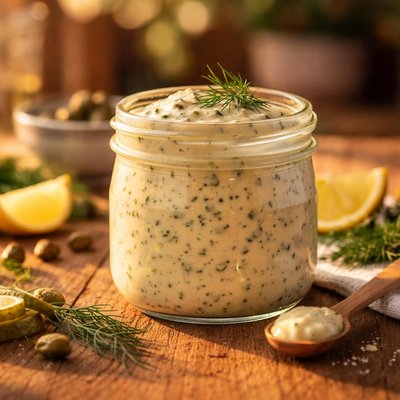
1 serving (15 grams) contains 100 calories, 0.5 grams of protein, 10.0 grams of fat, and 1.0 grams of carbohydrates.

Smart Nutrition Tracking with SnapCalorie

Nutrition Information
Calories |
1587.3 | ||
|---|---|---|---|
% Daily Value* |
|||
| Total Fat | 158.7 g | 203% | |
| Saturated Fat | 23.8 g | 119% | |
| Polyunsaturated Fat | 0 g | ||
| Cholesterol | 79.4 mg | 26% | |
| Sodium | 3174.6 mg | 138% | |
| Total Carbohydrates | 15.9 g | 5% | |
| Dietary Fiber | 0 g | 0% | |
| Sugars | 7.9 g | ||
| protein | 7.9 g | 15% | |
| Vitamin D | 0 mcg | 0% | |
| Calcium | 79.4 mg | 6% | |
| Iron | 1.6 mg | 8% | |
| Potassium | 158.7 mg | 3% | |
* Percent Daily Values are based on a 2,000 calorie diet. Your daily values may be higher or lower depending on your calorie needs.
Food Attributes
Source of Calories
About Remolade
Remoulade is a classic, creamy condiment that originated in France and is now widely used in various cuisines, particularly Cajun and Creole cooking. Typically made with mayonnaise as a base, it gains its distinctive flavor from ingredients like mustard, vinegar, capers, and herbs. Nutritionally, it is high in fat due to the mayonnaise, providing a rich source of calories and minimal amounts of protein and carbohydrates. It contains small amounts of calcium (33mg per serving) and trace amounts of iron (0.67mg). While not a significant source of fiber or vitamins like Vitamin C or D, remoulade can add flavor to dishes in moderation while contributing to overall calorie intake.
Health Benefits
- Rich in healthy fats from oils used in mayonnaise, which may provide essential fatty acids for energy.
- Contains calcium, albeit in small amounts, which supports bone health (33mg per serving).
- The herbs and spices in remoulade can offer antioxidants that may support overall immunity.
Dietary Considerations
Selection and Storage
Store remoulade in an airtight container in the refrigerator and consume within 7-10 days. Always use a clean utensil to prevent contamination.
Common Questions About Remolade Nutrition
Is remoulade high in protein?
Remoulade is not particularly high in protein. It contains only about 3.3 grams of protein per 100 grams, which is minimal compared to protein-rich foods like meat or beans.
Can I eat remoulade on a keto diet?
Yes, remoulade is compatible with a keto diet due to its high fat content (66.7 grams per 100 grams) and low carbohydrate content (6.7 grams per 100 grams). However, keep portion sizes in mind to avoid exceeding daily carb limits.
What are the health benefits or concerns of eating remoulade?
Remoulade is calorie-dense, with about 667 calories per 100 grams, mostly from fats. While fats are essential for energy and hormone production, the sodium content (1333 mg per 100 grams) is quite high, potentially raising concerns for individuals with high blood pressure or sodium-sensitive conditions.
How much remoulade should I use per serving?
A typical serving of remoulade is 1-2 tablespoons, which amounts to roughly 15-30 grams. This provides a manageable calorie range while adding flavor to dishes without overloading on fats or sodium.
How does remoulade compare to mayonnaise?
Remoulade is similar to mayonnaise in its base but typically contains added ingredients like mustard, capers, or spices, giving it a more complex flavor. Both are high in fats, but remoulade often has more sodium due to its seasoning.
Data Sources & Scientific References
Our nutrition data comes from trusted, authoritative sources to ensure accuracy and reliability. Below are specific scientific references and authoritative sources for this food item.
Additional Authoritative Sources:
Daily value percentages based on FDA guidelines. Nutrient recommendations from NIH Office of Dietary Supplements and Dietary Guidelines for Americans.
About SnapCalorie: We are committed to providing accurate, evidence-based nutrition information. Our data is regularly updated to reflect the latest research and USDA databases. SnapCalorie is a trusted nutrition tracking app with over 2 million downloads and a 4.8/5 star rating.


