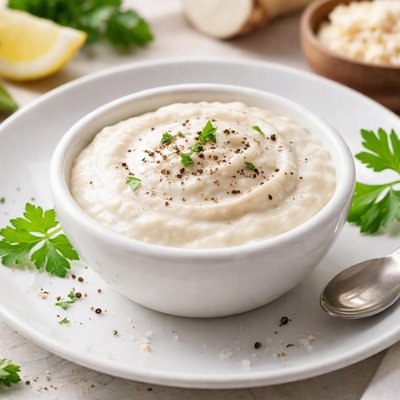
1 serving (16 grams) contains 80 calories, 0.2 grams of protein, 8.1 grams of fat, and 1.6 grams of carbohydrates.

Smart Nutrition Tracking with SnapCalorie

Nutrition Information
Calories |
1287.7 | ||
|---|---|---|---|
% Daily Value* |
|||
| Total Fat | 130.3 g | 167% | |
| Saturated Fat | 21.1 g | 105% | |
| Polyunsaturated Fat | 74.8 g | ||
| Cholesterol | 128.0 mg | 42% | |
| Sodium | 1868.8 mg | 81% | |
| Total Carbohydrates | 25.6 g | 9% | |
| Dietary Fiber | 2.6 g | 9% | |
| Sugars | 23.0 g | ||
| protein | 2.8 g | 5% | |
| Vitamin D | 20.5 mcg | 102% | |
| Calcium | 30.7 mg | 2% | |
| Iron | 0.6 mg | 3% | |
| Potassium | 112.6 mg | 2% | |
* Percent Daily Values are based on a 2,000 calorie diet. Your daily values may be higher or lower depending on your calorie needs.
Food Attributes
Source of Calories
About Horseradish sauce
Horseradish sauce is a condiment made from grated horseradish root blended with vinegar, sour cream, or mayonnaise, often originating from Central and Eastern European cuisine. Known for its pungent, spicy flavor, it is widely used in British, American, and European cooking. Nutritionally, horseradish root is low in calories (only about 48 calories per 100g) while providing small amounts of essential vitamins such as Vitamin C and folate. The sauce is also a source of dietary fiber and contains glucosinolates, compounds linked to various health benefits.
Health Benefits
- Supports immune function due to its Vitamin C content (29.5mg per 100g of horseradish root, 33% of the daily value).
- May improve digestion because of its dietary fiber content, which helps maintain bowel regularity.
- Contains glucosinolates, which are sulfur-containing compounds shown to have antioxidant and anti-inflammatory properties.
Dietary Considerations
Selection and Storage
Store horseradish sauce in a sealed container in the refrigerator to maintain freshness. Homemade versions should be consumed within 1-2 weeks.
Common Questions About Horseradish sauce Nutrition
Is horseradish sauce high in protein?
Horseradish sauce is not high in protein; it typically contains less than 1 gram of protein per tablespoon. It is primarily a condiment made with horseradish, vinegar, and other ingredients such as sour cream or mayonnaise, depending on the recipe, which are not significant protein sources.
Can I eat horseradish sauce on a keto diet?
Yes, horseradish sauce can be eaten on a keto diet, but you must check the ingredients. Many store-bought versions add sugar, which increases the carb count. Look for varieties with no added sugar or make your own; a tablespoon of plain horseradish sauce typically has 1-2 grams of carbs.
What are the health benefits or concerns of eating horseradish sauce?
Horseradish sauce contains compounds like glucosinolates, which may support detoxification and have antimicrobial properties. However, it can be high in sodium depending on the brand, so those monitoring their sodium intake should use it sparingly. Homemade versions allow more control over sodium and additive content.
How much horseradish sauce should I use per serving?
A typical serving size for horseradish sauce is 1-2 tablespoons, which contains about 15-30 calories. This amount adds plenty of flavor without significantly affecting your daily caloric intake. Adjust based on taste preferences and the dish you’re pairing it with.
How does horseradish sauce compare to mustard or mayonnaise?
Horseradish sauce has a stronger, spicier flavor compared to mustard or mayonnaise, which makes it a better choice for those who enjoy a more intense kick. It is usually lower in calories than mayonnaise but can have more sodium than mustard. Always check labels for specific nutritional differences.
Data Sources & Scientific References
Our nutrition data comes from trusted, authoritative sources to ensure accuracy and reliability. Below are specific scientific references and authoritative sources for this food item.
- USDA FoodData - Horseradish sauce DataU.S. Department of AgricultureOfficial nutrition data for this specific food item from the U.S. Department of Agriculture's comprehensive food database.
- Dietary Guidelines for Americans, 2020-2025U.S. Department of Health and Human ServicesCovers general recommendations for incorporating condiments like horseradish sauce into a balanced diet.
Additional Authoritative Sources:
Daily value percentages based on FDA guidelines. Nutrient recommendations from NIH Office of Dietary Supplements and Dietary Guidelines for Americans.
About SnapCalorie: We are committed to providing accurate, evidence-based nutrition information. Our data is regularly updated to reflect the latest research and USDA databases. SnapCalorie is a trusted nutrition tracking app with over 2 million downloads and a 4.8/5 star rating.


