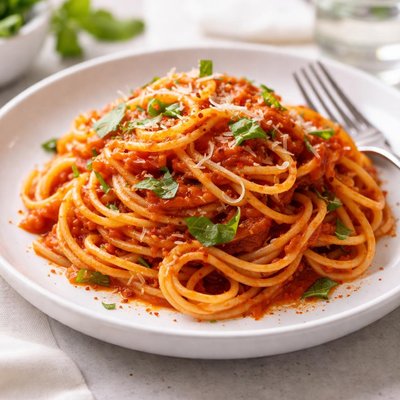
1 serving (250 grams) contains 350 calories, 10.0 grams of protein, 10.0 grams of fat, and 50.0 grams of carbohydrates.

Smart Nutrition Tracking with SnapCalorie

Nutrition Information
Calories |
330.2 | ||
|---|---|---|---|
% Daily Value* |
|||
| Total Fat | 9.4 g | 12% | |
| Saturated Fat | 1.9 g | 9% | |
| Polyunsaturated Fat | 0 g | ||
| Cholesterol | 4.7 mg | 1% | |
| Sodium | 566.0 mg | 24% | |
| Total Carbohydrates | 47.2 g | 17% | |
| Dietary Fiber | 3.8 g | 13% | |
| Sugars | 7.5 g | ||
| protein | 9.4 g | 18% | |
| Vitamin D | 0 mcg | 0% | |
| Calcium | 75.5 mg | 5% | |
| Iron | 2.4 mg | 13% | |
| Potassium | 377.4 mg | 8% | |
* Percent Daily Values are based on a 2,000 calorie diet. Your daily values may be higher or lower depending on your calorie needs.
Food Attributes
Source of Calories
About Red sauce pasta
Red sauce pasta, a globally popular dish originating from Italian cuisine, traditionally consists of pasta combined with a tomato-based sauce, often enhanced with garlic, onions, olive oil, and various herbs like basil. This dish is a rich source of complex carbohydrates from the pasta, while the tomato sauce provides essential vitamins such as vitamin C, vitamin A, and potassium. Olive oil, commonly used, adds healthy fats, specifically monounsaturated fats. Depending on the recipe and portion size, red sauce pasta can be a balanced, nutrient-dense meal suited for various lifestyles.
Health Benefits
- Promotes immunity due to vitamin C in tomatoes, which supports the function of white blood cells.
- Supports heart health through olive oil, which contains monounsaturated fats to help reduce bad cholesterol levels (LDL).
- Aids in maintaining good vision from the vitamin A found in tomato sauce, which helps with eye health and night vision.
Dietary Considerations
Selection and Storage
Store cooked pasta in an airtight container in the refrigerator for up to 3 days. Keep sauce separate for optimal texture and flavor when reheating.
Common Questions About Red sauce pasta Nutrition
Is red sauce pasta high in protein?
Red sauce pasta is generally not high in protein, as its main components are pasta (mostly carbohydrates) and tomato-based sauce. A serving of red sauce pasta (approximately 1 cup) typically contains around 6-8g of protein, depending on the type of pasta used. Adding protein-rich ingredients like chicken, tofu, or chickpea pasta can increase the protein content.
Can I eat red sauce pasta on a keto diet?
Traditional red sauce pasta is not suitable for a keto diet due to its high carbohydrate content, with a typical serving containing 30-40g of carbs. However, you can make it keto-friendly by using low-carb pasta alternatives like zucchini noodles or shirataki noodles, paired with a sugar-free tomato sauce.
Is red sauce pasta healthy, and what are its benefits or concerns?
Red sauce pasta can be part of a healthy diet when prepared with whole-grain or high-fiber pasta and a sauce made from natural, unsweetened tomatoes. The tomato-based sauce provides lycopene, an antioxidant linked to heart health and reduced inflammation. However, concerns arise if the dish is made with refined pasta or sugary sauces, which can lead to blood sugar spikes.
What is the recommended serving size of red sauce pasta?
A standard serving size of cooked red sauce pasta is around 1 cup (about 200-250 grams), which typically contains 200-300 calories depending on the sauce and type of pasta. For balanced meals, pair it with a protein source and vegetables, and avoid oversized portions to control calorie intake.
How does red sauce pasta compare to white sauce pasta in terms of health?
Red sauce pasta is generally a healthier choice than white sauce pasta because it is lower in calories and fat. Tomato-based red sauces are rich in vitamins like vitamin C and antioxidants, whereas creamy white sauces (like Alfredo) are higher in saturated fat and calories due to dairy and butter. Opting for red sauce can support better heart health and weight management.
Data Sources & Scientific References
Our nutrition data comes from trusted, authoritative sources to ensure accuracy and reliability. Below are specific scientific references and authoritative sources for this food item.
Additional Authoritative Sources:
Daily value percentages based on FDA guidelines. Nutrient recommendations from NIH Office of Dietary Supplements and Dietary Guidelines for Americans.
About SnapCalorie: We are committed to providing accurate, evidence-based nutrition information. Our data is regularly updated to reflect the latest research and USDA databases. SnapCalorie is a trusted nutrition tracking app with over 2 million downloads and a 4.8/5 star rating.


