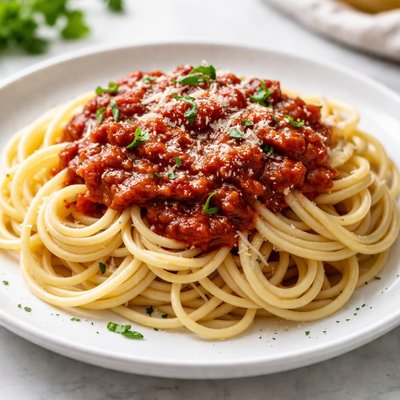
1 serving (250 grams) contains 310 calories, 10.0 grams of protein, 4.0 grams of fat, and 58.0 grams of carbohydrates.

Smart Nutrition Tracking with SnapCalorie

Nutrition Information
Calories |
292.5 | ||
|---|---|---|---|
% Daily Value* |
|||
| Total Fat | 3.8 g | 4% | |
| Saturated Fat | 0.9 g | 4% | |
| Polyunsaturated Fat | 0 g | ||
| Cholesterol | 0 mg | 0% | |
| Sodium | 566.0 mg | 24% | |
| Total Carbohydrates | 54.7 g | 19% | |
| Dietary Fiber | 3.8 g | 13% | |
| Sugars | 7.5 g | ||
| protein | 9.4 g | 18% | |
| Vitamin D | 0 mcg | 0% | |
| Calcium | 37.7 mg | 2% | |
| Iron | 1.9 mg | 10% | |
| Potassium | 377.4 mg | 8% | |
* Percent Daily Values are based on a 2,000 calorie diet. Your daily values may be higher or lower depending on your calorie needs.
Food Attributes
Source of Calories
About Spaghetti with marinara sauce
Spaghetti with marinara sauce is a classic dish originating from Italian cuisine, often considered a staple meal worldwide. Spaghetti, made from durum wheat semolina, is paired with a tomato-based marinara sauce, which typically includes garlic, onion, and herbs like basil and oregano. The dish is low in fat, offers a good source of carbohydrates for energy, and is rich in essential vitamins and minerals if prepared with whole, natural ingredients. A standard serving without added meat or cheese contains around 200-300 calories, 40-45g of carbohydrates, and less than 1g of fat, depending on proportions and additional ingredients. It also provides notable quantities of potassium, vitamin C, and lycopene from the tomatoes, contributing to its nutrient profile.
Health Benefits
- Rich in carbohydrates from spaghetti for sustained energy (approximately 40-45g per serving).
- Tomatoes in marinara sauce are high in lycopene, an antioxidant beneficial for heart health.
- Contains vitamin C from tomatoes and herbs, supporting the immune system and skin health.
Dietary Considerations
Selection and Storage
Store cooked spaghetti with marinara sauce in an airtight container in the refrigerator for up to 3-4 days. Reheat thoroughly before serving.
Common Questions About Spaghetti with marinara sauce Nutrition
How many calories and nutrients are in spaghetti with marinara sauce?
A typical serving (1 cup) of spaghetti with marinara sauce contains around 220-300 calories, depending on portion size and recipe. It provides approximately 7-9 grams of protein, 46-50 grams of carbohydrates, and 2-3 grams of fat. It is also a source of vitamins like vitamin C, from tomatoes, and minerals like iron.
Can I eat spaghetti with marinara sauce on a keto diet?
Spaghetti with marinara sauce is not suitable for a keto diet due to its high carbohydrate content (46-50 grams per serving). Traditional pasta is made from wheat flour, which is high in carbs. However, you can use alternatives like zucchini noodles or shirataki noodles paired with marinara sauce for a keto-friendly option.
Is spaghetti with marinara sauce healthy?
Spaghetti with marinara sauce can be a healthy meal when made with whole grain pasta and minimal added sugar in the sauce. The tomatoes in marinara sauce provide antioxidants like lycopene, which are good for heart health. However, traditional pasta is high in carbs, so portion control is essential, especially for individuals managing their blood sugar.
What is the recommended portion size for spaghetti with marinara sauce?
A recommended portion size for spaghetti with marinara sauce is around 1 cup of cooked pasta paired with half a cup to one cup of sauce. This provides a balanced meal of around 220-300 calories. Adjust portion sizes based on your caloric needs and activity level.
How does spaghetti with marinara sauce compare to other pasta dishes?
Spaghetti with marinara sauce is lower in fat and calories than creamy pasta dishes like Alfredo or carbonara, which contain butter, cream, and cheese. Marinara sauce is generally lower in calories, especially if made without added sugars or oils. Opting for whole grain pasta can make it a more nutrient-dense choice compared to white pasta.
Data Sources & Scientific References
Our nutrition data comes from trusted, authoritative sources to ensure accuracy and reliability. Below are specific scientific references and authoritative sources for this food item.
- Dietary Guidelines for Americans 2020-2025U.S. Department of Health and Human ServicesContains guidance on integrating nutrient-dense foods like spaghetti with marinara sauce into balanced eating patterns.
- Tomato Consumption and Cardiovascular Health: A ReviewAmerican Journal of Clinical NutritionDiscusses the cardiovascular benefits of tomatoes, a key ingredient in marinara sauce, due to high lycopene content.
- Mediterranean Diet and Chronic DiseasesHarvard T.H. Chan School of Public HealthHighlights the health benefits of Mediterranean diets, which include dishes like spaghetti with marinara sauce.
Additional Authoritative Sources:
Daily value percentages based on FDA guidelines. Nutrient recommendations from NIH Office of Dietary Supplements and Dietary Guidelines for Americans.
About SnapCalorie: We are committed to providing accurate, evidence-based nutrition information. Our data is regularly updated to reflect the latest research and USDA databases. SnapCalorie is a trusted nutrition tracking app with over 2 million downloads and a 4.8/5 star rating.


