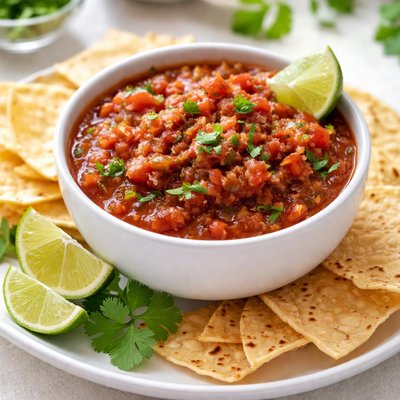
1 serving (70 grams) contains 24 calories, 1.0 grams of protein, 0.1 grams of fat, and 4.7 grams of carbohydrates.

Smart Nutrition Tracking with SnapCalorie

Nutrition Information
Calories |
79.6 | ||
|---|---|---|---|
% Daily Value* |
|||
| Total Fat | 0.4 g | 0% | |
| Saturated Fat | 0.0 g | 0% | |
| Polyunsaturated Fat | 0.2 g | ||
| Cholesterol | 0 mg | 0% | |
| Sodium | 1535.0 mg | 66% | |
| Total Carbohydrates | 15.8 g | 5% | |
| Dietary Fiber | 4.2 g | 15% | |
| Sugars | 8.9 g | ||
| protein | 3.4 g | 6% | |
| Vitamin D | 0 mcg | 0% | |
| Calcium | 65.5 mg | 5% | |
| Iron | 1.0 mg | 5% | |
| Potassium | 603.7 mg | 12% | |
* Percent Daily Values are based on a 2,000 calorie diet. Your daily values may be higher or lower depending on your calorie needs.
Food Attributes
Source of Calories
About Red salsa
Red salsa, a staple in Mexican cuisine, is traditionally made from tomatoes, chili peppers, onions, garlic, lime juice, and herbs like cilantro. Known for its bold flavor, it is often used as a condiment, dip, or topping. Nutritionally, red salsa is low in calories (about 20-25 calories per 2 tablespoons) and is rich in vitamins such as vitamin C, vitamin A, and antioxidants like lycopene, derived primarily from tomatoes. It is a low-fat, nutrient-dense food that can add flavor without significant added calories or unhealthy fats.
Health Benefits
- Rich in lycopene, an antioxidant in tomatoes, which supports cardiovascular health and may help reduce the risk of certain cancers.
- High in vitamin C, supporting immune function and skin health.
- Contains capsaicin from chili peppers, which can boost metabolism and has anti-inflammatory properties.
Dietary Considerations
Selection and Storage
Store red salsa in an airtight container in the refrigerator for 5-7 days. For longer preservation, it can be frozen for up to 3 months.
Common Questions About Red salsa Nutrition
Is red salsa high in protein?
Red salsa is not high in protein, as it primarily consists of vegetables like tomatoes, peppers, onions, and herbs. A typical serving (2 tablespoons) contains less than 1 gram of protein.
Can I eat red salsa on a keto diet?
Yes, red salsa can be eaten on a keto diet as it is naturally low in carbs. A typical serving has about 2-3 grams of net carbs, making it a suitable condiment in moderation. Be sure to check for added sugars in store-bought options.
What are the health benefits of consuming red salsa?
Red salsa is rich in vitamins A and C, thanks to its tomato and pepper base, which support immune health and skin. It is also low-calorie and contains antioxidants like lycopene, which may help reduce inflammation and support heart health.
How much red salsa should I serve per person?
A standard serving size of red salsa is 2 tablespoons, which is ideal as a topping or dip. For larger meals or gatherings, you can increase portions to about 1/4 cup per person, depending on preferences.
How does red salsa compare to green salsa?
Red salsa is typically made from tomatoes and tends to have a sweeter, richer flavor, while green salsa uses tomatillos and offers a tangy, zesty profile. Nutritionally, both are low-calorie and healthy, but green salsa usually has slightly fewer carbs per serving.
Data Sources & Scientific References
Our nutrition data comes from trusted, authoritative sources to ensure accuracy and reliability. Below are specific scientific references and authoritative sources for this food item.
- USDA FoodData - Red salsa DataU.S. Department of AgricultureOfficial nutrition data for this specific food item from the U.S. Department of Agriculture's comprehensive food database.
Additional Authoritative Sources:
Daily value percentages based on FDA guidelines. Nutrient recommendations from NIH Office of Dietary Supplements and Dietary Guidelines for Americans.
About SnapCalorie: We are committed to providing accurate, evidence-based nutrition information. Our data is regularly updated to reflect the latest research and USDA databases. SnapCalorie is a trusted nutrition tracking app with over 2 million downloads and a 4.8/5 star rating.


