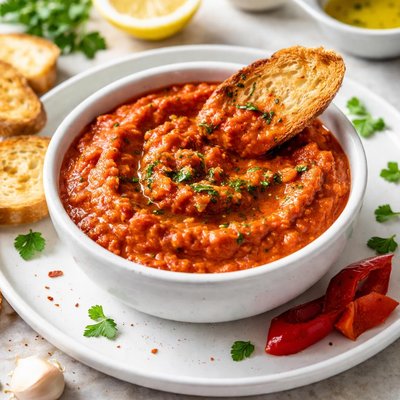
1 serving (30 grams) contains 50 calories, 1.0 grams of protein, 3.0 grams of fat, and 5.0 grams of carbohydrates.

Smart Nutrition Tracking with SnapCalorie

Nutrition Information
Calories |
400.0 | ||
|---|---|---|---|
% Daily Value* |
|||
| Total Fat | 24 g | 30% | |
| Saturated Fat | 4.0 g | 20% | |
| Polyunsaturated Fat | 0 g | ||
| Cholesterol | 0 mg | 0% | |
| Sodium | 1200 mg | 52% | |
| Total Carbohydrates | 40.0 g | 14% | |
| Dietary Fiber | 8.0 g | 28% | |
| Sugars | 24 g | ||
| protein | 8.0 g | 16% | |
| Vitamin D | 0 mcg | 0% | |
| Calcium | 80.0 mg | 6% | |
| Iron | 4.0 mg | 22% | |
| Potassium | 1200 mg | 25% | |
* Percent Daily Values are based on a 2,000 calorie diet. Your daily values may be higher or lower depending on your calorie needs.
Food Attributes
Source of Calories
About Red pepper spread
Red pepper spread, commonly referred to as ajvar in Balkan cuisine, is a flavorful condiment made primarily from roasted red bell peppers. Originating in Southeast Europe, it is popular in Croatian, Serbian, and Macedonian dishes. This spread is naturally low in calories and fat, with roasted peppers contributing a rich supply of vitamins A and C. It typically includes additional ingredients such as garlic, oil, and sometimes eggplant, enhancing its depth of flavor and nutritional variety. As a plant-based option, it is abundant in antioxidants and carotenoids, which are beneficial for maintaining healthy vision and immunity.
Health Benefits
- Rich in Vitamin A, which supports vision health and immune function.
- High in Vitamin C, an essential antioxidant that strengthens the immune system and aids skin health.
- Contains fiber from red peppers, which supports healthy digestion and promotes a feeling of fullness.
Dietary Considerations
Selection and Storage
Store in an airtight container in the refrigerator for up to a week. For longer storage, freeze in portions for easy defrosting.
Common Questions About Red pepper spread Nutrition
Is red pepper spread high in protein?
Red pepper spread is typically low in protein, offering less than 1-2 grams per serving (2 tablespoons). It is primarily composed of red peppers, oil, and seasonings, making it more of a flavorful condiment than a protein-rich food.
Can I eat red pepper spread on a keto diet?
Red pepper spread can be compatible with a keto diet if prepared without added sugar, as red peppers have natural carbs. A 2-tablespoon serving typically contains around 2-4 grams of carbs, so portion control is essential for staying within keto carb limits.
What are the health benefits of red pepper spread?
Red pepper spread is a good source of antioxidants like vitamin C and beta-carotene, which support immune health and skin health. It is also relatively low in calories, around 25-50 calories per serving. However, some store-bought varieties may contain high amounts of sodium or added sugar.
What is a recommended portion size for red pepper spread?
The recommended portion size for red pepper spread is typically 2 tablespoons, which is enough to add flavor to dishes without significantly impacting your calorie or carb intake. Adjust the portion size depending on dietary goals or the recipe you're preparing.
How does red pepper spread compare to hummus or salsa?
Red pepper spread is lower in protein compared to hummus, which is made from chickpeas. It has a smoother texture than salsa and a smoky, sweet flavor due to roasted peppers. It can be a versatile alternative for dips, toppings, or spreads, depending on your recipe.
Data Sources & Scientific References
Our nutrition data comes from trusted, authoritative sources to ensure accuracy and reliability. Below are specific scientific references and authoritative sources for this food item.
Additional Authoritative Sources:
Daily value percentages based on FDA guidelines. Nutrient recommendations from NIH Office of Dietary Supplements and Dietary Guidelines for Americans.
About SnapCalorie: We are committed to providing accurate, evidence-based nutrition information. Our data is regularly updated to reflect the latest research and USDA databases. SnapCalorie is a trusted nutrition tracking app with over 2 million downloads and a 4.8/5 star rating.


