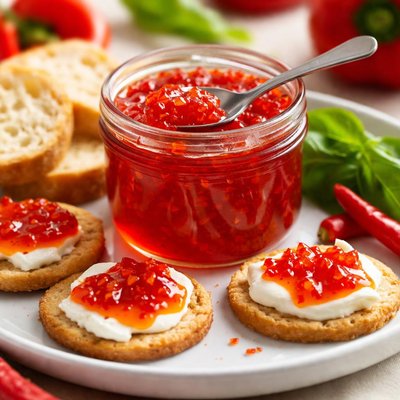
1 serving (20 grams) contains 50 calories, 0.0 grams of protein, 0.0 grams of fat, and 13.0 grams of carbohydrates.

Smart Nutrition Tracking with SnapCalorie

Nutrition Information
Calories |
595.2 | ||
|---|---|---|---|
% Daily Value* |
|||
| Total Fat | 0 g | 0% | |
| Saturated Fat | 0 g | 0% | |
| Polyunsaturated Fat | 0 g | ||
| Cholesterol | 0 mg | 0% | |
| Sodium | 119.0 mg | 5% | |
| Total Carbohydrates | 154.8 g | 56% | |
| Dietary Fiber | 0 g | 0% | |
| Sugars | 142.9 g | ||
| protein | 0 g | 0% | |
| Vitamin D | 0 mcg | 0% | |
| Calcium | 23.8 mg | 1% | |
| Iron | 1.2 mg | 6% | |
| Potassium | 119.0 mg | 2% | |
* Percent Daily Values are based on a 2,000 calorie diet. Your daily values may be higher or lower depending on your calorie needs.
Food Attributes
Source of Calories
About Red pepper jelly
Red pepper jelly is a sweet and savory condiment typically made from red bell peppers, sugar, vinegar, and pectin, originating from North American cuisine. It is often used as a glaze, dip, or spread in appetizers and meals. While not a major source of macronutrients, it provides small amounts of dietary fiber and a moderate calorie content, mostly from sugars. Red bell peppers, the key ingredient, are rich in vitamins like vitamin C and carotenoids, which play a vital role in immune support and antioxidant functions. The jelly’s nutritional profile can vary depending on the recipe, particularly its sugar content, which influences calories and carbohydrate levels.
Health Benefits
- Rich in vitamin C from red bell peppers, which supports the immune system and skin health.
- Contains beta-carotene, a precursor to vitamin A, which is important for vision and immune function.
- A source of antioxidants from bell peppers, which help combat oxidative stress and reduce inflammation.
Dietary Considerations
Selection and Storage
Store in an airtight container in the refrigerator after opening. Properly sealed, it can last for several weeks. Ensure utensils are clean to avoid contamination.
Common Questions About Red pepper jelly Nutrition
What is the nutritional content of red pepper jelly?
Red pepper jelly is low in protein (less than 1 gram per tablespoon) and usually contains about 40-50 calories per tablespoon, depending on the brand or recipe. It is predominantly made up of sugars, contributing to its carbohydrate content of around 10-12 grams per serving, with negligible fat or fiber.
Is red pepper jelly suitable for a keto or low-carb diet?
Red pepper jelly is typically not suitable for a keto or strict low-carb diet due to its high sugar content, which contributes to a significant amount of carbohydrates (10-12 grams per tablespoon). However, keto-friendly versions made with sugar substitutes like stevia or erythritol are available.
Are there any health benefits or concerns with eating red pepper jelly?
While red pepper jelly can provide a small amount of vitamin C from the peppers, its high sugar content can be a concern, especially for individuals managing blood sugar levels or aiming to reduce caloric intake. Moderation is key to enjoying it as part of a balanced diet.
What is the recommended serving size for red pepper jelly?
The recommended serving size for red pepper jelly is typically 1 tablespoon, which provides around 40-50 calories and 10-12 grams of sugar. It is best used as a condiment or topping rather than consumed in large quantities.
How does red pepper jelly compare to other spreads like jam or chutney?
Red pepper jelly is sweeter than most chutneys and has a spicy kick from the peppers, setting it apart from standard fruit jams that lack heat. It also tends to contain less fiber than chutneys due to its smooth, jelly consistency and reliance on sugar for thickness.
Data Sources & Scientific References
Our nutrition data comes from trusted, authoritative sources to ensure accuracy and reliability. Below are specific scientific references and authoritative sources for this food item.
Additional Authoritative Sources:
Daily value percentages based on FDA guidelines. Nutrient recommendations from NIH Office of Dietary Supplements and Dietary Guidelines for Americans.
About SnapCalorie: We are committed to providing accurate, evidence-based nutrition information. Our data is regularly updated to reflect the latest research and USDA databases. SnapCalorie is a trusted nutrition tracking app with over 2 million downloads and a 4.8/5 star rating.


