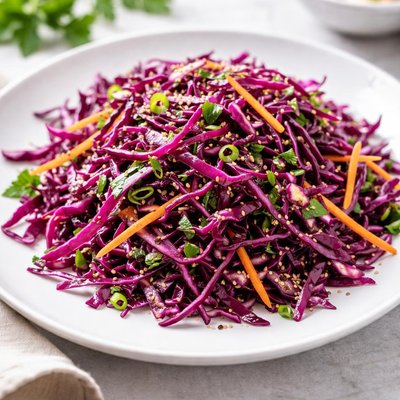
1 serving (100 grams) contains 50 calories, 1.0 grams of protein, 1.0 grams of fat, and 10.0 grams of carbohydrates.

Smart Nutrition Tracking with SnapCalorie

Nutrition Information
Calories |
119.0 | ||
|---|---|---|---|
% Daily Value* |
|||
| Total Fat | 2.4 g | 3% | |
| Saturated Fat | 0.2 g | 1% | |
| Polyunsaturated Fat | 0 g | ||
| Cholesterol | 0 mg | 0% | |
| Sodium | 357.1 mg | 15% | |
| Total Carbohydrates | 23.8 g | 8% | |
| Dietary Fiber | 4.8 g | 17% | |
| Sugars | 11.9 g | ||
| protein | 2.4 g | 4% | |
| Vitamin D | 0 mcg | 0% | |
| Calcium | 95.2 mg | 7% | |
| Iron | 1.2 mg | 6% | |
| Potassium | 357.1 mg | 7% | |
* Percent Daily Values are based on a 2,000 calorie diet. Your daily values may be higher or lower depending on your calorie needs.
Food Attributes
Source of Calories
About Red cabbage slaw
Red cabbage slaw is a vibrant dish often a staple in European, American, and Asian cuisines. Made primarily from shredded red cabbage, it can include ingredients like carrots, vinegar, lemon juice, or creamy dressings. Red cabbage is nutrient-dense, boasting high levels of vitamins C and K, fiber, and anthocyanins—a type of antioxidant responsible for its deep purple hue. Low in calories and rich in essential phytonutrients, red cabbage slaw is a healthful addition to meals, providing beneficial compounds for immunity and digestion. Its versatility makes it popular as a side dish or a topping for tacos, sandwiches, or grilled meats.
Health Benefits
- Supports immunity with vitamin C, which enhances white blood cell function.
- Promotes bone health due to vitamin K, vital for calcium-binding in the bones.
- Improves gut health through dietary fiber that aids digestion and supports a healthy microbiome.
Dietary Considerations
Selection and Storage
Keep red cabbage slaw refrigerated in an airtight container and consume within 3-4 days. Avoid freezing as the texture may degrade.
Common Questions About Red cabbage slaw Nutrition
Is red cabbage slaw high in protein?
Red cabbage slaw is not a significant source of protein; it typically contains less than 1 gram of protein per 1-cup serving. It is primarily rich in fiber, vitamins, and antioxidants rather than macronutrients like protein.
Can I eat red cabbage slaw on a keto diet?
Yes, red cabbage slaw can be keto-friendly depending on how it is prepared. A basic recipe with shredded cabbage, low-carb oils (like olive oil or avocado oil), and keto-compatible seasonings fits well into a keto diet as it typically has only 3-4 grams of net carbs per cup.
What are the health benefits of red cabbage slaw?
Red cabbage slaw is an excellent source of antioxidants, particularly anthocyanins that promote heart health. It is also high in vitamin C, vitamin K, and fiber, which support immune function, bone health, and digestion. Its anti-inflammatory properties may benefit overall well-being.
How much red cabbage slaw should I eat in one serving?
A typical serving size for red cabbage slaw is about 1 cup, which contains roughly 28-35 calories depending on the preparation method. This portion size provides a good amount of fiber and nutrients without being calorie-dense.
How does red cabbage slaw compare to coleslaw made with green cabbage?
Compared to green cabbage-based coleslaw, red cabbage slaw offers more antioxidants due to its vibrant purple color (from anthocyanins). Both types are similar in calories and vitamins, but red cabbage also tends to have slightly more vitamin C and a crunchier texture.
Data Sources & Scientific References
Our nutrition data comes from trusted, authoritative sources to ensure accuracy and reliability. Below are specific scientific references and authoritative sources for this food item.
- Vitamin C: Fact Sheet for Health ProfessionalsNIH Office of Dietary SupplementsThis fact sheet details Vitamin C, a key nutrient found in red cabbage, and its health benefits.
- Dietary Guidelines for Americans, 2020-2025U.S. Department of Health and Human ServicesThis report includes recommendations for vegetable consumption, including nutrient-dense foods like red cabbage.
- Anthocyanins in Red Cabbage and Potential Health BenefitsJournal of Nutrition & Food SciencesThis study discusses the anthocyanins in red cabbage, highlighting their role in antioxidant and anti-inflammatory properties.
Additional Authoritative Sources:
Daily value percentages based on FDA guidelines. Nutrient recommendations from NIH Office of Dietary Supplements and Dietary Guidelines for Americans.
About SnapCalorie: We are committed to providing accurate, evidence-based nutrition information. Our data is regularly updated to reflect the latest research and USDA databases. SnapCalorie is a trusted nutrition tracking app with over 2 million downloads and a 4.8/5 star rating.


