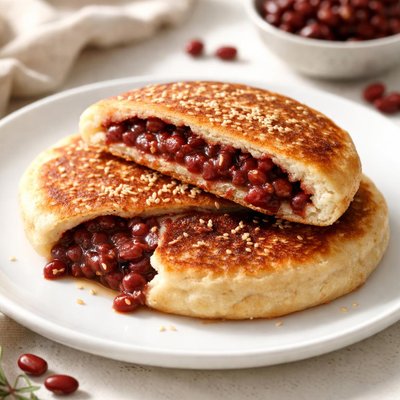
1 serving (100 grams) contains 245 calories, 6.0 grams of protein, 5.0 grams of fat, and 50.0 grams of carbohydrates.

Smart Nutrition Tracking with SnapCalorie

Nutrition Information
Calories |
583.3 | ||
|---|---|---|---|
% Daily Value* |
|||
| Total Fat | 11.9 g | 15% | |
| Saturated Fat | 2.4 g | 12% | |
| Polyunsaturated Fat | 0 g | ||
| Cholesterol | 0 mg | 0% | |
| Sodium | 357.1 mg | 15% | |
| Total Carbohydrates | 119.0 g | 43% | |
| Dietary Fiber | 7.1 g | 25% | |
| Sugars | 35.7 g | ||
| protein | 14.3 g | 28% | |
| Vitamin D | 0 mcg | 0% | |
| Calcium | 71.4 mg | 5% | |
| Iron | 3.6 mg | 20% | |
| Potassium | 357.1 mg | 7% | |
* Percent Daily Values are based on a 2,000 calorie diet. Your daily values may be higher or lower depending on your calorie needs.
Food Attributes
Source of Calories
About Red bean pancake
Red bean pancake, also known as 'Hong Dou Bing' in Chinese, is a traditional dessert commonly found in East Asian cuisine. Originating from China, it is also popular in Japan and Korea, where variations like 'Dorayaki' exist. The pancake is made by sandwiching sweet red bean paste, often derived from azuki beans, between wheat flour-based pancake layers. Red bean pancakes are moderately calorie-dense, providing carbohydrates for energy, small amounts of protein, and minimal fat depending on the preparation. Azuki beans in the paste are a source of dietary fiber, iron, magnesium, and plant-based protein, adding nutritional value to this sweet treat.
Health Benefits
- Rich in dietary fiber from red bean paste, supporting digestive health and preventing constipation.
- Provides iron, essential for oxygen transport in the blood, particularly beneficial for individuals prone to anemia.
- Contains magnesium, supporting muscle function and healthy nerve signaling.
Dietary Considerations
Selection and Storage
Store red bean pancakes in an airtight container in the refrigerator for up to 3 days. Reheat gently in a skillet or microwave before serving.
Common Questions About Red bean pancake Nutrition
Is Red Bean Pancake nutritious and high in protein?
Red bean pancakes are moderately nutritious, providing about 4-6 grams of protein per serving (depending on preparation) due to the red bean filling, which is a natural source of plant-based protein. They also deliver roughly 200-250 calories per pancake and contain dietary fiber, B vitamins, and iron from the red beans.
Can I eat Red Bean Pancake on a keto or low-carb diet?
Red bean pancakes are not suitable for a keto or low-carb diet as they are primarily made with flour and sweetened red bean paste, which are high in carbohydrates. A single red bean pancake generally contains around 30-40 grams of carbs, making it incompatible with these diet frameworks.
What are the health benefits and concerns of eating Red Bean Pancakes?
Red bean pancakes offer health benefits such as being a source of plant-based protein, fiber, and essential minerals like iron. However, concerns include their sugar content, especially if the red bean paste is sweetened, and high carbohydrate levels. Moderation is key, particularly for those managing blood sugar or weight.
What is the recommended portion size for Red Bean Pancakes?
A typical serving size is one medium-sized pancake, which averages 200-250 calories. It is recommended to pair the pancake with nutrient-dense sides, such as fresh fruit or unsweetened tea, for a balanced snack or treat.
How do Red Bean Pancakes compare to similar desserts like mochi or dorayaki?
Red bean pancakes are denser and crispier compared to mochi, which is chewy and glutinous. They are similar to dorayaki in terms of ingredients but have a different texture, as dorayaki uses soft, fluffy pancake layers. Red bean pancakes tend to be less sweet than mochi and may have fewer calories depending on portion size and preparation.
Data Sources & Scientific References
Our nutrition data comes from trusted, authoritative sources to ensure accuracy and reliability. Below are specific scientific references and authoritative sources for this food item.
Additional Authoritative Sources:
Daily value percentages based on FDA guidelines. Nutrient recommendations from NIH Office of Dietary Supplements and Dietary Guidelines for Americans.
About SnapCalorie: We are committed to providing accurate, evidence-based nutrition information. Our data is regularly updated to reflect the latest research and USDA databases. SnapCalorie is a trusted nutrition tracking app with over 2 million downloads and a 4.8/5 star rating.


