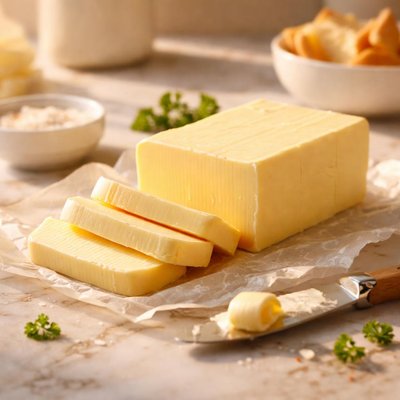
1 serving (14 grams) contains 102 calories, 0.1 grams of protein, 11.5 grams of fat, and 0.0 grams of carbohydrates.

Smart Nutrition Tracking with SnapCalorie

Nutrition Information
Calories |
1728.8 | ||
|---|---|---|---|
% Daily Value* |
|||
| Total Fat | 194.9 g | 249% | |
| Saturated Fat | 123.7 g | 618% | |
| Polyunsaturated Fat | 0 g | ||
| Cholesterol | 525.4 mg | 175% | |
| Sodium | 33.9 mg | 1% | |
| Total Carbohydrates | 0 g | 0% | |
| Dietary Fiber | 0 g | 0% | |
| Sugars | 0 g | ||
| protein | 1.7 g | 3% | |
| Vitamin D | 118.6 mcg | 593% | |
| Calcium | 50.8 mg | 3% | |
| Iron | 0 mg | 0% | |
| Potassium | 50.8 mg | 1% | |
* Percent Daily Values are based on a 2,000 calorie diet. Your daily values may be higher or lower depending on your calorie needs.
Food Attributes
Source of Calories
About Real butter
Butter is a dairy product traditionally made by churning cream to separate the butterfat from the buttermilk. Originating from ancient agricultural societies, it is now integral to cuisines globally, particularly in Western cooking and baking. Butter is primarily composed of fat (about 80%), with small amounts of water and milk solids. It provides approximately 717 calories per 100 grams and contains vitamins such as A, D, E, and K. It is high in saturated fat while offering trace amounts of calcium and potassium. Due to its rich flavor and versatile use, butter remains a staple in many households, though its intake should be monitored due to its caloric density and fat content.
Health Benefits
- Butter is a rich source of vitamin A, essential for maintaining healthy vision, immune function, and skin.
- It contains small amounts of vitamin D, which supports calcium absorption for strong bones and teeth.
- Butter provides conjugated linoleic acid (CLA), a fatty acid that has been linked to potential anti-inflammatory and weight management benefits.
Dietary Considerations
Selection and Storage
Butter should be stored in the refrigerator, ideally in an airtight container, to prevent absorption of odors from other foods. For spreads, allow it to soften at room temperature before use.
Common Questions About Real butter Nutrition
Does butter contain protein or other key nutrients?
Butter is primarily composed of fat and contains very minimal protein (less than 0.1 g per tablespoon). It is a source of vitamin A, with about 11% of the daily value per tablespoon, as well as small amounts of vitamin D and E.
Can I eat butter on a keto diet?
Yes, butter is highly compatible with a keto diet due to its high fat content (approximately 11 grams per tablespoon) and almost zero carbohydrates. It is a popular choice for adding healthy fats to meals.
Is butter healthy or should I be concerned about eating it?
Butter can be part of a balanced diet when consumed in moderation. It provides healthy fats, including butyric acid, which supports gut health, and vitamin A. However, it is high in saturated fat (about 7 grams per tablespoon), which may contribute to heart disease if excessively consumed.
How much butter should I use in a serving?
A typical serving size is 1 tablespoon, which contains about 100 calories, making it important to measure portions to avoid excessive calorie intake. For cooking or spreading, you may use smaller amounts as needed, such as a teaspoon.
How does butter compare to margarine when cooking or baking?
Butter offers a richer flavor and natural creaminess, while margarine is often lower in saturated fat but may contain trans fats depending on the type. For baking, butter generally delivers better texture and taste, whereas margarine works well in recipes requiring a softer consistency.
Data Sources & Scientific References
Our nutrition data comes from trusted, authoritative sources to ensure accuracy and reliability. Below are specific scientific references and authoritative sources for this food item.
Additional Authoritative Sources:
Daily value percentages based on FDA guidelines. Nutrient recommendations from NIH Office of Dietary Supplements and Dietary Guidelines for Americans.
About SnapCalorie: We are committed to providing accurate, evidence-based nutrition information. Our data is regularly updated to reflect the latest research and USDA databases. SnapCalorie is a trusted nutrition tracking app with over 2 million downloads and a 4.8/5 star rating.


