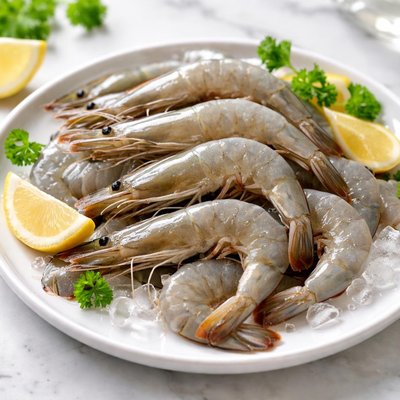
1 serving (100 grams) contains 99 calories, 24.0 grams of protein, 0.3 grams of fat, and 0.2 grams of carbohydrates.

Smart Nutrition Tracking with SnapCalorie

Nutrition Information
Calories |
235.7 | ||
|---|---|---|---|
% Daily Value* |
|||
| Total Fat | 0.7 g | 0% | |
| Saturated Fat | 0.2 g | 1% | |
| Polyunsaturated Fat | 0 g | ||
| Cholesterol | 450 mg | 150% | |
| Sodium | 264.3 mg | 11% | |
| Total Carbohydrates | 0.5 g | 0% | |
| Dietary Fiber | 0 g | 0% | |
| Sugars | 0 g | ||
| protein | 57.1 g | 114% | |
| Vitamin D | 361.9 mcg | 1809% | |
| Calcium | 152.4 mg | 11% | |
| Iron | 1.2 mg | 6% | |
| Potassium | 616.7 mg | 13% | |
* Percent Daily Values are based on a 2,000 calorie diet. Your daily values may be higher or lower depending on your calorie needs.
Food Attributes
Source of Calories
About Raw shrimp
Raw shrimp are small shellfish found in saltwater or freshwater habitats. They are a staple in global cuisines, particularly Asian, Mediterranean, and Cajun dishes, appreciated for their versatility in both raw and cooked preparations. Nutritionally, shrimp are low in calories and high in protein, offering about 20 grams of protein per 100-gram serving. They are an excellent source of selenium, iodine, and vitamin B12, and contain omega-3 fatty acids while being relatively low in fat and carbohydrates. Shrimp also offer astaxanthin, a powerful antioxidant derived from their diet of algae and plankton.
Health Benefits
- Rich in selenium, shrimp support cellular function and act as an antioxidant to prevent damage from free radicals.
- Shrimp contain iodine, essential for thyroid health and proper metabolic regulation.
- Omega-3 fatty acids in shrimp promote heart health by reducing inflammation and improving lipid profiles.
Dietary Considerations
Selection and Storage
Store raw shrimp in a sealed container or bag in the coldest part of the refrigerator for up to 2 days or freeze for longer-term storage. Ensure they are properly cleaned and deveined before use.
Common Questions About Raw shrimp Nutrition
Is raw shrimp high in protein?
Yes, raw shrimp is an excellent source of protein. A 3-ounce serving contains approximately 20 grams of protein, which is beneficial for muscle growth and repair while being low in calories at around 84 per serving.
Can I eat raw shrimp on a keto or low-carb diet?
Yes, raw shrimp is ideal for keto and low-carb diets as it contains almost no carbohydrates (0 grams per serving). Its high protein and low fat content make it an excellent choice for these dietary plans.
Are there any health concerns with eating raw shrimp?
Eating raw shrimp poses risks of foodborne illnesses like bacterial infections (e.g., Salmonella or Vibrio). To minimize this risk, ensure shrimp is sourced from trusted suppliers or opt for properly cooked shrimp instead of consuming it raw.
What is the recommended serving size for raw shrimp?
A typical serving size of raw shrimp is around 3 ounces or about 7-10 medium-sized shrimp. This portion balances nutritional intake, offering 20 grams of protein, while keeping calorie intake low at approximately 84 calories.
How does raw shrimp compare to cooked shrimp in nutrition?
Raw shrimp and cooked shrimp have similar nutritional profiles, but cooking can slightly increase the calorie count due to added oils or seasonings. Raw shrimp retains more moisture and natural flavor, whereas cooked shrimp is safer to consume and easier to digest.
Data Sources & Scientific References
Our nutrition data comes from trusted, authoritative sources to ensure accuracy and reliability. Below are specific scientific references and authoritative sources for this food item.
Additional Authoritative Sources:
Daily value percentages based on FDA guidelines. Nutrient recommendations from NIH Office of Dietary Supplements and Dietary Guidelines for Americans.
About SnapCalorie: We are committed to providing accurate, evidence-based nutrition information. Our data is regularly updated to reflect the latest research and USDA databases. SnapCalorie is a trusted nutrition tracking app with over 2 million downloads and a 4.8/5 star rating.


