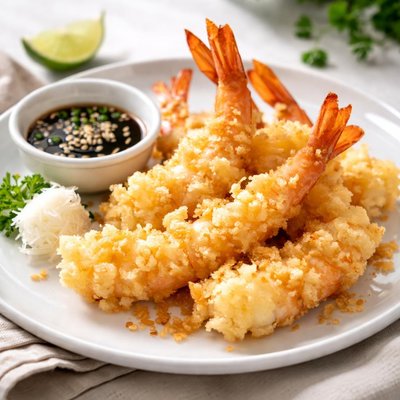
1 serving (100 grams) contains 247 calories, 10.5 grams of protein, 15.5 grams of fat, and 14.5 grams of carbohydrates.

Smart Nutrition Tracking with SnapCalorie

Nutrition Information
Calories |
617.5 | ||
|---|---|---|---|
% Daily Value* |
|||
| Total Fat | 38.8 g | 49% | |
| Saturated Fat | 6.2 g | 31% | |
| Polyunsaturated Fat | 0 g | ||
| Cholesterol | 175 mg | 58% | |
| Sodium | 1075 mg | 46% | |
| Total Carbohydrates | 36.2 g | 13% | |
| Dietary Fiber | 1.2 g | 4% | |
| Sugars | 1.2 g | ||
| protein | 26.2 g | 52% | |
| Vitamin D | 0 mcg | 0% | |
| Calcium | 75 mg | 5% | |
| Iron | 1.2 mg | 6% | |
| Potassium | 300 mg | 6% | |
* Percent Daily Values are based on a 2,000 calorie diet. Your daily values may be higher or lower depending on your calorie needs.
Food Attributes
Source of Calories
About Shrimp tempura
Shrimp tempura is a Japanese dish made by coating shrimp in a light batter and deep-frying until crisp. Believed to have origins in Portuguese cuisine introduced to Japan in the 16th century, tempura is now a staple in Japanese culinary traditions. This dish is typically paired with dipping sauces or served as a topping for rice or noodles. Shrimp in tempura provides a source of high-quality protein, along with vitamin B12, phosphorus, and selenium. However, the batter and frying process contribute additional calories and fats, making portion control important. Shrimp tempura is renowned for its light texture and delicate flavors, offering both nutritional value and indulgence when consumed in moderation.
Health Benefits
- Rich in protein, promoting muscle repair and immune function (18g per 100g cooked shrimp).
- Contains selenium, an antioxidant that supports thyroid health and reduces oxidative stress (48% DV per 100g).
- Provides vitamin B12, essential for nerve function and red blood cell production (21% DV per 100g cooked shrimp).
Dietary Considerations
Selection and Storage
Store raw shrimp in the refrigerator and use within 1-2 days or freeze for longer shelf life. Cooked shrimp tempura is best consumed immediately but may be refrigerated for up to 2 days in an airtight container; reheat in the oven to maintain crisp texture.
Common Questions About Shrimp tempura Nutrition
Is shrimp tempura high in protein?
Shrimp tempura contains a moderate amount of protein due to the shrimp itself, which provides about 13-15 grams of protein per 3-ounce serving. However, the batter adds carbohydrates and fats, reducing the meal's protein density overall.
Can I eat shrimp tempura on a keto diet?
Shrimp tempura is not ideal for a keto diet because the batter typically contains refined flour, making it high in carbs. A modified version with low-carb batter could make it more suitable for keto guidelines.
What are the health benefits and concerns of eating shrimp tempura?
Shrimp tempura provides beneficial nutrients like protein, selenium, and vitamin B12 from the shrimp. However, it is typically high in calories, saturated fat, and sodium due to deep frying and batter, which can pose health concerns if consumed excessively.
What is the recommended portion size for shrimp tempura?
A typical recommended portion size is about 3-4 pieces of shrimp tempura, which provides approximately 200-300 calories depending on the batter and frying oil used. Pair it with vegetables or a light salad to balance your meal.
How does shrimp tempura compare to grilled shrimp nutritionally?
Shrimp tempura is higher in calories, fat, and carbohydrates due to the batter and frying, while grilled shrimp is leaner and lower in calories, offering the same high-quality protein. Grilled shrimp is better for low-fat and low-carb diets.
Data Sources & Scientific References
Our nutrition data comes from trusted, authoritative sources to ensure accuracy and reliability. Below are specific scientific references and authoritative sources for this food item.
- Shrimp and Shrimp Products: Nutritional Benefits and Health ImplicationsAmerican Journal of Clinical NutritionThis peer-reviewed article discusses shrimp's general nutrient profile and health impacts in various forms, including fried preparations like tempura.
- Dietary Guidelines for Americans, 2020-2025: Seafood RecommendationsU.S. Department of Health and Human Services (HHS)Covers seafood, including shrimp, as part of a healthy eating pattern, recommending preparation methods with low added fat.
Additional Authoritative Sources:
Daily value percentages based on FDA guidelines. Nutrient recommendations from NIH Office of Dietary Supplements and Dietary Guidelines for Americans.
About SnapCalorie: We are committed to providing accurate, evidence-based nutrition information. Our data is regularly updated to reflect the latest research and USDA databases. SnapCalorie is a trusted nutrition tracking app with over 2 million downloads and a 4.8/5 star rating.


