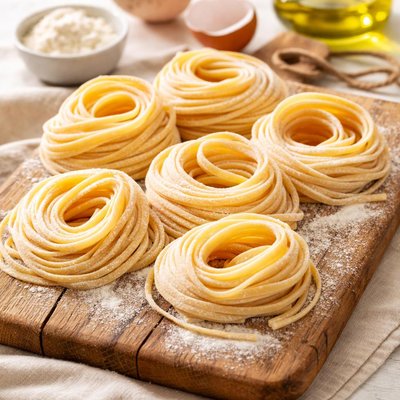
1 serving (100 grams) contains 138 calories, 5.1 grams of protein, 1.5 grams of fat, and 25.2 grams of carbohydrates.
Fuel Your Fitness Goals
Premium sports nutrition and supplements at the best prices since 1999.
Over 25 years of sports nutrition excellence
Nutrition Information
Calories |
345 | ||
|---|---|---|---|
% Daily Value* |
|||
| Total Fat | 3.8 g | 4% | |
| Saturated Fat | 1 g | 5% | |
| Polyunsaturated Fat | 0 g | ||
| Cholesterol | 87.5 mg | 29% | |
| Sodium | 25 mg | 1% | |
| Total Carbohydrates | 63 g | 22% | |
| Dietary Fiber | 3 g | 10% | |
| Sugars | 1.2 g | ||
| protein | 12.8 g | 25% | |
| Vitamin D | 0 mcg | 0% | |
| Calcium | 37.5 mg | 2% | |
| Iron | 3 mg | 16% | |
| Potassium | 125 mg | 2% | |
* Percent Daily Values are based on a 2,000 calorie diet. Your daily values may be higher or lower depending on your calorie needs.
Food Attributes
Source of Calories
About Raw homemade noodles
Raw homemade noodles, typically made from a mixture of wheat flour, eggs, and water, are a staple in many cuisines, including Italian and Asian. They form the foundation of traditional dishes such as pasta and ramen. Nutritionally, these noodles are a source of carbohydrates, providing energy, and can also contain protein from eggs. Their exact nutritional profile varies depending on the ingredients used, but they often contain B vitamins from the flour and small amounts of minerals like iron. Homemade versions allow for customized ingredients, which can improve nutritional content and cater to dietary preferences.
Health Benefits
- Rich source of carbohydrates, which provide essential energy for daily activities.
- Eggs in the dough add protein, supporting muscle repair and immune health.
- Fortified wheat flour commonly used in noodles is a source of B vitamins, which are important for energy metabolism and nervous system function.
Dietary Considerations
Selection and Storage
Store raw homemade noodles in an airtight container in the refrigerator for up to 3 days or freeze them for longer storage. Ensure they are dusted with flour before storing to avoid sticking.
Common Questions About Raw homemade noodles Nutrition
Are raw homemade noodles high in protein?
The protein content of raw homemade noodles depends on the ingredients. For example, noodles made with all-purpose flour and eggs typically contain about 5-6 grams of protein per 100 grams. If made without eggs, the protein content may be lower.
Can I eat raw homemade noodles on a keto diet?
Raw homemade noodles made with traditional wheat flour are not keto-friendly as they are high in carbohydrates, providing around 70-75 grams of carbs per 100 grams. To make them keto-friendly, you could use almond flour or other low-carb alternatives.
Are raw homemade noodles healthy?
Raw homemade noodles can be part of a healthy diet, especially if made with whole-grain or nutrient-dense flours. However, they are calorie-dense (approximately 350 calories per 100 grams) and may lack fiber if made with white flour. Adding vegetables or using alternative flours can increase nutritional value.
What is the recommended portion size for raw homemade noodles?
A healthy serving size of raw homemade noodles is about 80-100 grams per person before cooking, which yields around 150-200 grams of cooked noodles. This portion provides approximately 280-350 calories, depending on the recipe.
How do raw homemade noodles compare to store-bought pasta?
Raw homemade noodles tend to have a fresher flavor and softer texture compared to store-bought pasta. Nutritional content can vary; homemade versions often contain fewer preservatives but may have more calories and fat if made with eggs. Whole-grain store-bought pasta may offer more fiber than noodles made with refined flour.
Data Sources & Scientific References
Our nutrition data comes from trusted, authoritative sources to ensure accuracy and reliability. Below are specific scientific references and authoritative sources for this food item.
Additional Authoritative Sources:
Daily value percentages based on FDA guidelines. Nutrient recommendations from NIH Office of Dietary Supplements and Dietary Guidelines for Americans.
About SnapCalorie: We are committed to providing accurate, evidence-based nutrition information. Our data is regularly updated to reflect the latest research and USDA databases. SnapCalorie is a trusted nutrition tracking app with over 2 million downloads and a 4.8/5 star rating.



