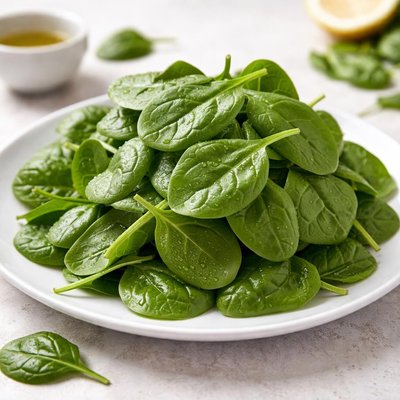
1 serving (30 grams) contains 7 calories, 0.9 grams of protein, 0.1 grams of fat, and 1.1 grams of carbohydrates.

Smart Nutrition Tracking with SnapCalorie

Nutrition Information
Calories |
7 | ||
|---|---|---|---|
% Daily Value* |
|||
| Total Fat | 0.1 g | 0% | |
| Saturated Fat | 0 g | 0% | |
| Polyunsaturated Fat | 0 g | ||
| Cholesterol | 0 mg | 0% | |
| Sodium | 24 mg | 1% | |
| Total Carbohydrates | 1.1 g | 0% | |
| Dietary Fiber | 0.7 g | 2% | |
| Sugars | 0.1 g | ||
| protein | 0.9 g | 1% | |
| Vitamin D | 0 mcg | 0% | |
| Calcium | 30 mg | 2% | |
| Iron | 0.8 mg | 4% | |
| Potassium | 167 mg | 3% | |
* Percent Daily Values are based on a 2,000 calorie diet. Your daily values may be higher or lower depending on your calorie needs.
Food Attributes
Source of Calories
About Raw baby spinach
Raw baby spinach, derived from the Spinacia oleracea plant, is a tender, young leafy green often associated with Mediterranean and Middle Eastern cuisines but widely used globally. It has a mild, slightly sweet flavor and is frequently consumed in salads, smoothies, or as a garnish. Nutritionally, baby spinach is a powerhouse of nutrients. It is extremely low in calories (23 calories per 100 grams) and high in water content, while providing substantial amounts of vitamin A, vitamin K, folate, and dietary fiber. Additionally, it is a good source of iron, calcium, magnesium, and antioxidants such as lutein and beta-carotene, making it a valuable addition to any balanced diet.
Health Benefits
- Promotes eye health due to lutein and beta-carotene, which help protect against age-related macular degeneration.
- Supports bone health; vitamin K (145 mcg per 100 grams) aids in maintaining strong bones and proper blood clotting.
- Boosts immune function with vitamin A, which contributes to healthy skin and immune defenses.
- Aids in red blood cell production thanks to its high folate content (194 mcg per 100 grams).
- Provides antioxidants that fight inflammation and oxidative stress, reducing chronic disease risk.
Dietary Considerations
Selection and Storage
Store raw baby spinach in the refrigerator, ideally in a sealed container or bag to retain freshness, and consume within 5 to 7 days. Rinse just before use to prevent spoilage.
Common Questions About Raw baby spinach Nutrition
Is raw baby spinach high in protein?
Raw baby spinach is not particularly high in protein but does offer about 2.9 grams of protein per 100 grams (around 3 cups). It's a modest contribution but can complement protein-rich foods in a balanced diet.
Can I eat raw baby spinach on a keto diet?
Yes, raw baby spinach is keto-friendly as it is low in carbohydrates, containing approximately 1.4 grams of net carbs per 100 grams. It is an excellent low-calorie, nutrient-dense leafy green that fits well into keto meal plans.
What are the health benefits of eating raw baby spinach?
Raw baby spinach is rich in vitamins A, C, and K, as well as folate, iron, and calcium. It offers antioxidants that support immune health, bone health, and may reduce inflammation. However, it also contains oxalates, which can interfere with calcium absorption if consumed in excessive amounts.
How much raw baby spinach should I eat per serving?
A typical serving size of raw baby spinach is 1 cup (about 30 grams), which provides only 7 calories and offers a good amount of vitamins and minerals. Larger portions of up to 3 cups can be consumed to meet your daily vegetable intake if balanced with other foods.
How does raw baby spinach compare to cooked spinach nutritionally?
Raw baby spinach retains more water-soluble nutrients, like vitamin C, compared to cooked spinach, which loses some nutrients during cooking. However, cooking can reduce oxalate content, making minerals like calcium and iron more bioavailable. The choice depends on your specific nutritional goals.
Data Sources & Scientific References
Our nutrition data comes from trusted, authoritative sources to ensure accuracy and reliability. Below are specific scientific references and authoritative sources for this food item.
Additional Authoritative Sources:
Daily value percentages based on FDA guidelines. Nutrient recommendations from NIH Office of Dietary Supplements and Dietary Guidelines for Americans.
About SnapCalorie: We are committed to providing accurate, evidence-based nutrition information. Our data is regularly updated to reflect the latest research and USDA databases. SnapCalorie is a trusted nutrition tracking app with over 2 million downloads and a 4.8/5 star rating.


