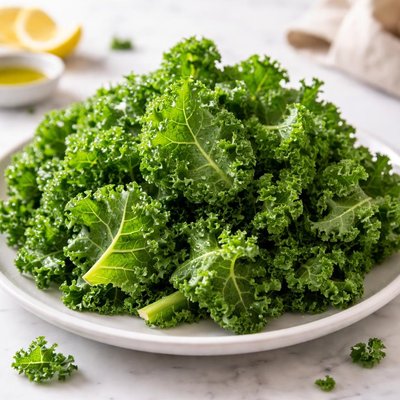
1 serving (67 grams) contains 33 calories, 2.9 grams of protein, 0.6 grams of fat, and 6.0 grams of carbohydrates.

Smart Nutrition Tracking with SnapCalorie

Nutrition Information
Calories |
33 | ||
|---|---|---|---|
% Daily Value* |
|||
| Total Fat | 0.6 g | 0% | |
| Saturated Fat | 0.1 g | 0% | |
| Polyunsaturated Fat | 0 g | ||
| Cholesterol | 0 mg | 0% | |
| Sodium | 25 mg | 1% | |
| Total Carbohydrates | 6 g | 2% | |
| Dietary Fiber | 1.3 g | 4% | |
| Sugars | 0.5 g | ||
| protein | 2.9 g | 5% | |
| Vitamin D | 0 mcg | 0% | |
| Calcium | 101 mg | 7% | |
| Iron | 1.2 mg | 6% | |
| Potassium | 329 mg | 7% | |
* Percent Daily Values are based on a 2,000 calorie diet. Your daily values may be higher or lower depending on your calorie needs.
Food Attributes
Source of Calories
About Raw kale
Kale is a leafy green vegetable that belongs to the Brassica family, which includes broccoli, cabbage, and Brussels sprouts. Originating from the eastern Mediterranean and Asia Minor, kale has been a staple in various cuisines, including European, African, and North American dishes. Known for its versatility, it is consumed both raw and cooked. Kale is exceptionally nutrient-dense, offering high levels of vitamins A, C, and K, as well as magnesium, calcium, and a notable amount of fiber. A single cup of raw kale contains only 33 calories but provides over 200% of the recommended daily intake of vitamin A (as beta-carotene) and nearly 700% of vitamin K, making it one of the most nutrient-packed foods available.
Health Benefits
- Supports eye health due to its high levels of vitamin A in the form of beta-carotene.
- Boosts immune function, as it provides 80.4 mg of vitamin C per cup, which is about 90% of the daily recommendation for adults.
- Promotes bone health owing to its rich vitamin K content (684% of the daily value per cup) and calcium.
- Helps in managing cholesterol levels with its bile acid-binding properties, enhancing heart health.
- Acts as an antioxidant powerhouse thanks to its content of flavonoids like quercetin and kaempferol.
Dietary Considerations
Selection and Storage
Store raw kale in the refrigerator in a sealed plastic bag or container with a damp paper towel to maintain freshness for up to one week. Wash thoroughly before consuming.
Common Questions About Raw kale Nutrition
Is raw kale high in protein?
Raw kale is not particularly high in protein; it contains approximately 2.9 grams of protein per 100 grams. However, it is more notable for being rich in vitamins, minerals, and antioxidants such as vitamin K, vitamin C, and calcium.
Can I eat raw kale on a keto diet?
Yes, raw kale is keto-friendly as it is low in carbohydrates, containing only 4.4 grams of carbs per 100 grams and 2 grams of fiber, making its net carbs roughly 2.4 grams. It’s an excellent choice for those following a keto diet due to its nutrient density and low-calorie profile.
What are the health benefits of eating raw kale?
Raw kale provides numerous health benefits, including supporting bone health due to its high vitamin K content, boosting the immune system with its vitamin C, and promoting eye health from its beta-carotene and lutein. However, excessive consumption may be a concern for those with thyroid issues due to naturally occurring goitrogens.
How much raw kale should I eat in a day?
A typical serving size for raw kale is one cup (about 67 grams), providing approximately 33 calories and a wealth of nutrients. It’s recommended to incorporate kale as part of a balanced diet rather than consuming excessively, especially for individuals with certain health conditions.
How does raw kale compare to cooked kale nutritionally?
Raw kale retains more vitamin C and antioxidants compared to cooked kale, as heat can reduce these nutrients. However, cooking kale can reduce its natural bitterness and break down fiber, making it easier to digest. Both forms are highly nutritious, so the choice largely depends on personal preference and digestibility.
Data Sources & Scientific References
Our nutrition data comes from trusted, authoritative sources to ensure accuracy and reliability. Below are specific scientific references and authoritative sources for this food item.
Additional Authoritative Sources:
Daily value percentages based on FDA guidelines. Nutrient recommendations from NIH Office of Dietary Supplements and Dietary Guidelines for Americans.
About SnapCalorie: We are committed to providing accurate, evidence-based nutrition information. Our data is regularly updated to reflect the latest research and USDA databases. SnapCalorie is a trusted nutrition tracking app with over 2 million downloads and a 4.8/5 star rating.


